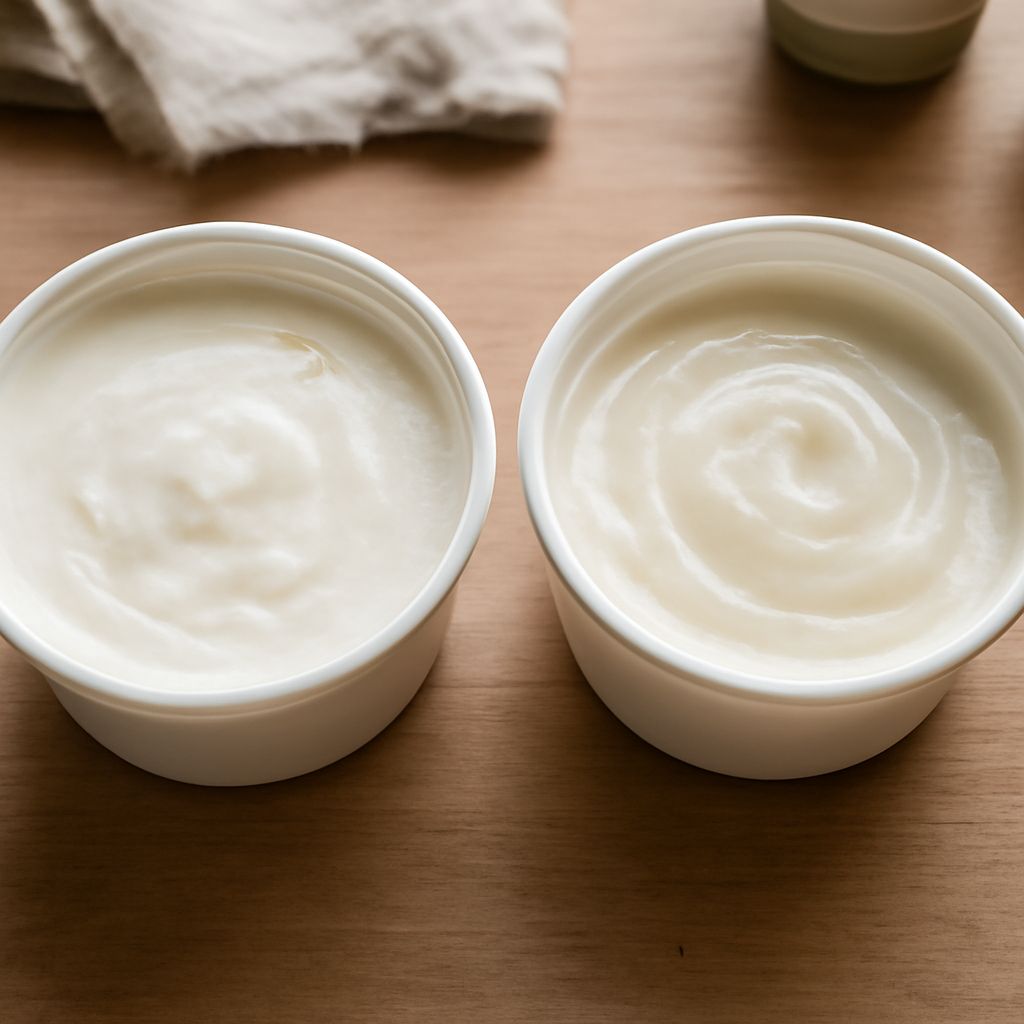
If you’re choosing between tallow and lard, the simplest rule is this: use tallow when you want a beefy, high-heat fat with a firmer set, and use lard when you want a milder pork fat that stays softer and works especially well in baking. Both can fry, roast, and enrich savory food, but they behave differently enough that the best choice depends on the job.
The difference between tallow and lard starts with the animal source. Tallow usually comes from beef or mutton fat, most often the hard fat around the kidneys and loins called suet. Lard comes from pig fat, commonly the fatty tissue from the belly, back, or leaf fat around the kidneys. Those source tissues affect how the fat renders, how cleanly it tastes, and how it sets at room temperature.
The Difference Between Tallow and Lard
When you compare beef tallow vs lard, you’re comparing two rendered animal fats with different starting materials and textures. Tallow is usually rendered from firmer, more saturated fat, so it tends to be whiter, denser, and more solid when cool. Lard is typically rendered from pig fat that can produce a softer, more spreadable fat, especially if it comes from back fat or leaf fat.
Rendering matters because it changes both purity and flavor. Well-rendered tallow and lard remove water and protein, which helps them keep longer and reduces off flavors. More refined versions of either fat taste cleaner and milder. Less refined versions taste more distinctly of the animal they came from, which can be a feature if you want stronger savory character in the pan.
At room temperature, tallow usually holds its shape better, while lard often feels softer and more plastic. That texture difference shows up in the kitchen: tallow is less likely to smear, and lard is easier to scoop or blend into dough. If you’re trying to understand the difference between lard and tallow in one sentence, think “firmer beef fat versus softer pork fat.”
Compare Flavor, Texture, and Cooking Performance
Flavor is where the two fats separate most clearly. Tallow often has a deeper, beefier flavor, especially if it is only lightly refined. That stronger taste can be great in roasted potatoes, seared meats, or any dish where you want a savory backbone. Lard is usually milder and slightly porky, and refined lard can be nearly neutral. That makes it easier to use when you want fat performance without a dominant flavor.
For heat performance, both are useful, but tallow generally handles very high heat a little more confidently because of its firmer composition and higher saturation. That makes it a strong pick for hard searing and deep frying. Lard also fries well, but because it can be softer and sometimes a bit more delicate in flavor, you may notice it feels better for medium-high cooking than for prolonged aggressive heat if you want a neutral result.
In baking, lard usually wins for tenderness and spreadability. It cuts into flour smoothly and can create a flaky texture in pie crusts, biscuits, and other pastry because it is soft enough to distribute evenly without melting too quickly. Tallow can also work in pastry, but it is less forgiving if you want a light, crumbly result. It tends to produce a sturdier texture and a more pronounced savory note.
Use the same criteria when you compare them:
- Flavor intensity: tallow is usually stronger; lard is usually milder.
- Texture at room temperature: tallow is firmer; lard is softer and more spreadable.
- Refinement: more refined versions of either fat taste cleaner and work in a wider range of dishes.
- Heat behavior: both tolerate high heat, but tallow is often the better choice for intense frying and searing.
- Pastry behavior: lard is generally better for flaky dough because of its softness and ease of blending.
Best Uses for Tallow and Lard
If you want a practical shortcut, choose the fat based on the technique.
For frying: tallow is excellent for fries, fried chicken, hash browns, and other foods that benefit from a crisp exterior and a savory finish. Lard also fries beautifully, especially when you want a slightly gentler flavor or when you’re cooking foods that already have enough richness.
For roasting: tallow is ideal for potatoes, carrots, Brussels sprouts, and beef dishes because it reinforces browned, meaty flavors. Lard works well on vegetables and pork, and it can add a rounder, less assertive richness. If you want a roast with more pronounced savory depth, tallow is the better fit. If you want a softer, more neutral roast fat, choose lard.
For sautéing: both work. Tallow gives you a stronger browned flavor for onions, mushrooms, and steakhouse-style vegetables. Lard is a good all-purpose sauté fat when you want less beefiness and more flexibility with delicate ingredients.
For pastry: lard is the classic choice for pie crusts, biscuits, empanadas, and tortillas because it creates tenderness and flake. It also blends quickly into flour, which helps with a lighter dough. Tallow can be used in savory pie crusts or rustic doughs, but it is less traditional for sweet or very tender pastry.
For tortillas: lard is often preferred because it makes dough soft, flexible, and flavorful without turning heavy. Tallow can work in flour tortillas too, especially if you want a richer, beefier edge, but it usually changes the flavor more noticeably.
For general savory cooking: tallow fits beef dishes, root vegetables, and high-heat pan work. Lard fits beans, greens, skillet cornbread, biscuits, and doughs where you want richness without a strong meat note. If you cook a lot of heritage or traditional recipes, both fats may show up depending on the regional style.
Storage and Substitution Tips
Store both fats in a cool, dark place if you’ll use them quickly, or refrigerate them for longer keeping. For the longest storage, freeze them in a tightly sealed container. Cleanly rendered fat lasts longer than fat with bits of food or moisture left in it.
Watch for rancidity by checking smell and appearance. Fresh tallow and lard should smell clean, mild, and pleasantly meaty or neutral. If either fat smells sour, paint-like, stale, or bitter, discard it. Yellowing, mold, or a sticky surface are also warning signs. If the texture changes unexpectedly and the flavor tastes sharp or off, don’t try to mask it with seasoning.
You can often substitute them one for one by volume, but not always by best results. That swap works most smoothly in savory cooking where the fat is only part of the dish. In baking, the difference between tallow and lard becomes more important: lard’s softness makes it easier to replace butter or shortening in pie dough, while tallow may make the crust firmer and more savory than you expected. If you substitute tallow for lard in tortillas or pastry, expect a stronger flavor and a less tender result. If you substitute lard for tallow in frying or roasting, expect a milder taste and a slightly softer set.
For the cleanest swap, match the fat to the goal: use tallow when you want browning, savoriness, and structure; use lard when you want softness, spreadability, and a more neutral finish. That’s the most useful way to choose between tallow vs lard in everyday cooking.