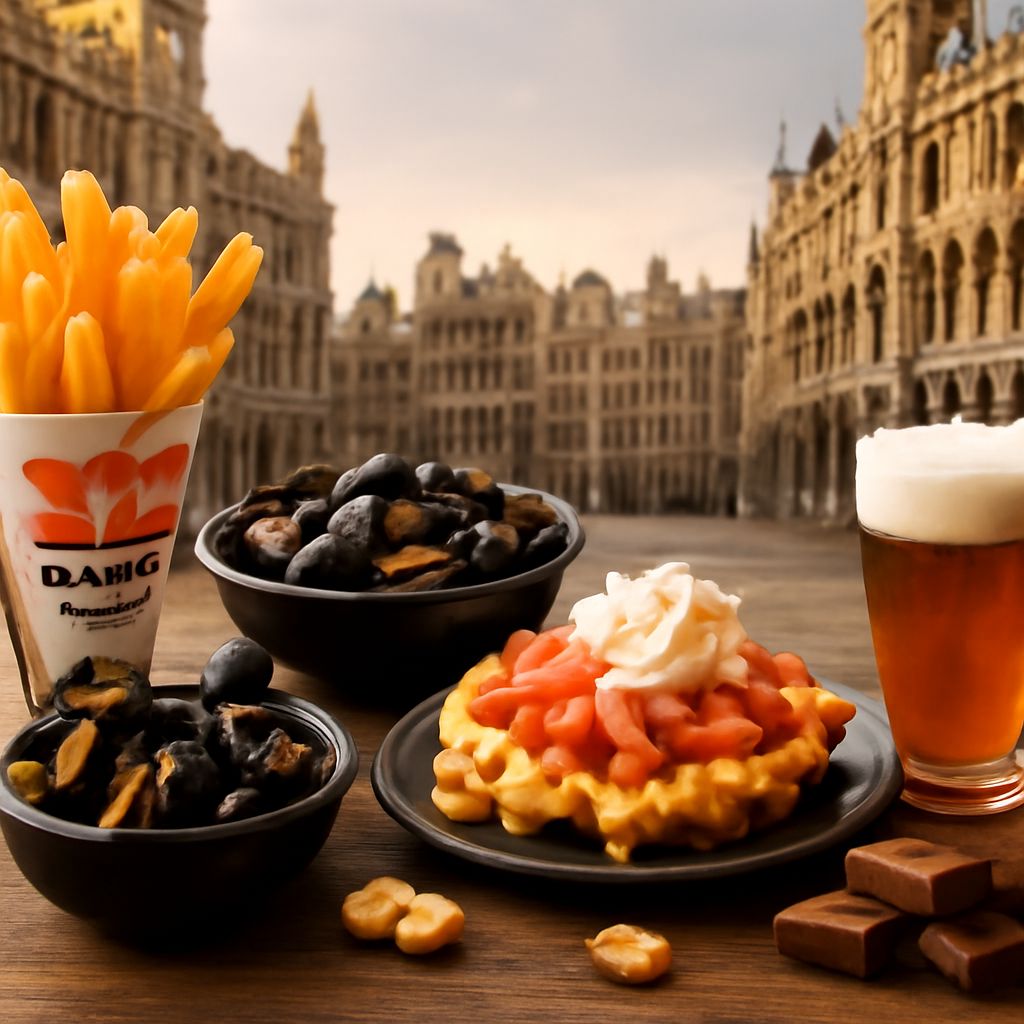
Belgian cuisine is at its best when you use it as a shortlist, not a vague category. If you want the most useful sample of traditional Belgian food, start with fries, mussels, stoofvlees, waffles, endive, and speculoos. Those dishes give you the clearest read on how Belgium cuisine balances comfort, beer-friendly flavors, seafood, and bakery staples.
For most people, the right way to explore Belgian dishes is to choose by meal, richness, and setting. Some options work best as a quick snack, others as a dinner anchor, and a few are better as desserts or shared plates. That makes Belgian food easy to select once you know what each dish does well.
Belgian Cuisine: Main Options
If you want a practical starting point, build your choices around these core Belgian dishes. Each one gives you a different side of Belgian cuisine.
- Moules-frites — mussels with fries. This is one of the most recognizable traditional Belgian food combinations and the safest first order if you want a full local meal.
- Belgian fries — thicker, crisp fries served with mayonnaise or sauce. These are a snack, side, or street-food main depending on portion size.
- Stoofvlees — Flemish beef stew braised in beer. This is the most useful comfort-food choice when you want a hearty, savory plate.
- Waterzooi — a creamy chicken or fish stew. It is lighter than stoofvlees and works well when you want something rich but not heavy.
- Waffles — Brussels waffles are lighter and crispier; Liège waffles are denser, sweeter, and more caramelized. Both are signature Belgian cuisine choices, but they fit different moments.
- Endive dishes — Belgian endive shows up baked, wrapped, or in salads. It gives you a more vegetable-forward side of Belgium cuisine.
- Speculoos — spiced cookies or cookie spread. This is the easiest sweet finish and one of the most exportable Belgian dishes.
- Belgian chocolate desserts — pralines, mousse, and filled pastries. These are better as a finish than as a full category to anchor a meal.
If you want the shortest possible list, choose these four: mussels and fries, stoofvlees, waffles, and speculoos. That mix covers savory, sweet, casual, and classic without overlap.
Compare Belgian Cuisine by the Criteria That Matter
The easiest way to choose among traditional Belgian food options is to compare them by meal fit, richness, and crowd appeal. That keeps you from picking a dish that tastes good but works poorly for the occasion.
1. Best for a full meal vs. a snack
- Full meal: moules-frites, stoofvlees, waterzooi
- Snack or side: Belgian fries
- Sweet stop or dessert: waffles, speculoos, chocolate-based desserts
If you are building a dinner, the stew and seafood options are the most complete. If you are browsing a market, fries and waffles are the easiest first picks.
2. Best for rich comfort vs. lighter eating
- Richest: stoofvlees, Liège waffles, chocolate desserts
- Middle ground: moules-frites, Brussels waffles
- Lighter: waterzooi, endive dishes
Belgian cuisine often leans comforting, but it is not all heavy. Waterzooi and endive give you balance if you want traditional Belgian food without a dense finish.
3. Best for first-time visitors vs. repeat exploration
- Best first taste: moules-frites, Belgian fries, Brussels or Liège waffles
- Best deeper cut: waterzooi, stoofvlees with regional beer, endive preparations
- Best sweet souvenir: speculoos and pralines
If you are new to Belgium cuisine, start with the most visible dishes first. If you already know the basics, move toward stews, vegetable dishes, and regional variations.
4. Best for sharing vs. ordering individually
- Shareable: fries, waffles, chocolate assortments
- Usually individual: stoofvlees, waterzooi, moules-frites
This matters if you are eating with a group. Shared sweets and fries make it easy to sample Belgian dishes without committing to one large plate.
Choose Traditional Belgian Food for the Right Occasion
Use the occasion to narrow your choice. Belgian cuisine works especially well when you match the dish to the time of day and the kind of meal you want.
- For lunch: fries with sauce, a waffle, or a lighter endive dish.
- For dinner: moules-frites, stoofvlees, or waterzooi.
- For a beer-focused meal: stoofvlees or fries. These pair naturally with the savory side of Belgian food.
- For a seafood choice: moules-frites or waterzooi with fish.
- For a sweet stop: Brussels waffles if you want light texture, Liège waffles if you want caramelized sweetness, speculoos if you want a simple takeaway item.
- For a mixed tasting: combine fries, one stew, and one dessert. That gives you the clearest overview of Belgian dishes in one meal.
If you are choosing for a group, a smart order is fries for the table, one savory main, and one shared sweet. That structure lets everyone sample Belgium cuisine without overcommitting to the same flavor profile.
If you want the most reliable “safe choice,” go with moules-frites. If you want the most comforting choice, pick stoofvlees. If you want the most versatile dessert, choose waffles.
How to Use Belgian Dishes in a Meal Plan
You can make Belgian cuisine work across a full day by using it in layers instead of trying to force every dish into one meal. This is the simplest way to turn traditional Belgian food into an easy eating plan.
- Breakfast or coffee break: waffles, speculoos, or a small pastry with chocolate.
- Midday meal: fries, a sandwich-style snack, or a lighter endive preparation.
- Main meal: mussels, stoofvlees, or waterzooi.
- After-dinner sweet: pralines, chocolate dessert, or a second waffle if you want a richer finish.
A simple one-day Belgian food plan could look like this: waffle in the morning, fries at lunch, stoofvlees or moules-frites for dinner, and speculoos or chocolate afterward. That gives you variety without repeating textures too much.
If you are planning a menu, use these pairings:
- Fries + mussels for a classic Belgian cuisine meal.
- Stoofvlees + fries for a hearty, beer-friendly plate.
- Waterzooi + bread or potatoes for a softer, milder dinner.
- Waffle + coffee for a simple dessert or snack.
- Speculoos + chocolate for a take-home sweet selection.
When you want the broadest introduction to Belgian cuisine, prioritize dishes in this order: mussels and fries, stoofvlees, waffles, waterzooi, then speculoos. That sequence gives you the strongest mix of savory, sweet, and regional Belgian dishes with the least duplication.