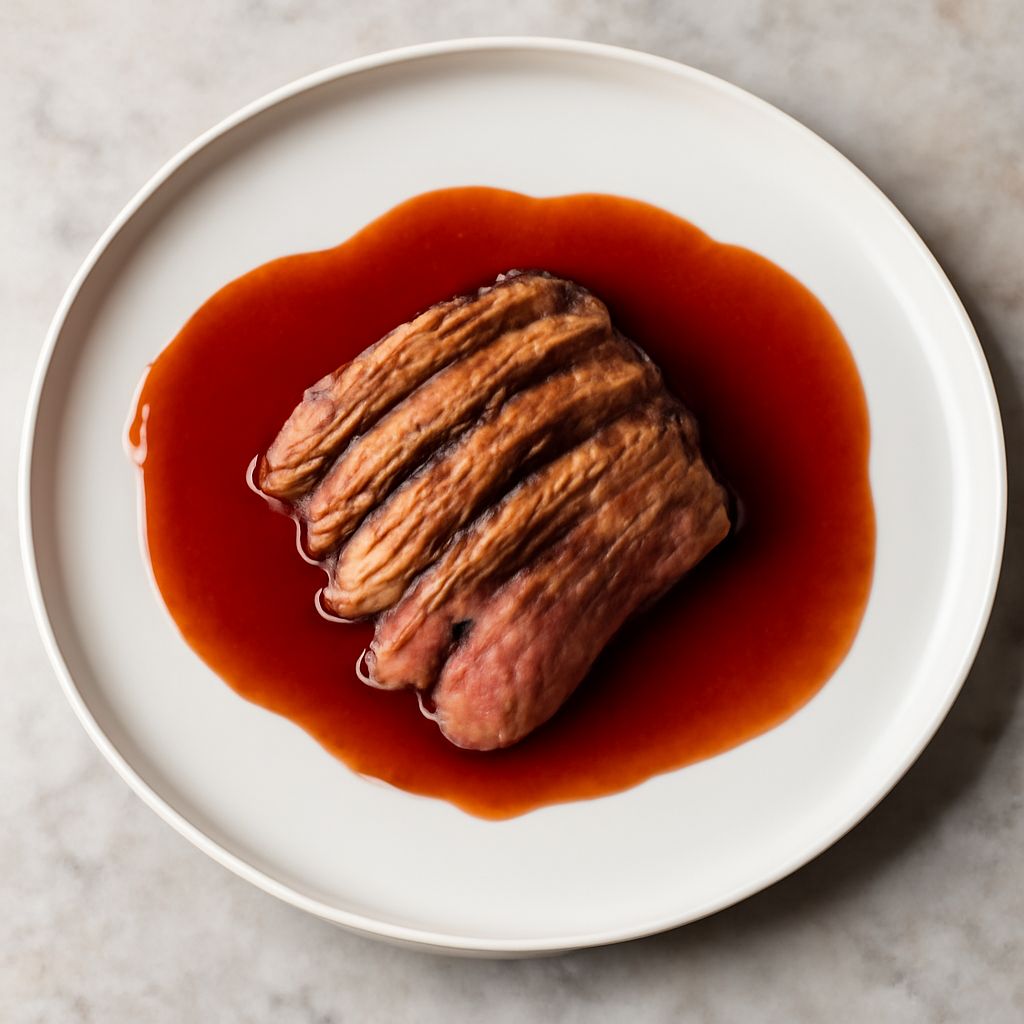
A red wine reduction made with 2 cups of dry red wine, aromatics, and 1 cup of stock yields about ¾ cup of smooth sauce. Here is how to make a red wine reduction without scorching the wine or cooking it down into a harsh syrup: reduce it gently, add stock before the flavor becomes overly concentrated, then strain and finish with cold butter.
Use the volume and texture cues below rather than time alone. Your pan size, heat level, and stock will affect how quickly the liquid evaporates.
How to make a red wine reduction: 2 cups of wine to ¾ cup of sauce
Yield: about ¾ cup, enough for four to six servings.
- 2 cups dry red wine
- 1 cup unsalted or low-sodium beef, veal, or chicken stock
- 1 medium shallot, thinly sliced
- 1 garlic clove, lightly crushed
- 2 thyme sprigs
- 1 bay leaf
- 6 black peppercorns
- 1 teaspoon neutral oil
- 2 tablespoons cold unsalted butter, cut into small pieces
- Salt, only as needed
Choose a wide 10- to 12-inch sauté pan so the wine evaporates evenly. A narrow saucepan takes longer and can make it harder to judge the volume. Keep a fine-mesh strainer nearby, and use unsalted stock if possible so you can control the final seasoning.
Choose a dry red for a Cabernet reduction: measured aromatics and wine
Cabernet Sauvignon works especially well because its dry, full-bodied character gives the sauce structure. A Cabernet reduction will taste bold and tannic, so it is a good match for steak, lamb, roast beef, and other richly flavored foods. Merlot gives a softer result, while Pinot Noir creates a lighter, more aromatic sauce.
Avoid sweet wines, heavily oaked wines, and anything you would not enjoy drinking. Sweetness becomes more pronounced as liquid evaporates, and aggressive oak or tannin can turn bitter. The wine does not need to be expensive, but it should be dry and reasonably balanced.
Heat the oil in the pan over medium heat. Add the shallot and cook for 2 to 3 minutes, stirring, until it softens without browning deeply. Add the garlic, thyme, bay leaf, peppercorns, and wine. Scrape the bottom of the pan to release any softened shallot.
Reduce the wine gently for 12–18 minutes, then add 1 cup of stock
Bring the wine to a steady simmer, not a hard boil. You should see small, regular bubbles across the surface. Cook uncovered for 12 to 18 minutes, adjusting the heat so the liquid evaporates steadily. Do not use very high heat: wine that scorches or becomes thick and syrupy before the stock is added will usually taste bitter and harsh.
Stop the first reduction when the wine has fallen from 2 cups to about ½ cup. The liquid should look darker and slightly glossy, but it should still flow freely when you tilt the pan. The aromatics may be visible through the reduced wine, and the smell should be concentrated but not sharp or burnt.
Add the 1 cup of stock and return the pan to a gentle simmer. This is the point where you begin building a finished sauce rather than simply concentrating wine. Simmer for another 12 to 15 minutes, stirring occasionally, until the combined liquid measures about ¾ cup and has a lightly syrupy texture.
Wine reduction versus finished sauce: simmer 12–15 minutes and judge consistency
Reducing wine alone produces an intense liquid with concentrated fruit, acidity, alcohol, and tannin. It can be useful as a component, but it often tastes thin in body and sharp on the palate. Adding stock supplies savory flavor, gelatin, and water, which gives the sauce a rounder texture and makes it more suitable for serving.
Judge the finished reduction by how it moves. Lift a spoon from the pan: the sauce should coat the back in a thin, even layer, and a line drawn through it with your finger should remain visible for about 1 to 2 seconds. It should fall from the spoon in a smooth ribbon rather than drip like water. After butter is added, it will thicken slightly more.
Start checking before the 12-minute mark if your pan is very wide or your burner runs hot. If the liquid still looks watery after 15 minutes, continue simmering in 1- to 2-minute intervals. If it has become dense, sticky, or jam-like, it has gone too far. Remove it from the heat immediately and correct it before adding butter.
Strain and finish with 2 tablespoons of butter; keep a red wine glaze balanced
Pour the sauce through a fine-mesh strainer into a clean pan or heatproof bowl. Press lightly on the solids to release liquid, but do not mash them through the mesh; crushed herbs, peppercorns, and overcooked shallot can make the sauce gritty or bitter.
Return the strained sauce to the pan over low heat. Whisk in the cold butter one piece at a time, adding each piece only after the previous one is nearly incorporated. This emulsifies the butter into the reduction, adding shine, richness, and a smoother mouthfeel. Taste before adding salt because stock and evaporation both increase seasoning.
For a thinner sauce, whisk in warm unsalted stock 1 tablespoon at a time. If the sauce is too thin, simmer it briefly after straining, then reassess before adding butter. To correct excessive acidity, whisk in another small piece of butter and 1 tablespoon of stock. If it still tastes sharp, add up to ⅛ teaspoon sugar, a little at a time.
A mildly bitter sauce can sometimes be balanced with 1 to 2 tablespoons of stock, a little butter, and a tiny pinch of sugar. If the bitterness comes from scorched wine or aromatics, do not scrape the pan or try to mask it; start again. For a thicker red wine glaze, reduce the strained sauce slightly further, but stop when it coats the spoon rather than becoming sticky. Serve the sauce warm over the finished meat.