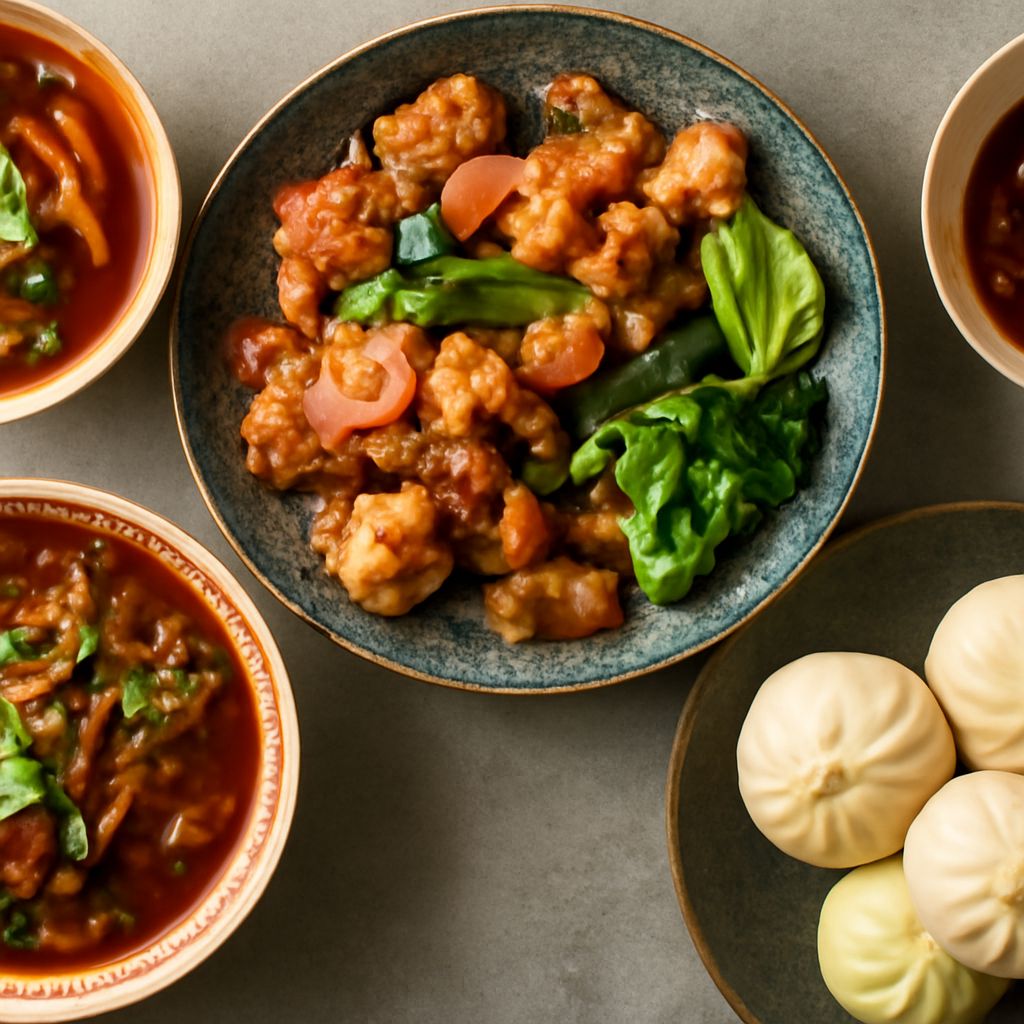
These easy Chinese food recipes let you choose by cooking time, heat level, and equipment while keeping each dish’s defining technique intact. You can make these easy traditional Chinese food recipes with a skillet, saucepan, or steamer; a wok is helpful but not essential.
Traditional Chinese food recipes vary widely by region and method. Sichuan mapo tofu brings chile and Sichuan pepper, Cantonese gai lan depends on crisp greens and a savory sauce, while Jiangsu fried rice relies on dry grains and careful timing. The eight dishes below give you practical ways to explore those differences at home.
What Makes Easy Recipes for Traditional Chinese Food Approachable?
An approachable recipe limits the number of active steps without removing the step that creates its character. Prepare every ingredient before you turn on the heat: stir-frying moves too quickly for you to chop as you cook, while braising rewards a steady simmer and patience.
You also need less specialized equipment than you might expect. A large skillet replaces a wok for most stir-fries, a covered saucepan can steam eggs, and a rice cooker can handle plain rice while you prepare the topping. Keep the heat moderate when cooking aromatics, then raise it for quick stir-fries so ingredients sear instead of releasing excess water.
Easy Chinese Food Recipes: Mapo Tofu, Gai Lan, and Tomato-and-Egg Stir-Fry
Mapo tofu, Sichuan, 25 minutes: Use 14 ounces soft tofu, 4 ounces ground pork or mushrooms, 1½ tablespoons doubanjiang, 1 cup stock, 1 teaspoon soy sauce, 1 teaspoon cornstarch mixed with 2 teaspoons water, and Sichuan pepper. Brown the pork, fry the doubanjiang until its red oil appears, add the stock and tofu, and simmer gently for five minutes. Stir in the slurry and finish with pepper. The tofu should remain tender and the sauce should cling; hard boiling will break the curds. Adjust the chile paste for medium or high heat.
Gai lan with oyster sauce, Cantonese, 10 minutes: Steam or blanch 1 pound gai lan for three to four minutes, until the stems are crisp-tender. Drain thoroughly. Warm 1 tablespoon oil with one sliced garlic clove, then add 1½ tablespoons oyster sauce, 1 tablespoon water, and a small pinch of sugar. Spoon the sauce over the greens. This brief steaming step preserves gai lan’s clean bitterness and snap. Dull color and limp stems mean you cooked it too long.
Tomato-and-egg stir-fry, northern home-style, 15 minutes: Beat 4 eggs with a pinch of salt. Cook them in 1 tablespoon oil until barely set, remove them, then stir-fry 3 chopped tomatoes and 1 sliced scallion with 1 teaspoon sugar for four to five minutes. Return the eggs and toss for one minute. The tomatoes should become juicy but retain some shape, while the eggs stay in soft curds. Keep the eggs slightly underdone before they return to the hot pan.
Smashed cucumber salad, Shandong-style, 10 minutes plus resting: Smash 2 cucumbers with the side of a knife, cut them into pieces, and toss with ½ teaspoon salt for 10 minutes. Drain, then dress with 1 tablespoon Chinkiang vinegar, 1 tablespoon soy sauce, 1 minced garlic clove, and a few drops of sesame oil. The salt-and-drain step keeps the dressing bright rather than watery. Add chile oil if you want more heat.
Steamed egg with soy, Chinese home-style, 15 minutes: Beat 3 eggs with 1½ times their volume in warm water, strain the mixture, and pour it into a heatproof bowl. Cover and steam over low heat for eight to 10 minutes, until the center jiggles like custard. Finish with soy sauce and sesame oil. A smooth surface means the steam was gentle; large bubbles indicate water that was boiling too hard.
Easy Chinese Dishes: Three-Cup Chicken, Yangzhou Fried Rice, and Scallion Oil Noodles
Three-cup chicken, Taiwanese, 35 minutes: Cut 1½ pounds boneless chicken thighs into chunks. Brown them in 1 tablespoon oil, then add 3 tablespoons each rice wine, light soy sauce, and toasted sesame oil, along with 6 garlic cloves and several slices of ginger. Cover and simmer for 15 minutes, uncover, and reduce until glossy. Add a handful of Thai basil at the end. The defining step is reducing the aromatic sauce around the chicken; a thin, watery sauce needs more uncovered cooking.
Yangzhou fried rice, Jiangsu, 20 minutes: Separate 3 cups cold cooked rice with your fingers. Scramble 2 eggs in a hot wok or skillet, remove them, then stir-fry ½ cup shrimp or diced ham, ½ cup peas, and 2 sliced scallions. Add the rice and eggs, seasoning with only 1 to 2 teaspoons light soy sauce or salt. Keep the heat high and toss until every grain is hot and separate. Fresh, wet rice turns sticky, so chill cooked rice overnight when possible.
Scallion oil noodles, Shanghai-style, 15 minutes: Boil 8 ounces wheat noodles. Meanwhile, cook ⅓ cup sliced scallions in ¼ cup neutral oil over medium-low heat for six to eight minutes, until golden but not burnt. Turn off the heat and stir in 2 tablespoons light soy sauce, 1 teaspoon dark soy sauce, and ½ teaspoon sugar. Toss with the drained noodles. The slowly fried scallions create the dish’s fragrance; blackened scallions will make the sauce bitter.
Traditional Chinese Food Recipes by Time, Heat, and Equipment
- Fastest choices: Make gai lan, smashed cucumber salad, or scallion oil noodles in about 10 to 15 minutes. Tomato-and-egg stir-fry takes about 15 minutes and needs only one skillet.
- For a longer, saucy meal: Choose mapo tofu or three-cup chicken. Mapo tofu is ready in about 25 minutes; three-cup chicken takes 35 minutes because the sauce must reduce.
- For mild heat: Start with steamed egg, gai lan, tomato and egg, or Yangzhou fried rice. Mapo tofu is the spicy option, but you can reduce the doubanjiang and Sichuan pepper.
- For high-heat cooking: Use a wok or wide skillet for fried rice, tomato and egg, and mapo tofu. Have the ingredients measured before cooking, and avoid crowding the pan.
- For low-heat cooking: Use a covered saucepan or steamer for steamed egg, and a heavy skillet or Dutch oven for three-cup chicken. A small pot is enough for noodles.
- For the least equipment: Pick tomato-and-egg stir-fry, cucumber salad, or scallion noodles. For a complete meal, serve one quick vegetable dish alongside rice or noodles.
A Starter Pantry for Homemade Chinese Food
For homemade Chinese food, begin with ingredients that cover several regional styles rather than buying every specialty at once:
- Light soy sauce: Adds salt and savory depth to eggs, noodles, fried rice, and sauces.
- Dark soy sauce: Use sparingly for color and a deeper flavor in scallion noodles or braises.
- Shaoxing rice wine: Brings aroma to three-cup chicken, marinades, and stir-fried meat.
- Oyster sauce: Gives gai lan and other vegetables a concentrated, savory finish.
- Chinkiang vinegar: Supplies mellow acidity for cucumber salad, dipping sauces, and noodles.
- Doubanjiang and Sichuan pepper: Keep these for mapo tofu and other Sichuan-style dishes; they provide fermented chile flavor and a citrusy, numbing heat.
- Toasted sesame oil, cornstarch, dried wheat noodles, garlic, ginger, and scallions: These finish sauces, thicken braises, build aroma, and make simple pantry meals taste complete.