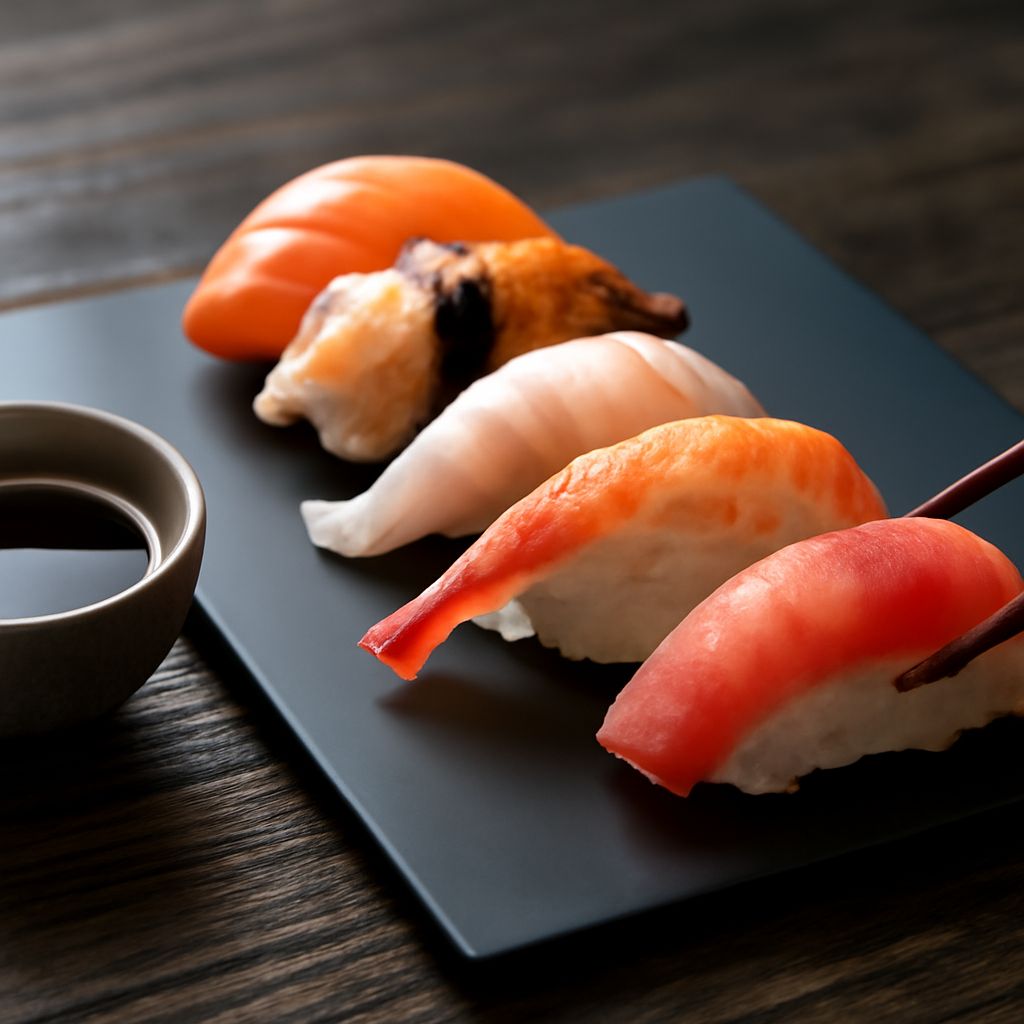
When was sushi invented? Sushi has no single invention date. It developed over centuries, beginning as a way to preserve fish in fermented rice and eventually becoming the seasoned-rice dishes you know today. The broad timeline runs from early preserved-fish methods in Southeast Asia to Japanese vinegared-rice sushi, Edo-style nigiri in the 1800s, and the many roll formats served worldwide.
If you want the short answer, sushi began as a preservation technique more than 1,000 years ago, while modern sushi took shape in Japan between the 1600s and 1800s. That distinction matters because sushi was not originally defined by raw fish or by rolls.
When was sushi invented?
No confirmed year marks the invention of sushi. The earliest ancestor was likely created in parts of Southeast Asia, where people packed salted fish in cooked rice so natural fermentation could preserve it. This method spread through China and eventually reached Japan. Japanese records describe preserved-fish sushi by the eighth century, although the practice was probably older.
Early sushi looked very different from a contemporary California roll or piece of nigiri. Fermentation could take months, and people generally ate the fish while discarding the sour rice used around it. Over time, Japanese cooks shortened the process, began eating the rice, and used vinegar to create a faster, more predictable result.
So, the most accurate answer to “when was sushi invented?” is that its history has several turning points rather than one starting date: ancient fish preservation, Japanese vinegared-rice sushi, Edo-period nigiri, and later rolled forms.
Where sushi began: preserved fish and rice
The earliest form is commonly called narezushi. To make it, people salted fish and layered it with cooked rice. The rice encouraged lactic-acid fermentation, which created an acidic environment that slowed spoilage. The finished fish could be stored for an extended period, making the method useful in warm, humid regions.
In this early system, rice functioned mainly as a preservation tool. It was not yet a side dish intended to be enjoyed with the fish. The fish developed a strong, sour flavor, and the rice was often removed before serving.
Japanese cooks gradually adapted the technique to local ingredients and preferences. Later forms, sometimes grouped under terms such as namanare, used shorter fermentation periods. This allowed diners to eat both the fish and the rice while the flavors remained fresher. That change moved sushi away from long-term storage and toward a prepared meal.
This origin also explains why sushi should not be treated as synonymous with raw fish. The earliest sushi relied on salt and fermentation, not raw-fish service. Some modern sushi uses raw seafood, but cooked seafood, vegetables, egg, and other fillings are also common.
The history of sushi in Japan: vinegared rice and changing service
A major step in the history of sushi was replacing or supplementing natural fermentation with vinegar. Vinegar gave the rice a pleasantly sour flavor and allowed cooks to prepare sushi much faster. By the Muromachi period, from the 1300s through the 1500s, Japanese styles increasingly served the rice and fish together.
As preparation became quicker, sushi shifted from a preservation method to a fresh dish. Rice was seasoned with vinegar, salt, and often sugar, then paired with fish, vegetables, or other ingredients. The exact balance varied by region and period, but the use of seasoned rice became the defining feature.
During the Edo period, from 1603 to 1868, urban food culture accelerated the change. Edo, now Tokyo, had a large population and a lively street-food trade. Cooks developed convenient servings that could be prepared and eaten quickly, using local seafood from Edo Bay. Sushi became less about waiting for fermentation and more about freshness, portability, and efficient service.
From Edo-style nigiri to modern rolls
Edo-style nigiri emerged in the early 1800s and is often associated with Hanaya Yohei, a sushi vendor active in Edo during the 1820s. He is widely credited with popularizing hand-formed rice topped with a slice of seafood. Unlike older fermented styles, nigiri could be assembled and served immediately.
Nigiri helped establish the basic format many people recognize today: a compact portion of seasoned rice with a topping placed over it. Depending on the ingredient, the topping might be raw, cooked, cured, pickled, or marinated. This is also why nigiri and sashimi are different: nigiri includes seasoned rice, while sashimi is sliced seafood served without it.
Rolled sushi, or makizushi, developed as another practical way to combine rice and fillings. A sheet of nori could enclose the ingredients, making the food easy to portion and handle. Thin rolls, thick rolls, and inside-out rolls later created more variety. In the 20th century, sushi restaurants outside Japan introduced additional combinations, including cooked fillings, avocado, cream cheese, and sauces.
Modern sushi therefore includes several lineages at once: fermented fish preparations, vinegared-rice forms, nigiri, and rolls. They share seasoned rice and a method of combining it with toppings or fillings, even when their ingredients and presentation differ.
How many pieces of sushi are in a roll?
A standard cylindrical sushi roll is usually cut into six or eight pieces. Six pieces produce larger portions, while eight pieces create smaller, more common bite-size servings. The exact count depends on the roll’s diameter, the restaurant’s knife cuts, and the portion size the chef wants.
Smaller rolls, such as thin hosomaki, may be cut into six or eight pieces. Larger futomaki and heavily filled specialty rolls may use a different count, including four, five, or ten pieces. There is no universal number, so a menu’s listed piece count is more reliable than the word “roll” alone.
A temaki, or hand roll, is the main exception. It is shaped like a cone and is normally served as one uncut piece. Nigiri is not a roll either; restaurants typically count each hand-formed rice portion separately.
Facts about sushi: seasoned rice, fish, and roll formats
- Sushi is defined by seasoned rice. Vinegared rice is the common foundation, whether the topping is raw fish, cooked seafood, egg, tofu, or vegetables.
- Raw fish is optional. Cooked shrimp, eel, crab, smoked fish, pickled vegetables, and tamago are all used in sushi.
- Narezushi was fermented. Its rice helped preserve fish and was often discarded, unlike the rice served in most sushi today.
- Nigiri became popular in Edo. Its hand-pressed rice and topping made fresh sushi fast to prepare and easy to serve.
- Most cylindrical rolls contain six or eight pieces. Larger rolls and restaurant-specific cuts can use other counts.
- Temaki is normally one piece. Its cone shape is intended to be held and eaten by hand rather than sliced into rounds.