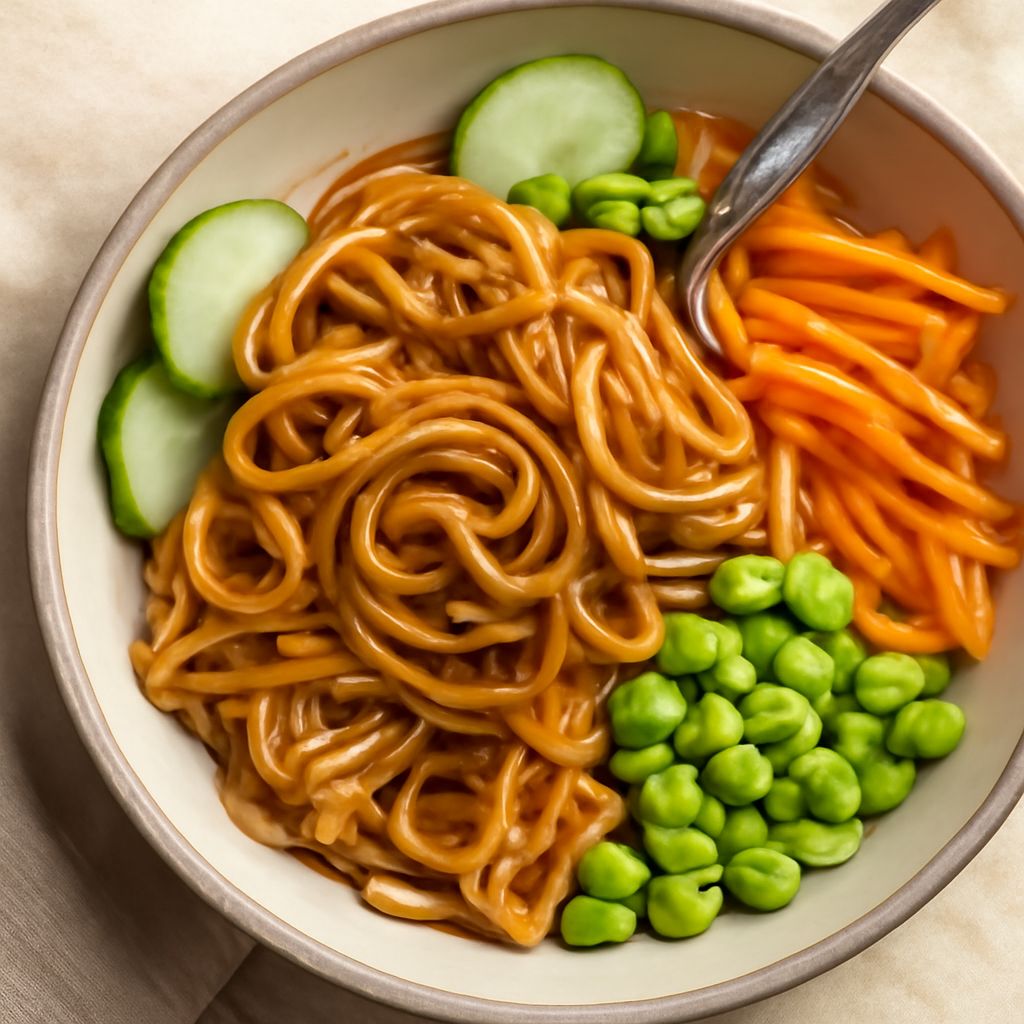
This thai peanut noodles recipe makes four servings of rice noodles coated in a smooth, balanced sauce with creamy peanut butter, soy sauce, lime, sweetness, chile, garlic, ginger, and warm water. Crisp vegetables add freshness and crunch, while chicken, tofu, or shrimp can turn the dish into a more substantial meal.
Prepare the sauce before cooking the noodles so you can dress them while they are still warm. The finished sauce should pour slowly from a spoon and cling to the noodles without becoming pasty.
Thai Peanut Noodles Recipe Ingredients for 4 Servings
For the noodles and sauce:
- 12 ounces dried rice noodles, medium-width
- 1/2 cup creamy, unsweetened peanut butter
- 3 tablespoons low-sodium soy sauce
- 2 tablespoons fresh lime juice, plus more to finish
- 2 tablespoons packed light brown sugar or maple syrup
- 1 tablespoon Thai sweet chile sauce
- 1 tablespoon finely grated fresh ginger
- 2 garlic cloves, finely grated or minced
- 1/3 cup warm water, plus up to 1/4 cup more for thinning
- 1 teaspoon toasted sesame oil
- 1/4 teaspoon crushed red pepper flakes, optional
For the vegetables and toppings:
- 1 cup thinly sliced red bell pepper
- 1 cup shredded carrots
- 1 cup thinly sliced cucumber
- 3 green onions, sliced
- 1/2 cup chopped roasted peanuts
- 1/4 cup chopped cilantro
- Lime wedges, for serving
For protein, use 12 ounces cooked chicken, baked or pan-seared tofu, or sautéed shrimp. If you use regular soy sauce instead of low-sodium soy sauce, begin with 2 tablespoons and add more only after tasting.
Mix and Balance the Peanut Sauce: Sweet, Salty, Sour, and Spicy
- Add the peanut butter, soy sauce, lime juice, brown sugar or maple syrup, chile sauce, ginger, garlic, warm water, sesame oil, and red pepper flakes to a medium bowl.
- Whisk until glossy and completely smooth, about 1 minute. Peanut butter can resist the liquid at first, so press it against the side of the bowl as you whisk.
- Taste the sauce before adding the noodles. It should taste slightly stronger than you want the finished dish to taste because the noodles will dilute it.
Balance the four main flavors in small additions. Add 1 teaspoon of lime juice for more sourness, 1 teaspoon of brown sugar or maple syrup for sweetness, or 1 teaspoon of soy sauce for salt and depth. Add more chile sauce or red pepper flakes for heat. If the sauce tastes too salty, stir in 1 to 2 tablespoons warm water, then add lime juice or a small amount of sugar to restore definition.
Adjust the texture before dressing the noodles. If the sauce is too thick to whisk or spread, add warm water 1 tablespoon at a time. If it becomes too thin, whisk in 1 tablespoon peanut butter and wait 30 seconds for it to thicken. A sauce that looks slightly loose in the bowl is usually right for hot noodles, which absorb liquid as they sit. For cold service, keep it a little thinner because chilled noodles firm up and grab sauce quickly.
Cook and Dress Peanut Thai Noodles: Hot or Cold
- Bring a large pot of water to a boil. Cook the rice noodles according to the package directions, checking them 1 minute before the suggested time. They should be flexible and tender but still have a slight chewy center.
- Drain the noodles immediately when they reach that stage. Do not let them sit in the hot water, or they will become soft and break when you toss them.
- For hot peanut thai noodles, drain well without rinsing. Add them directly to the bowl of sauce and toss for 30 to 60 seconds. The noodles will finish softening and absorb the sauce. If they clump, add 1 tablespoon warm water and toss again.
- For cold noodles, rinse them under cold running water until fully cool. Drain thoroughly, shaking the colander to remove excess water. Toss with the sauce right away; residual water can make the sauce slide off.
Start with about three-quarters of the sauce, then add more as needed. This prevents the noodles from becoming overdressed. Use tongs or two forks to lift and turn the noodles rather than stirring aggressively, which can tear softened rice noodles.
After tossing, check the coating. Properly dressed noodles look glossy, with sauce in the folds rather than a thick layer pooled at the bottom. If the noodles seem dry after 2 minutes, add the remaining sauce or a splash of warm water for hot service. If they look watery, toss for another minute; the noodles may absorb the excess. For cold noodles, drain again if water collects in the serving bowl.
Add Crisp Vegetables, Protein, and Garnishes
Add the sliced bell pepper, carrots, cucumber, and half of the green onions after the noodles are coated. Fold gently so the vegetables stay crisp. For a hot dish, add cooked protein at the same time and toss just until warmed through. For a cold version, chill the dressed noodles and vegetables for 10 to 15 minutes before topping.
Choose additions according to the texture and flavor you want:
- Chicken: Add sliced grilled or sautéed chicken for a mild, savory option.
- Tofu: Use crisp-edged baked or pan-seared tofu so it holds its texture against the sauce.
- Shrimp: Toss in quickly sautéed shrimp at the end; overcooked shrimp can become rubbery.
- Extra vegetables: Add blanched broccoli, snap peas, bean sprouts, shredded cabbage, or edamame.
Finish each serving with chopped roasted peanuts, cilantro, the remaining green onions, and a lime wedge. A little extra chile sauce adds heat at the table without changing the balance of the whole bowl. Serve immediately while hot, or refrigerate the cold noodles for up to 2 days. If leftovers tighten in the refrigerator, stir in 1 to 2 teaspoons warm water or lime juice before serving.