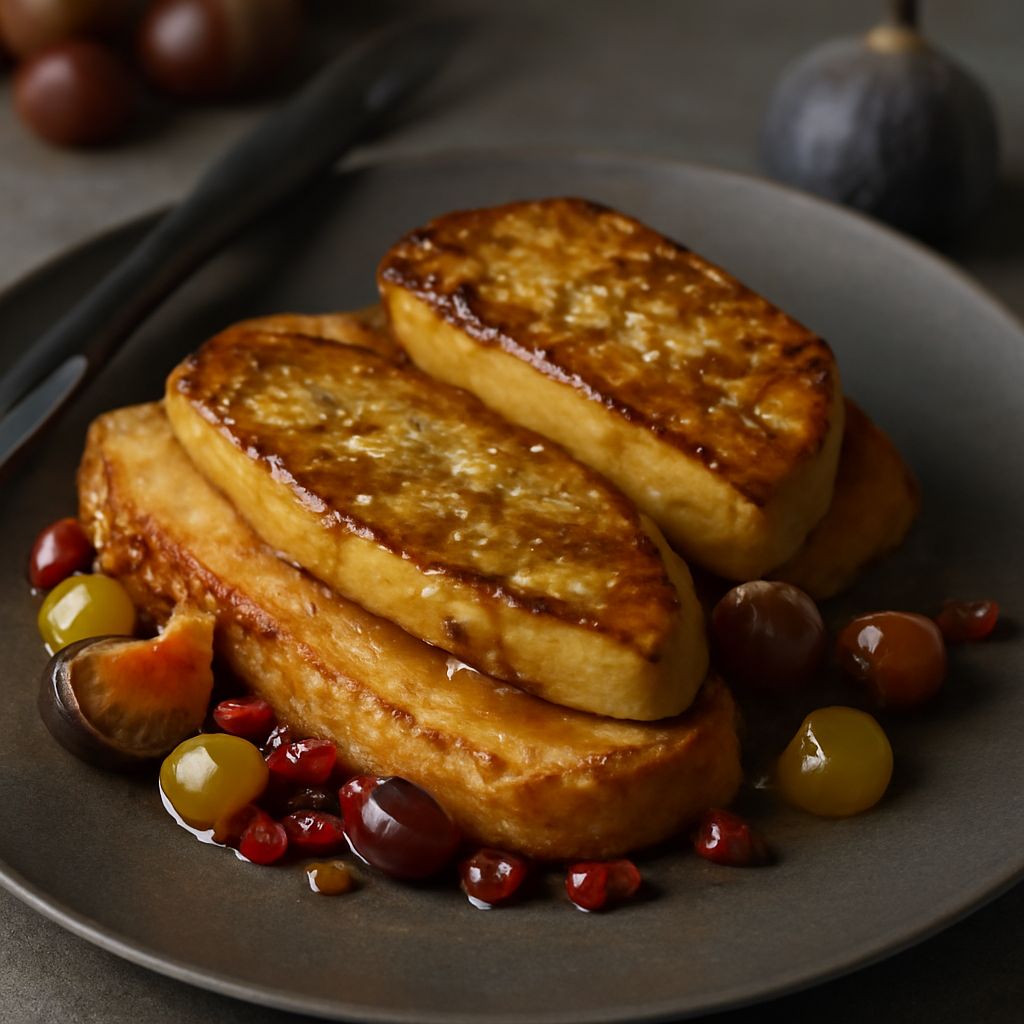
For seared foie gras, use cold, firm slices and a very hot dry pan. Cook each side for only 30 to 45 seconds, then drain the rendered fat and serve the warm, silky center with something tart or fruity to balance its richness.
If you are learning how to make foie gras, the key is controlling temperature and time. The foie gras should brown quickly while the center stays soft; prolonged cooking melts away the portion you want to eat.
Seared Foie Gras Starts with Cold, Firm ½- to ¾-Inch Slices
This method is for raw foie gras, either as a whole lobe or a prepared piece. For four appetizer portions, plan on 8 to 12 ounces total. Cut the foie gras into slices ½ to ¾ inch thick, keeping each portion about 2 to 3 ounces.
- Chill the foie gras in the refrigerator for at least 30 minutes before slicing.
- If it feels soft, place it in the freezer for 10 to 15 minutes, just until firm. Do not freeze it solid.
- Use a sharp knife warmed under hot water and dried completely between cuts.
- Pat every slice dry with paper towels. Moisture will create steam instead of a browned crust.
Keep the slices cold while you prepare the pan. Cold foie gras holds its shape during the first seconds of cooking, giving the exterior time to sear before the center begins to render.
Season and Heat a Dry Pan Until Very Hot
Choose a heavy 10- or 12-inch stainless-steel or cast-iron skillet. Do not add oil, butter, or cooking spray; foie gras releases enough fat on its own. Set the pan over medium-high heat for 2 to 3 minutes, until it is very hot. A tiny drop of water should evaporate immediately, and the pan may show a faint wisp of smoke. Heavy smoking means the pan is too hot, so lower the heat briefly.
Season both sides of the cold slices with fine salt immediately before cooking. Add a light pinch of white or black pepper if you like. Have a thin spatula, a rack or paper towel-lined plate, and a heatproof container ready before the foie gras touches the pan.
Pan-Seared Foie Gras: Brown Crust, Soft Center, 30–45 Seconds per Side
- Place the slices in the dry pan with space between them. They should sizzle at once.
- For ½-inch slices, sear the first side for 25 to 30 seconds. For ¾-inch slices, cook for 35 to 45 seconds.
- Turn each portion with a thin spatula and cook the second side for the same amount of time.
- Transfer the slices as soon as both sides are deeply golden brown and the edges look caramelized.
Start timing as soon as each slice hits the pan, and do not press down on it. The correct center feels soft and gently yielding when nudged. It should be warm and silky inside, often with a rosy color, while the crust is firm and browned. If the surface is pale after the suggested time, your pan was not hot enough; cook for another 10 seconds per side rather than extending the cooking dramatically. If the slice becomes firm, gray, or surrounded by a large pool of fat, it has gone too far and will be drier.
For especially thick portions, briefly stand each slice on its edge for 5 to 10 seconds to brown the sides, but avoid adding extra cooking time once the center begins to firm.
Drain the Rendered Fat, Rest, and Serve with Acid or Fruit
Move the cooked foie gras immediately to a rack or paper towel-lined plate, keeping the slices separate. Let them rest for 1 to 2 minutes. This short rest lets excess fat drain while residual heat finishes warming the center; a longer rest can leave the crust greasy.
Pour the hot rendered fat through a fine-mesh strainer into a heatproof container. Reserve it for roasting potatoes, frying eggs, or enriching a sauce. If you do not want to save it, let it cool and solidify, then discard it in the trash rather than pouring it down the drain.
Serve each portion with a small, bright accompaniment. Good choices include thin slices of tart apple or pear, sour cherry or fig compote, citrus segments, pomegranate seeds, or pickled shallots. A few drops of sherry vinegar, balsamic vinegar, or a lightly reduced citrus sauce can provide the same balance. Add toasted brioche or sourdough if desired, but keep the bread and sweet elements modest so they do not overwhelm the foie gras. The finished pan-seared foie gras should have a bronzed crust, a soft center, and enough acidity or fruit to cut through its richness.