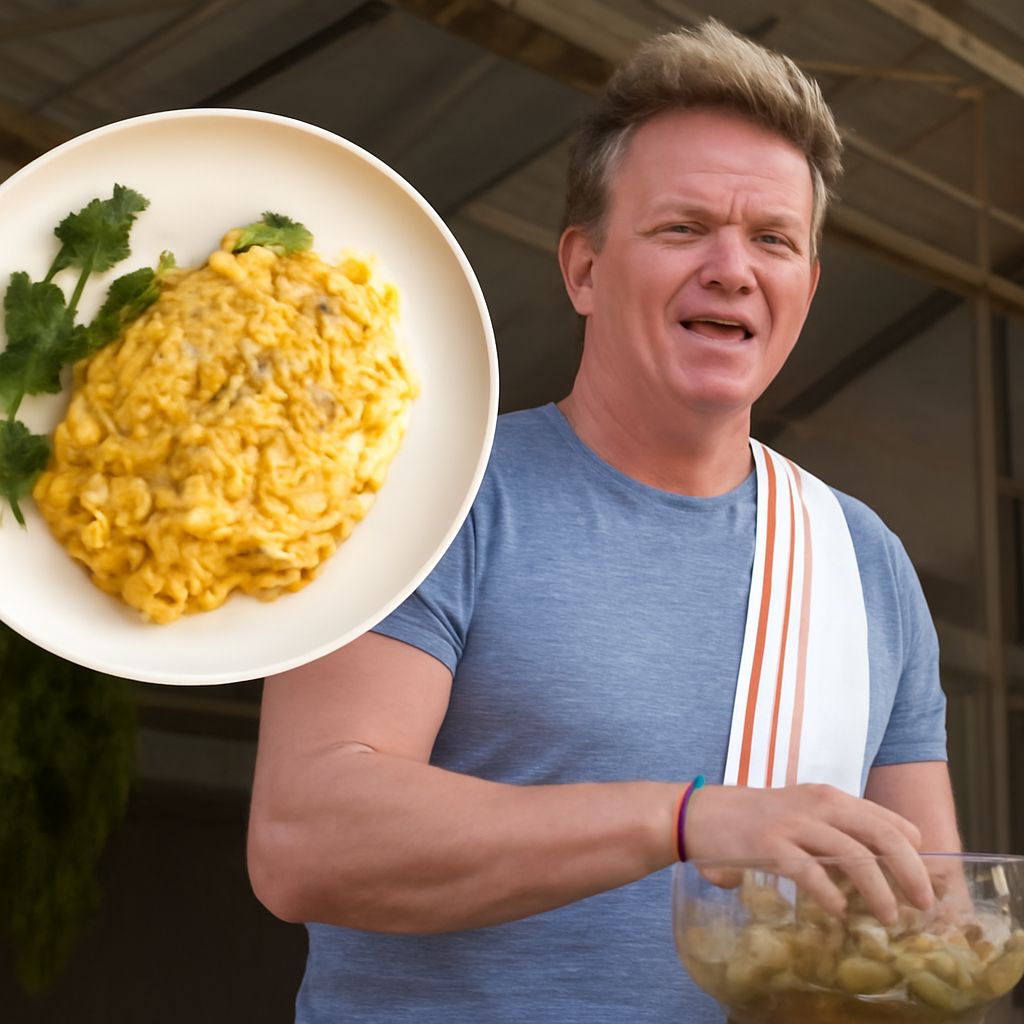
For Gordon Ramsay scrambled eggs, use six large eggs, 1 tablespoon of butter, and gentle heat for two servings. The key is to stir constantly while moving the pan on and off the burner, then stop cooking while the curds still look slightly loose. A teaspoon of crème fraîche added off the heat gives the eggs their cool, creamy finish.
This method produces small, soft curds rather than firm, dry pieces. You will need a cold nonstick skillet or small saucepan, a silicone spatula, and a serving plate ready before you start.
Gordon Ramsay Scrambled Eggs: Ingredients and Pan Setup
- 6 large eggs
- 1 tablespoon unsalted butter
- 1 teaspoon crème fraîche
- Fine salt and freshly ground black pepper
- Optional: finely sliced chives for serving
Crack the eggs directly into a cold nonstick skillet or saucepan. Add the butter before turning on the burner. Do not whisk the eggs separately; stirring them in the pan helps create the characteristic small, creamy curds.
Set the pan beside the stove, reduce the heat as soon as the eggs begin to thicken, and keep your spatula moving. Have the crème fraîche and serving plate ready because the eggs finish quickly once the curds form.
Scrambled eggs Gordon Ramsay-style: Stir constantly through low-heat bursts and off-heat pauses
- Place the cold pan with the eggs and butter over low to medium-low heat. Stir continuously with a silicone spatula, scraping across the bottom and around the edges so no part of the egg sets too quickly.
- After about 20 to 30 seconds, when the butter melts and the eggs become streaky, lift the pan off the heat. Keep stirring for 10 to 15 seconds. The residual heat will continue cooking the mixture without creating tough edges.
- Return the pan to the burner for another short burst, then remove it again. Repeat this rhythm—low heat, then off heat—while constantly stirring and folding the eggs.
Watch the curds rather than the clock. At first, the mixture will look liquid with thin ribbons. Next, small curds will gather, but the eggs should remain glossy and able to flow slowly around the pan. When your spatula leaves a brief trail on the bottom that closes gradually, take the pan off the heat.
These Ramsay scrambled eggs are ready when they look almost underdone in the pan. If they appear fully firm, matte, or crumbly before you remove them, they have cooked too far. Do not continue cooking until the eggs are dry; residual heat will set the center after you transfer them.
Gordon Ramsay’s scrambled eggs: Season late, then fold in 1 teaspoon crème fraîche off heat
Season only after the curds have formed and the pan is off the burner. Add a small pinch of salt and a few grinds of black pepper, then fold gently. Adding salt at the end helps keep the texture tender and prevents the eggs from becoming watery during the longer cooking process.
Add the crème fraîche while the eggs are still in the warm pan, but completely off the heat. Fold it through with two or three slow turns. It cools the eggs slightly, stops the cooking, and adds a smooth, lightly tangy finish. If you prefer a richer result, use a teaspoon of full-fat sour cream, but do not add enough to make the curds loose or soupy.
Serve glossy, small curds before residual heat dries them
Spoon the eggs onto warm toast or a plate immediately. The finished curds should be small, soft, and glossy, with just enough structure to hold their shape. They should not release liquid, but they should spread gently when nudged with a fork.
Scatter over chives if you like and serve at once. If the eggs tighten while standing, the pan was left on the heat too long; next time, use shorter burner bursts and remove the pan when the center still looks slightly loose.