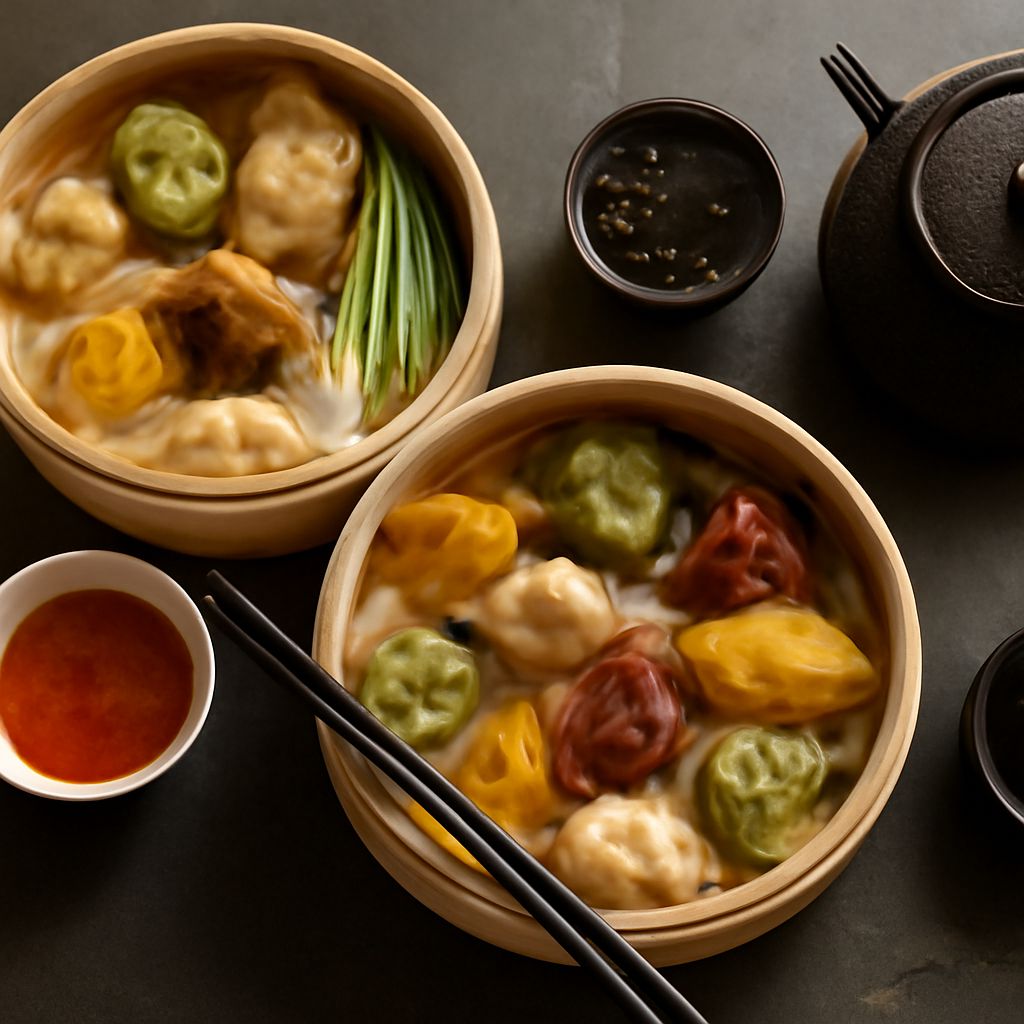
To learn how to use a bamboo steamer, place the baskets over a wok or pot filled with simmering water, keeping the water below the bamboo base. Line the baskets, leave space between pieces of food, stack the tiers with the longest-cooking items on the bottom, and cover them with the lid.
This setup works for dumplings, vegetables, buns, fish, and other foods. Start timing when steady steam surrounds the food, and keep boiling water available so you can replenish the pan without letting it run dry.
How to Use a Bamboo Steamer Over a Wok or Pot
Choose a bamboo steamer that sits securely on the rim of your wok or pot. The pan should support the basket without allowing it to drop inside. A steamer that matches the pan diameter or is slightly wider usually fits best. If you use a round-bottom wok, place a steamer ring on the wok first so the baskets remain level.
- Set the pan on the stove and add water before placing the steamer on top.
- Position the filled basket over the pan only after the water reaches a steady simmer.
- Put the bamboo lid on top, making sure it sits evenly and seals most of the steam.
The basket should sit above the water, not in it. Steam must pass through the slats and perforations to cook the food.
Fit the Pan and Set a Safe Water Level
Add about 1 to 2 inches of water, or enough to remain below the bottom of the steamer with a visible gap. Boiling water must never touch the food or the bamboo baskets. Overfilling can cause water to splash into the lower tier, while too little water can evaporate before the food finishes.
Bring the water to a boil, then reduce the heat slightly to maintain vigorous, steady steam. Check the pan during longer cooking. If the water level drops, carefully remove the steamer, add more boiling water, and return the baskets to the pan. Avoid pouring water through the basket, and use boiling rather than cold water to reduce cooking interruptions.
Line and Load the Baskets for Even Steam Flow
Line each basket before adding food. Use perforated parchment rounds, parchment with several holes cut into it, reusable steamer liners, cheesecloth, or clean cabbage or lettuce leaves. Grease parchment lightly if you are steaming buns or sticky dumplings. Leave some of the basket’s holes uncovered so steam can circulate.
Arrange food in a single layer whenever possible. Leave about 1 inch between dumplings or buns and keep pieces from touching the basket wall. Food expands as it cooks, and crowded pieces can stick together or block steam. For vegetables, cut pieces to a similar size. For fish, use a perforated liner or a bed of leaves and leave space around the fillet.
If you use several baskets, place foods that need the most time or strongest heat in the bottom tier. Put delicate, quick-cooking foods in the upper tiers. Keep foods with strong flavors separate when possible, especially fish and sweet buns.
Stack Tiers, Steam, Rotate, and Replenish Water
Load the bottom basket first, then add the remaining baskets and finish with the lid. Steam begins cooking once the lid is in place and the pan produces steady steam. Start your timer at that point, not when you first turn on the stove.
- Vegetables usually take 5 to 10 minutes.
- Dumplings take about 8 to 15 minutes, depending on size and whether they are frozen.
- Buns commonly take 12 to 18 minutes.
- Fish fillets often take 8 to 15 minutes, depending on thickness.
Keep the lid closed as much as possible. Each lift releases heat and lengthens the cooking time. If the lower tier cooks noticeably faster, rotate the basket 180 degrees or swap compatible tiers halfway through cooking. Do this quickly, then replace the lid.
Check the water after about 10 minutes and more often during long steaming. If the pan is nearly dry, remove the hot stack carefully with heatproof gloves, add boiling water, and set the steamer back in place. Never allow the pan to boil dry.
Test Doneness for Dumplings, Vegetables, Buns, and Fish
Test the thickest or largest piece rather than relying only on the timer.
- Dumplings: The wrapper should look cooked and slightly translucent, with no raw, floury center. Cut one open, and use a thermometer for meat-filled dumplings; ground pork or beef should reach 160°F, while poultry fillings should reach 165°F.
- Vegetables: A fork should enter with slight resistance. Remove them promptly if you want firm texture, since residual heat continues cooking them.
- Buns: The surface should spring back when pressed lightly, and the center should not look wet or gummy. Check the underside if the buns sit on a solid liner.
- Fish: The thickest part should be opaque and flake easily. Fish is done at 145°F in the center.
When the food is done, turn off the heat and lift the lid away from you so escaping steam does not burn your hands. Remove the food from the liner or basket soon after cooking to prevent condensation from making the bottoms soggy.