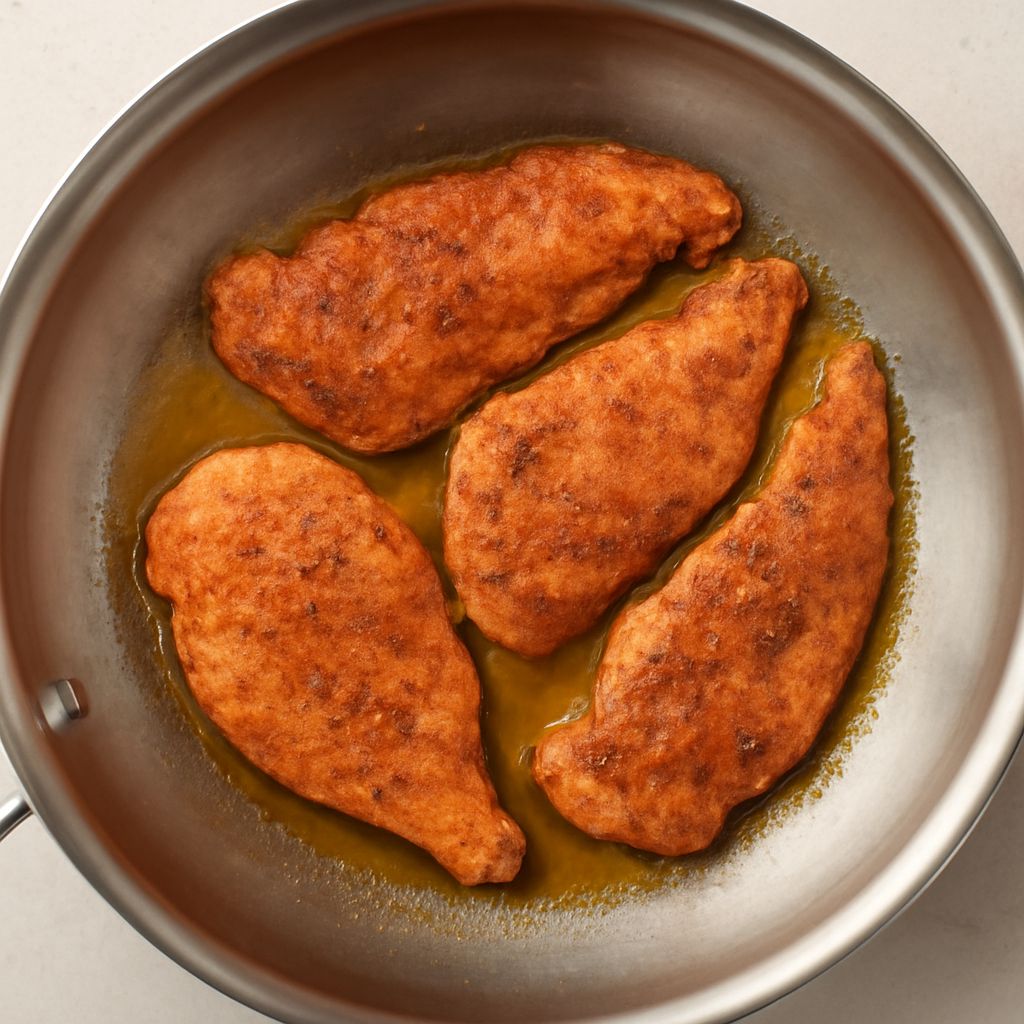
To learn how to saute chicken breast with a golden exterior and moist center, first make the meat an even thickness. Dry it thoroughly, season it, and cook it in a lightly oiled skillet over moderate-high heat. For a breast about 1/2 to 3/4 inch thick, allow roughly 3 to 5 minutes per side, then verify that the center reaches 165°F and rest the chicken for 5 minutes.
This method works best with boneless, skinless chicken breasts. Use one large breast or two small breasts, but leave space between pieces so the pan browns the chicken instead of steaming it.
How to Saute Chicken Breast Evenly
Chicken breasts usually taper from a thin end to a thick center, so the meat will not cook evenly unless you adjust its shape first.
- Pound it: Place the breast between sheets of plastic wrap or in a sturdy food-safe bag. Pound the thickest section with a meat mallet until the piece is about 1/2 to 3/4 inch thick throughout.
- Slice it: For a very thick breast, cut it horizontally into two thinner cutlets. Keep your knife parallel to the cutting board and use long, controlled strokes.
- Trim it: Remove loose fat, connective tissue, or a thin flap that could burn before the thicker portion cooks.
Season both sides with about 1/2 teaspoon kosher salt and a few grinds of black pepper per pound of chicken. You can add paprika, garlic powder, or dried herbs, but avoid a heavy coating of wet marinade because excess moisture interferes with browning.
Dry the Surface and Prepare the Pan
Pat the chicken completely dry with paper towels immediately before cooking. A dry surface makes direct contact with the hot pan, allowing the proteins to brown. Wet chicken releases steam, which leaves the exterior pale and can lower the pan temperature.
Choose a heavy 10- or 12-inch skillet, such as cast iron, stainless steel, or a sturdy nonstick pan. Add 1 tablespoon of a neutral oil, such as avocado, canola, or vegetable oil. Heat the empty pan over moderate-high heat for about 2 minutes, then add the oil. The oil should look fluid and shimmer when the pan is ready; it should not smoke heavily.
Place the chicken in a single layer with at least an inch of space between pieces. If the pan is too small, cook in batches and add a little more oil between batches if needed. Crowding traps moisture and causes steaming instead of browning.
How to Saute Chicken and Turn It Once
Lay each piece into the pan away from you to reduce splatter. You should hear an immediate, steady sizzle. If the sound is faint, the pan needs more heat; if the oil smokes aggressively or the seasoning darkens within seconds, lower the heat slightly.
Leave the chicken in place for 3 to 5 minutes without sliding or repeatedly checking it. Limited movement gives the underside time to form a browned crust. When the first side is ready, it should release fairly easily from the pan and show a deep golden color. If it sticks firmly, give it another 30 seconds rather than forcing it.
Turn the chicken once with tongs and cook the second side for another 3 to 5 minutes. The exact timing depends on thickness: a thin cutlet may need only 2 to 3 minutes per side, while a piece close to 3/4 inch may need 4 to 6 minutes per side. If the exterior is browning too quickly before the center is done, reduce the heat to medium after turning. Do not press down on the meat, because that pushes out juices without making it cook faster.
Sauteing Chicken: Check Doneness and Rest
Timing and color are useful cues, but an instant-read thermometer is the reliable doneness check. Insert it sideways into the thickest part of the breast so the tip reaches the center, not the pan. The chicken is done when the center reads 165°F. If you have several pieces, check the thickest one first and verify any piece that looks substantially larger.
Move the cooked chicken to a plate and let it rest for 5 minutes. Leave it uncovered or cover it loosely; a tight covering can soften the browned surface. Resting allows the juices to settle so they stay in the meat when you slice it. Cut across the grain and serve while warm.