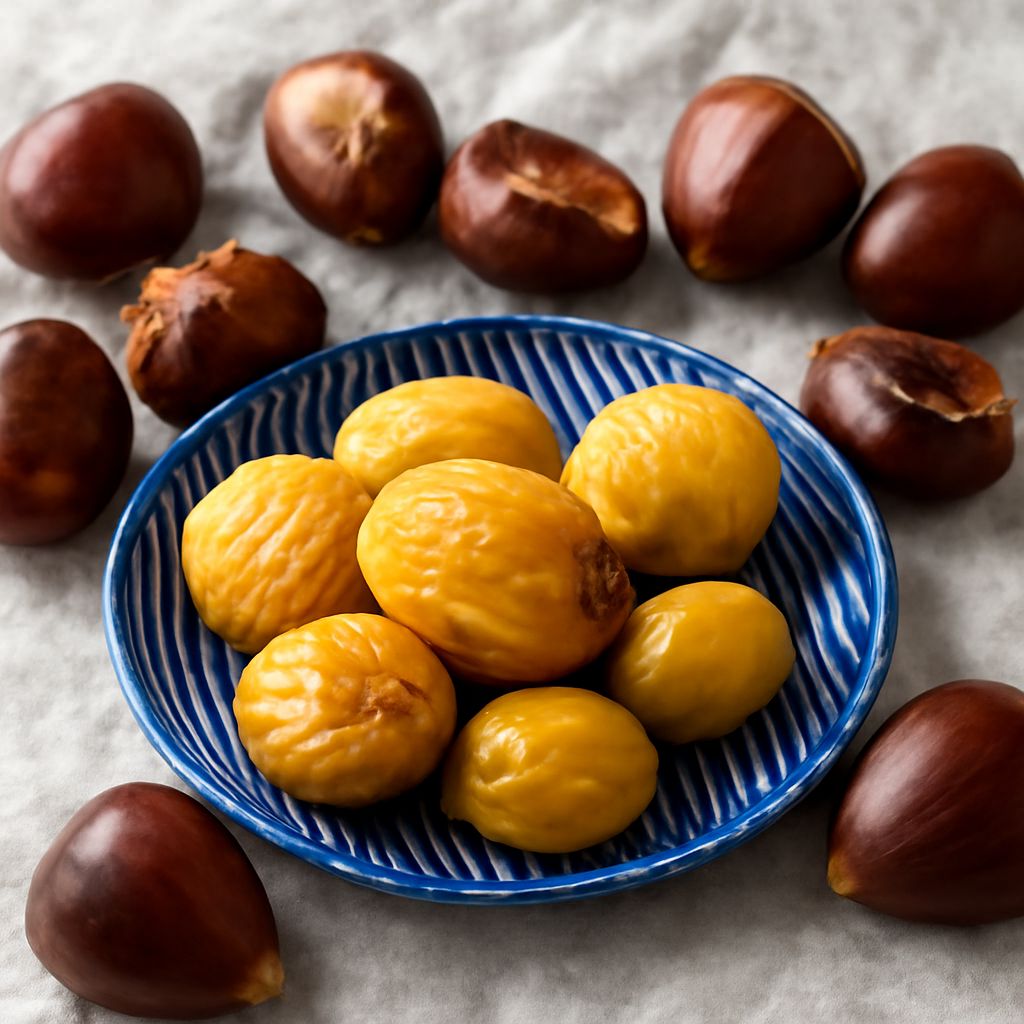
Chestnuts roasting works best in a hot oven: score every chestnut first, roast it at 425°F for 20–25 minutes, then towel-steam and peel the nuts while they are still warm. The high heat opens the shells and helps loosen the papery inner skin.
For about 1 pound of chestnuts, you need a serrated knife, a rimmed baking sheet, and a clean kitchen towel. Choose firm chestnuts that feel heavy for their size, then rinse and dry them before scoring.
Chestnuts Roasting: Score the Rounded Side Through Shell and Inner Skin
Place each chestnut flat side down on a sturdy cutting board, leaving the rounded side facing up. Hold it securely with your fingertips away from the blade. Using a serrated knife or chestnut knife, cut an X across the center of the rounded side.
Make each cut about ½ inch long and roughly ⅛ inch deep—deep enough to pass completely through the hard shell and the thin inner skin, but not to slice deeply into the nut. If the chestnut rolls, steady it with a folded towel or score it inside a chestnut-cutting tool.
Score every chestnut before roasting. An unscored chestnut can trap steam and split unpredictably in the oven.
How to Roast Chestnuts at 425°F for 20–25 Minutes
- Heat your oven to 425°F.
- Arrange the scored chestnuts in a single layer on a rimmed baking sheet, with the X facing up. Leave a little space between them so hot air can circulate.
- Roast for 20–25 minutes, rotating the pan after about 12 minutes for even cooking.
You do not need to add oil or water. The shells will release enough moisture to create steam inside each nut while the dry heat browns the exposed edges.
Look for Split Shells and Tender Centers
Start checking at 20 minutes. The scored shells should curl back or split open at the X, and the exposed chestnut flesh should look golden or creamy yellow. The centers should feel soft when pierced with a fork or the tip of a knife.
If a chestnut still has a tightly closed score or a firm, chalky center, roast the batch for another 3–5 minutes and check again. If the shells are blackened and the centers are dry, they have roasted too long. Chestnuts can vary in size, so use the split shell and tender center as your final doneness cues rather than relying on the clock alone.
Chestnut Roasting: Towel-Steam and Peel While Warm
Transfer the hot chestnuts directly from the baking sheet to a clean, dry kitchen towel. Fold the towel over them and wrap them snugly for 5–10 minutes. This towel steaming softens the shell and loosens the inner skin, making peeling easier.
Work with a few chestnuts at a time while keeping the rest covered. When each nut is warm enough to handle, pinch the shell at the split X and pull away both the thick outer shell and the papery inner skin. Peel around the entire nut, using a small paring knife to lift stubborn pieces. Remove all of the inner skin because it can taste bitter and cling tightly as the nut cools.
If the shells become difficult to remove, rewrap the chestnuts for a few minutes or return them to the warm oven briefly. Peel them before they cool completely; cold chestnuts are much harder to clean.
Serve Warm Roasted Chestnuts
Serve the peeled chestnuts warm with butter and flaky salt, or eat them plain for a naturally sweet, tender snack. You can also toss them with rosemary, add them to stuffing, or fold chopped roasted chestnuts into soups and grain dishes.