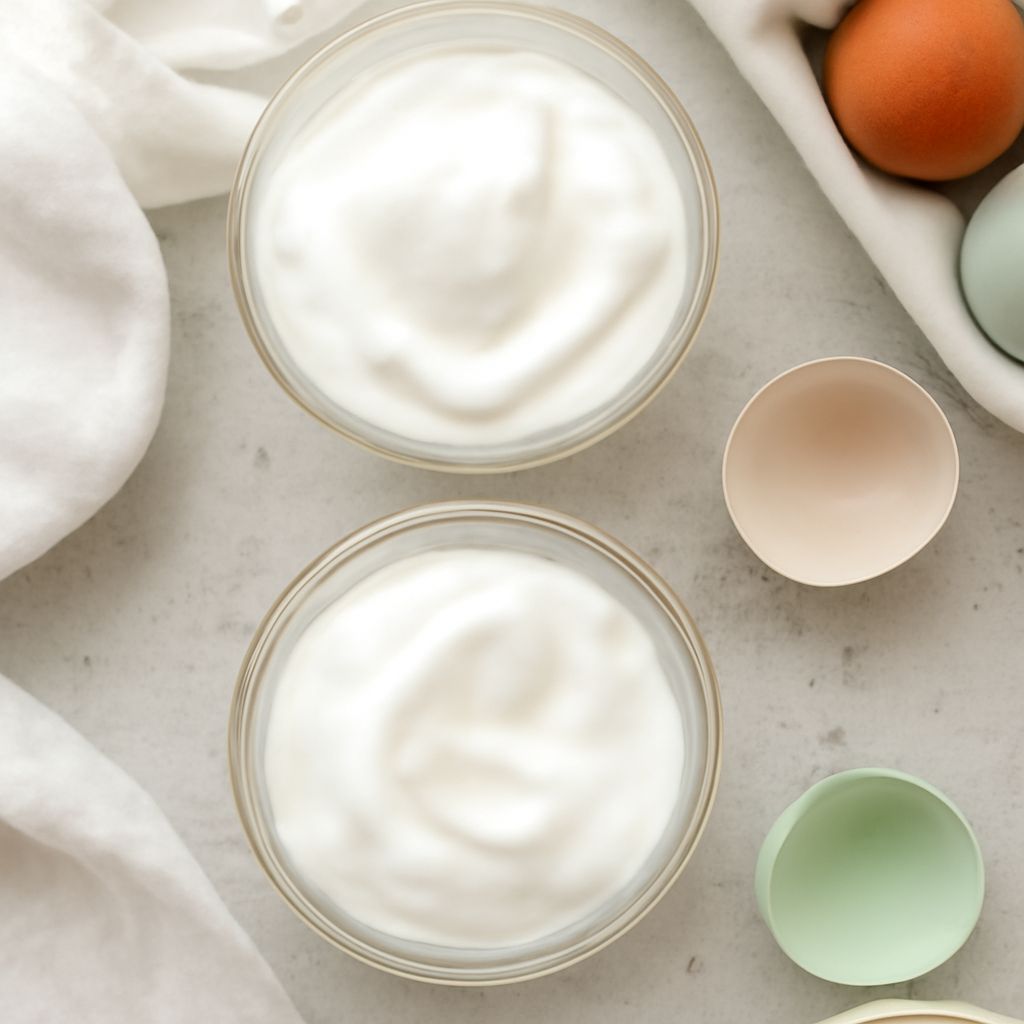
Soft peaks are the first stage where whipped cream or beaten egg whites hold a visible shape. Lift the whisk, and the peak should form briefly before its tip bends or droops. A soft peak is not interchangeable with a stiff peak: the difference is how firmly the mixture holds its shape, both on the whisk and in the bowl.
Use soft peaks when a recipe calls for a light, foldable mixture. For toppings and fillings, recipes usually need medium or stiff peaks, depending on how much structure the finished dish requires.
What soft peaks look like on the whisk and in the bowl
When you lift the whisk from soft-whipped cream, the mixture forms a peak with a rounded tip that curls downward. The cream looks smooth and slightly glossy. Whisk marks remain visible for a moment, but the ridges soften and the cream slowly relaxes back into the bowl.
Beaten egg whites at the soft-peak stage also form a drooping tip, but they usually look lighter and more foamy than cream. The whites should appear glossy rather than watery. In the bowl, the foam mounds briefly when you move the whisk, then slumps; surface trails fade quickly.
Stop here when you need to fold whipped cream or egg whites into another mixture without losing too much air. Soft peaks are also useful when a recipe tells you to whip only until the mixture is barely structured.
How medium peaks change on the whisk and in the bowl
Medium peaks sit between soft and stiff peaks. Lift the whisk, and the peak stands for a moment before the tip bends slightly. It does not collapse as quickly as a soft peak, but it is not sharply upright.
In whipped cream, medium peaks create distinct whisk tracks and a mound that holds its shape while remaining smooth and spreadable. The cream may slump slightly at the edges, but it does not immediately level out. In egg whites, the foam looks glossy and more stable; the ridges stay visible, and a lifted peak curls only gently.
Choose medium peaks for cream that you plan to spoon over dessert or spread between cake layers when you want structure without a dense texture. They can also be the right stopping point before folding egg whites into a batter that needs a little more support.
What do stiff peaks look like?
What do stiff peaks look like? Lift the whisk straight up: the peak should stand upright with a pointed or clearly defined tip. It should not droop or curl. The mixture on the whisk holds its shape, and the bowl shows sharp, lasting ridges.
Stiff whipped cream looks thick, smooth, and stable. A whisk dragged through the bowl leaves a clean path that stays open. Stiff egg whites look glossy and form peaks that remain upright when you lift the whisk. The foam should still look cohesive, not dry or clumpy.
Use stiff peaks for meringue, piping, or recipes that depend on egg whites for maximum structure. For whipped cream, stiff peaks work when you need a topping or filling to hold a defined shape, but they can become overwhipped quickly.
Whipped cream vs. egg whites: when to stop before overwhipping
Watch the texture as closely as the peak. Whipped cream changes from smooth to grainy when you continue past stiff peaks. It may look lumpy, lose its sheen, and begin separating into solid butterfat and thin liquid. Stop as soon as the cream holds the shape your recipe needs. If it is only slightly grainy, gently fold in a little unwhipped cream; badly separated cream cannot return to a smooth whipped texture.
Egg whites usually become dry, dull, and clumpy when overbeaten. Instead of forming a smooth, glossy peak, they may look cottony, break apart on the whisk, or release liquid in the bowl. Overbeaten whites are harder to fold and may produce a less even baked structure.
- Soft peaks: the tip droops, bowl ridges fade, and the mixture remains easy to fold.
- Medium peaks: the tip bends slightly, bowl ridges last, and the mixture holds a soft mound.
- Stiff peaks: the tip stands upright, bowl ridges stay sharp, and the mixture keeps its shape.
Check the whisk and the bowl together before stopping. If the peak and the surrounding mixture show different stages, use the less-developed cue as your guide and continue only briefly.