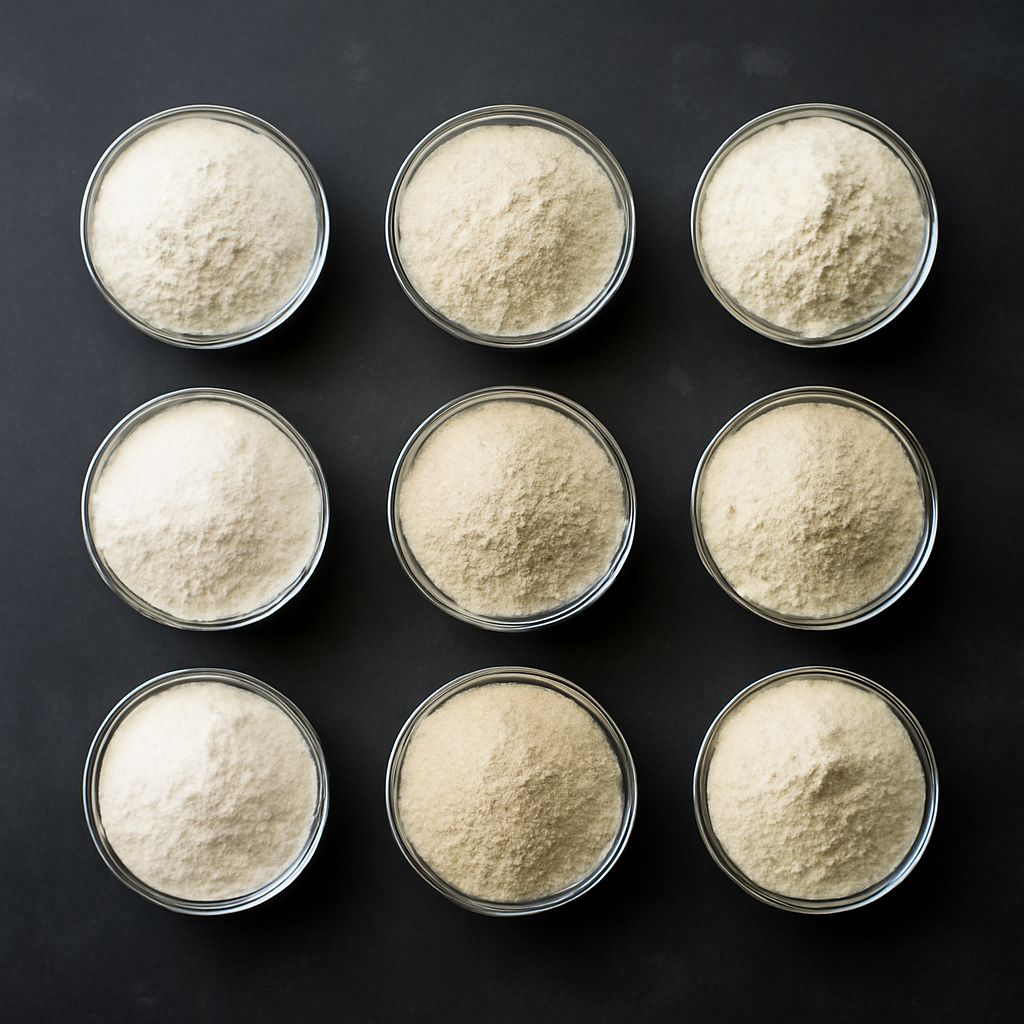
Flour types differ mainly in protein content, milling, and gluten potential. Those differences determine whether your bake turns out chewy and structured or soft and tender. For most recipes, choose all-purpose flour as the middle-ground option, then switch to a specialized flour when you need a specific texture.
This guide to different types of flour and their uses starts with wheat flours, then covers whole-grain and non-wheat options. Because protein and starch behave differently across grains, you should not treat every flour as a one-to-one substitute for all-purpose flour.
Flour types by protein: structure, tenderness, and gluten potential
When wheat flour meets water, two proteins form gluten. Kneading or mixing develops that gluten into an elastic network that traps gas and gives dough structure. Higher-protein flour generally produces more chew and strength; lower-protein flour produces a finer, more tender crumb.
- Low protein, about 6% to 9%: Soft wheat flours make delicate cakes, biscuits, and pastries. They develop less gluten, so the result stays tender.
- Medium protein, about 10% to 12%: All-purpose flour balances structure and tenderness for cookies, muffins, quick breads, pancakes, and many yeast recipes.
- High protein, about 12% to 14%: Bread flour supports elastic dough, strong fermentation, and chewy loaves, bagels, and pizza crusts.
Milling also matters. Refined white flour removes most of the bran and germ, leaving a softer, more predictable ingredient. Whole-grain flour retains those parts, which adds flavor, fiber, and minerals but can make dough heavier. Bran can also interrupt gluten development, even when the flour’s labeled protein content is relatively high.
Different kinds of flour: all-purpose, bread, cake, pastry, and self-rising
All-purpose flour is usually milled from a blend of hard and soft wheat. Its moderate protein level makes it the best general choice for cookies, brownies, cakes, pie crusts, pancakes, and everyday bread. It gives cakes more structure than cake flour and pastries more strength than pastry flour.
Bread flour is milled from harder wheat and contains more protein than all-purpose flour. Use it for sandwich bread, lean hearth loaves, pizza, focaccia, and bagels, where you want dough that stretches without tearing and a pleasantly chewy bite. Substituting it into a cake can make the crumb firm or tough.
Cake flour is finely milled, bleached soft-wheat flour with very low protein. It produces a light, delicate crumb in layer cakes, cupcakes, sponge cakes, and other recipes where tenderness matters most. It absorbs liquid differently from all-purpose flour, so use a tested conversion rather than swapping by intuition.
Pastry flour falls between cake flour and all-purpose flour in protein. It gives pie crusts, tart shells, biscuits, scones, and muffins enough strength to hold their shape while keeping the texture tender and flaky.
Self-rising flour combines finely milled wheat flour with baking powder and salt. It works well in quick biscuits, simple cakes, and some pancakes, but it is not interchangeable with plain flour unless you also adjust the recipe’s leavening and salt.
Whole-grain and specialty wheat flours: whole-wheat and semolina
Whole-wheat flour includes the bran, germ, and endosperm. It has a nuttier flavor and more fiber than refined flour and works well in sandwich bread, rolls, muffins, pancakes, and hearty cookies. Its bran absorbs water and can weigh down dough, so recipes often need additional hydration, longer resting, or a blend with bread or all-purpose flour.
White whole-wheat flour comes from a lighter-colored wheat variety but remains whole grain. It offers a milder flavor while still producing a denser, more substantial result than refined flour.
Semolina is a coarse, golden flour made from durum wheat. Its firm gluten and granular texture make it especially useful for pasta, couscous, and some rustic breads. Fine semolina or durum flour can also add color and a slightly nutty flavor to pizza dough, but it usually works best blended with bread or all-purpose flour rather than used as a complete replacement.
Non-wheat flours: gluten-free options, blends, binders, and substitution limits
Non-wheat flours do not behave like wheat flour because they lack gluten. Almond flour adds moisture, fat, and a tender crumb to cookies, cakes, and quick breads. Oat flour brings mild sweetness and softness to muffins and pancakes. Rice flour gives gluten-free blends a clean flavor and light texture, while buckwheat flour contributes an earthy taste to pancakes, crepes, and rustic breads. Cornmeal and corn flour work well in cornbread, tortillas, and coatings, depending on their grind.
For yeast bread and many cakes, use a formulated gluten-free blend instead of replacing wheat flour with one non-wheat flour. Blends often combine rice, tapioca, potato, sorghum, or other starches to balance structure, moisture, and tenderness. Xanthan gum, guar gum, psyllium husk, eggs, or ground flax can provide binding and elasticity that gluten would normally supply.
Because each flour absorbs water differently, gluten-free recipes may require changes to liquid, mixing, resting, and baking time. Almond flour cannot replace bread flour for a chewy loaf, and rice flour alone will not reproduce wheat’s stretch. Choose a blend designed for the specific application—bread, cake, pastry, or thickening—rather than assuming all gluten-free flours are interchangeable.