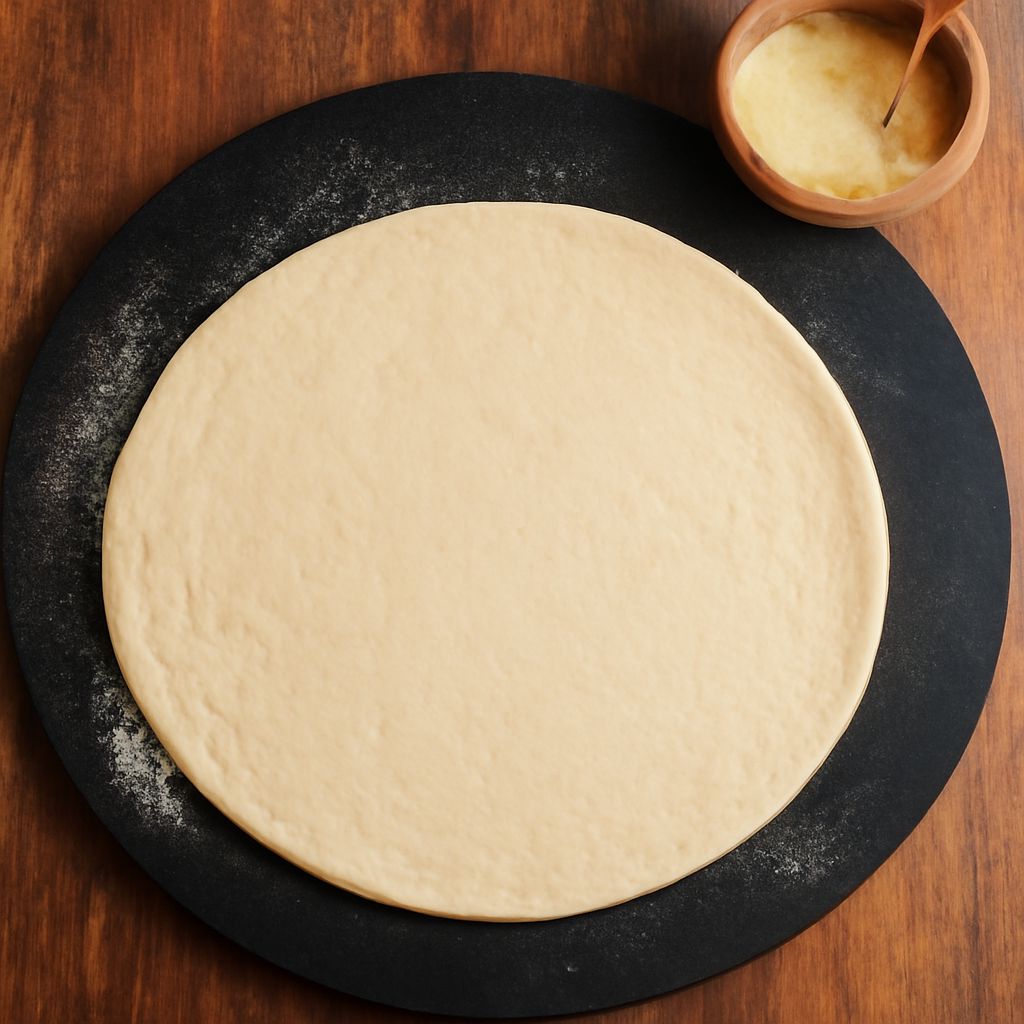
If you’re deciding how long to let pizza dough rise, plan on 1–3 hours for a warm same-day dough and 12–72 hours for a cold-fermented dough. At ordinary room temperature, many doughs need 2–6 hours for the bulk rise, followed by 30–120 minutes as dough balls. Use volume, bubbles, stretch, and feel rather than the clock or doubling alone.
Rise time changes with dough temperature, room temperature, and yeast quantity. More yeast and warmer conditions speed fermentation; less yeast and colder conditions slow it down.
How Long to Let Pizza Dough Rise: Warm Same-Day Timing (1–3 Hours)
For a warm same-day schedule, keep the dough around 78–82°F. Let it rise in bulk for about 60–120 minutes, then divide and shape it into balls. Give the balls another 30–60 minutes before stretching and topping them. That puts the total rise time at roughly 1–3 hours.
This schedule works best when the dough begins near room temperature and contains enough yeast for a quick fermentation. If your kitchen is cool, the water and dough are cold, or you reduce the yeast, the same dough may need several additional hours.
How Long Should Pizza Dough Rise? Room-Temperature Timing
At a moderate 68–75°F room temperature, expect about 2–6 hours for the bulk rise. After dividing, allow 1–3 hours for the dough balls to relax and expand. A lower-yeast formula may take the longer end of that range, while a higher-yeast formula can be ready sooner.
Bulk rise and the final dough-ball rest serve different purposes. During the bulk rise, the entire mass ferments and develops strength. After you divide and round it, the final rest makes each ball more extensible, so it stretches without snapping back. You can shorten the final rest if the dough already feels soft and relaxed, but a tight dough needs more time.
Do not treat a doubled volume as a mandatory endpoint. Some pizza formulas are ready when they increase by only 50%, especially when they use strong flour, low yeast, or a long fermentation. The dough’s condition matters more than an exact percentage.
How Long Does It Take for Pizza Dough to Rise? Cold Fermentation (12–72 Hours)
Cold fermentation usually takes 12–72 hours in a refrigerator set around 37–40°F. A 24–48-hour schedule is a practical middle ground: it gives the dough time to develop flavor while remaining easy to handle.
You can refrigerate the dough as one mass, then divide it after 12–24 hours, or divide it into balls after a short initial rest and refrigerate them for 24–72 hours. In either case, let the dough warm for about 1–3 hours before shaping. Cold dough is firmer and may appear barely risen until it warms.
Use less yeast for a longer cold fermentation. A dough designed for a 48-hour refrigerator rise may overproof if left warm for several hours, while a same-day dough may ferment too slowly in the refrigerator. Follow the formula’s yeast amount when possible, and adjust the schedule rather than adding yeast midway.
Signs Pizza Dough Is Ready: Bulk Rise, Dough-Ball Rest, and Feel
During the bulk rise, check for these signs before dividing:
- Volume: The dough looks noticeably fuller, often 30–100% larger, with a smoother or slightly domed surface. It does not have to double.
- Bubbles: Look for bubbles along the sides or underneath the dough, and small air pockets across the surface.
- Strength: The dough feels aerated but still holds its shape when you move the bowl.
After dividing, check the dough balls before stretching:
- Extensibility: A ready ball stretches outward without immediately shrinking back or tearing.
- Feel: It feels soft, puffy, and lighter than when first shaped. A gentle fingertip press leaves an indentation that slowly returns.
- Surface: The ball has relaxed and may show a few bubbles beneath its skin.
If the dough snaps back tightly, feels dense, or tears easily, give it more time. If it has collapsed, feels unusually slack and sticky, or shows large bubbles with little strength, it may be over-fermented; shape it gently and bake it promptly.