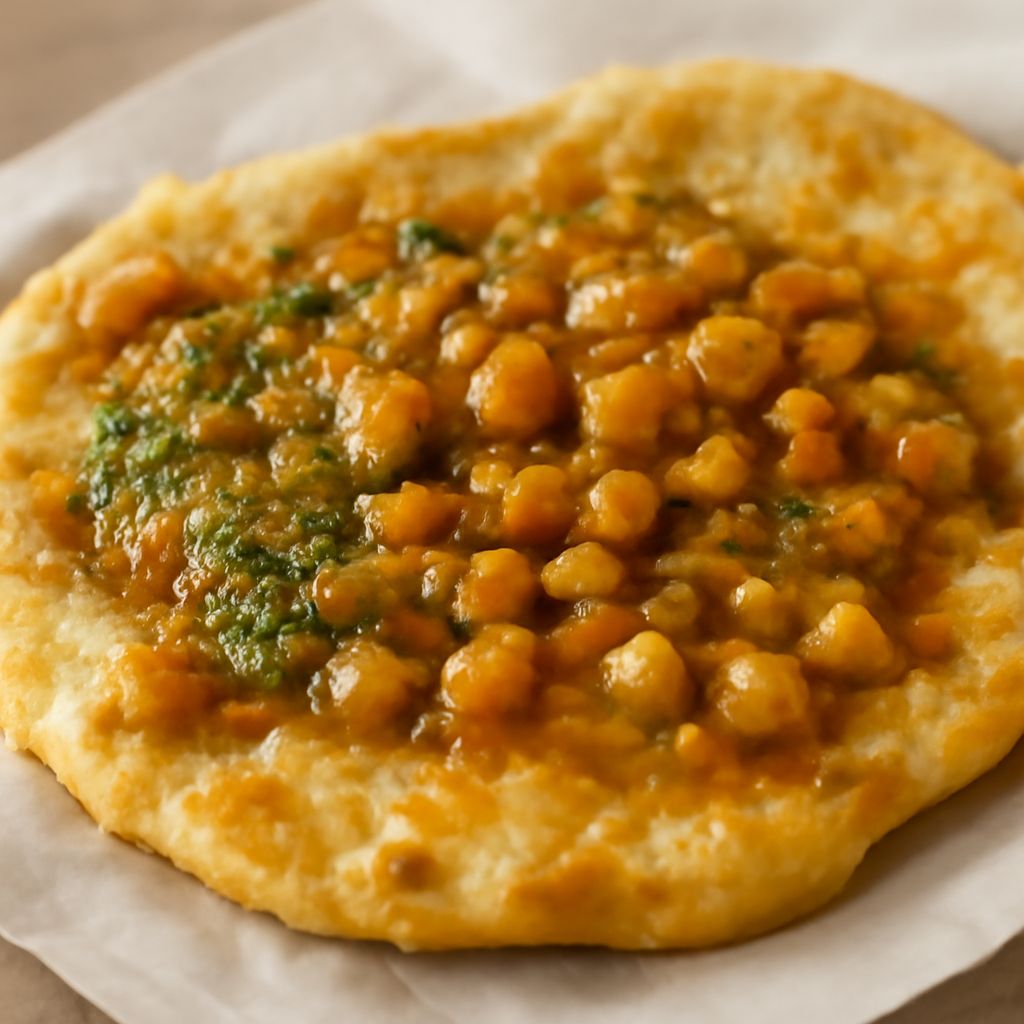
Trinidadian food brings together Indian, African, Creole, Chinese, Syrian-Lebanese, and Indigenous traditions in dishes built for sharing, snacking, and celebration. You will find bold curry, peppery sauces, coconut, split peas, fresh herbs, seafood, and slow-cooked one-pot meals across everyday tables and festive gatherings.
Start with the street foods: doubles, bake and shark, and savory pastries. Then look for roti, pelau, callaloo, seafood, and pastelles to understand how Trini food moves from quick breakfasts to family feasts.
Trinidadian Food: Street Foods and Snacks—Doubles, Bake and Shark, and More
Doubles pair two soft bara, or fried flatbreads, with curried channa, cucumber, pepper sauce, tamarind, and chutneys. You can order them mild or fiery, and vendors often assemble them to order for breakfast or a late-night snack.
Bake and shark places fried shark inside a round fried bake with lettuce, tomato, pineapple, cucumber, sauces, and hot pepper. Vendors may use another firm fish, but the combination of crisp bread, seasoned seafood, and fresh toppings remains the signature.
For smaller bites, try aloo pie, a fried pastry filled with spiced potato, or pholourie, small split-pea fritters served with mango, tamarind, or channa sauces. Corn soup, often sold from street carts, offers a more filling option with corn, dumplings, split peas, and vegetables.
Trini Food: Curries, Roti, Pelau, and Everyday Mains
Roti usually means both the flatbread and the meal wrapped inside it. A buss up shut has a shredded, paratha-like texture, while dhalpuri contains ground split peas and pairs especially well with curry. Fill your roti with curried chicken, goat, duck, shrimp, pumpkin, channa, or potato.
Trinidadian curries often begin with toasted spices, onion, garlic, ginger, and seasonings such as cumin and coriander. Goat curry delivers a deep, savory flavor; channa and aloo provide a satisfying vegetarian combination. Pepper sauce and kuchela, a sharp green-mango relish, let you adjust heat and acidity at the table.
Pelau combines rice, pigeon peas, coconut milk, vegetables, and meat or chicken in one pot. Browning the sugar before adding the other ingredients gives the rice its characteristic color and caramelized depth. You will often see pelau at family lunches, picnics, and large gatherings because it travels and serves easily.
Callaloo, Seafood, and Side Dishes for Home Tables
Callaloo is a smooth, stew-like dish made with leafy greens such as dasheen leaves, okra, coconut milk, aromatics, and often crab. A blender or traditional swizzle stick creates its characteristic texture. Serve it beside rice, provisions, or stewed meats rather than treating it only as a soup.
Seafood reflects the islands’ coastal setting. Alongside bake and shark, you may find fried or stewed fish, crab, conch, shrimp, and salted cod preparations. Tobago especially adds strong seafood traditions, often pairing fish with provisions, coconut, herbs, and bright pepper sauces.
Common sides include macaroni pie, fried plantains, cucumber salad, steamed vegetables, cassava, dasheen, and green fig, the local name for unripe banana. Together, these sides balance rich curry, fried foods, and pepper-heavy sauces.
Trinidad and Tobago Food: Distinct Indian, African, Creole, Chinese, Syrian-Lebanese, and Indigenous Threads
Indian influence appears clearly in doubles, roti, channa, dhal, chutneys, and spice-centered curries, brought and developed through Indo-Caribbean communities. African traditions contribute techniques, seasoning patterns, one-pot cooking, and dishes such as callaloo, while Creole cooking blends local ingredients and methods across communities rather than belonging to one single recipe.
Chinese Trinidadian cooking adds chow mein, fried rice, ginger, garlic, soy, and wok-style preparation, often adapted to local peppers and vegetables. Syrian-Lebanese communities contributed foods such as kibbeh, hummus, shawarma, and garlic-forward sauces, which now sit within the wider restaurant and home-food landscape.
Indigenous knowledge remains visible through cassava, corn, peppers, herbs, fish, and ground provisions, as well as ways of cooking with local plants. These influences overlap, but they do not erase each tradition’s history. A single table can hold roti, macaroni pie, pelau, and seafood without reducing them to one origin story.
Pastelles, Sweets, and Festival Meals
Pastelles are seasoned meat, chicken, or vegetarian fillings wrapped in a cornmeal dough, enclosed in banana leaves, and steamed. Families commonly prepare them at Christmas, often making many at once for sharing. The folding and wrapping can become a group activity, with each household protecting its own seasoning style.
Christmas tables may also include baked ham, sorrel, ginger beer, black cake, and macaroni pie. During other celebrations, you might see pelau, curry, fried rice, or large trays of seafood served buffet-style.
For sweets and snacks, look for kurma, crisp spiced dough pieces coated with syrup; toolum, a chewy confection made with coconut and brown sugar; coconut sugar cake; pone; and guava cheese. These treats bring coconut, ginger, spices, dried fruit, and caramelized sugar into the same generous food culture.