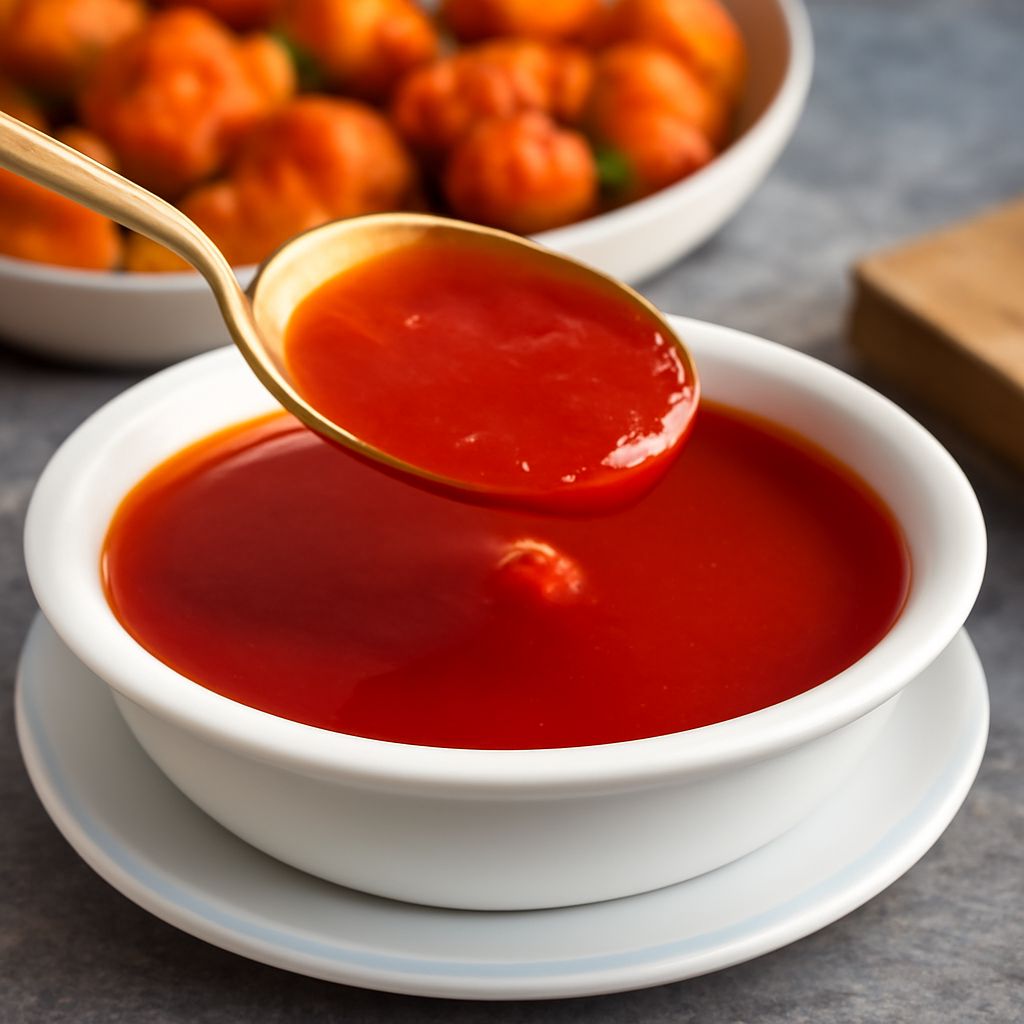
What gives a glossy dipping sauce that lively balance of sweetness and tang? A little sugar, vinegar, and salt, tasted together and thickened briefly on the stove. This recipe for a tangy sweet and sour sauce uses pantry ingredients. Making the sauce at home lets you adjust each flavor to suit the meal.
The method makes about 1 cup, enough for four to six dipping portions or a light coating for a skillet of vegetables and protein. Set out the ingredients before you start: once the mixture boils, it comes together quickly.
Ingredients and the role of each
- 1/2 cup unsweetened pineapple juice
- 1/4 cup rice vinegar, unseasoned
- 3 tablespoons packed light brown sugar
- 2 tablespoons ketchup
- 1 tablespoon soy sauce
- 1 tablespoon cornstarch
- 2 tablespoons cold water
Pineapple juice supplies fruitiness as well as sweetness; vinegar gives the sauce its bright edge. Ketchup adds color and a little body, while soy sauce brings salt and savory depth. Brown sugar softens the sharpness without making the mixture taste flat. Stir the cornstarch into cold water separately so it disperses before it reaches the hot liquid.
For this easy recipe for sweet and sour sauce, measure the vinegar rather than pouring straight from the bottle. Unseasoned rice vinegar has a gentle flavor, but it still contributes a noticeable bite. If your pineapple juice is sweetened, taste the heated mixture before adding all the sugar, then add more as needed.
How to Make Sweet and Sour Sauce on the Stove
- In a small saucepan, whisk the pineapple juice, rice vinegar, brown sugar, ketchup, and soy sauce. Heat over medium heat, stirring until the sugar dissolves and the liquid begins to simmer, about 3 to 4 minutes.
- In a small cup, stir the cornstarch and cold water until smooth. Give it another stir immediately before pouring, since the starch settles quickly.
- While whisking the simmering liquid, slowly pour in the slurry. Continue whisking until the sauce returns to a gentle boil. Boil for about 1 minute, stirring, until glossy and thick enough to coat the back of a spoon.
- Remove from the heat. Let it stand for a minute, then taste and adjust. It will thicken a little more as it cools.
When preparing the sauce, watch its texture as it heats. Watch the spoon: a finger drawn through the coating should leave a clear path for a moment. If the sauce still runs like juice after its minute at a gentle boil, simmer a little longer while stirring. Starch needs heat to swell and thicken the liquid; a cloudy, raw-looking mixture needs more cooking. Keep the heat moderate and stir across the bottom and corners of the pan to prevent scorching.
The sweet and sour sauce recipe, easy enough for a weeknight, also leaves room for your palate. Taste a small spoonful after it has cooled slightly. If sweetness dominates, stir in 1 teaspoon vinegar at a time. If it tastes too sharp, add 1 teaspoon brown sugar, stirring until dissolved. For more savory depth, add soy sauce a few drops at a time. Taste between additions: a small change can make the other flavors seem stronger.
Choose the texture for the table
Knowing how to make a sweet and sour sauce gives you control over its finish. For dipping, let the finished sauce cool for a few minutes so it clings to a dumpling or piece of chicken. For a stir-fry, keep it slightly looser: it should flow around the ingredients and leave a thin sheen when tossed.
To loosen a finished sauce, whisk in warm water a teaspoon at a time. If you want a thicker glaze, mix 1 teaspoon cornstarch with 2 teaspoons cold water, whisk a little of that slurry into the simmering sauce, and cook at a gentle boil for 1 minute. Stop when it coats the spoon; you may not need all the extra slurry.
Serving and storing
Serve the sauce warm alongside egg rolls, fried tofu, or roasted chicken. Spoon a little over rice and vegetables, or toss it with cooked peppers and pineapple just before serving. When coating a stir-fry, add the sauce near the end and warm it briefly so the vegetables keep their texture.
This version of the sweet-and-sour sauce recipe can be made ahead. Cool it promptly, transfer it to a covered container, and refrigerate for up to 3 to 4 days. Reheat gently in a saucepan, stirring until hot throughout. The surface may look firmer after chilling, but stirring as it warms will show its true consistency.
If the reheated sauce is too thick, whisk in warm water a teaspoon at a time until it flows from the spoon and coats your food as you like.