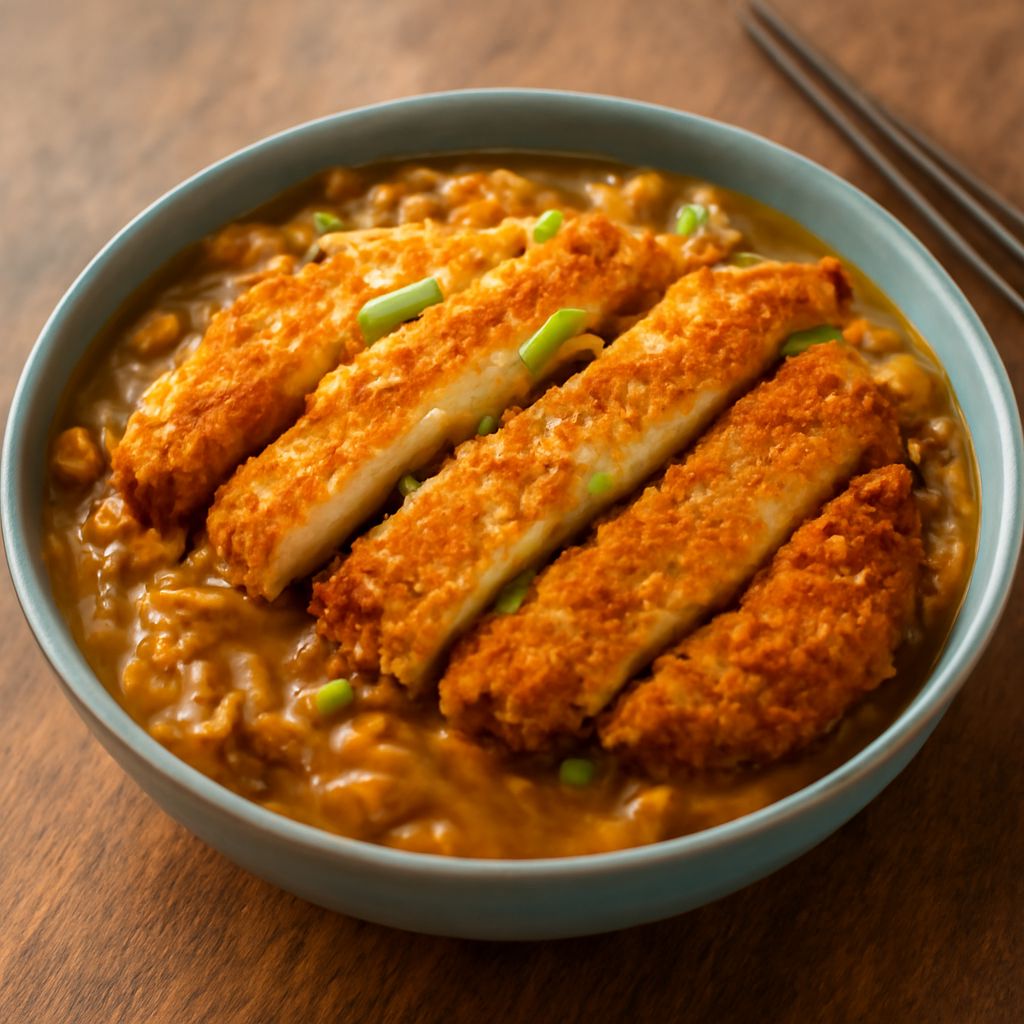
How do you get a delicate, crackling crust around chicken that stays tender? Flatten the meat evenly, coat it in panko, and fry it in moderately hot oil. This recipe for chicken katsu takes you from the first cut to a plate of sliced cutlets, rice, cabbage, and a glossy sauce.
If you are wondering how chicken katsu is made, the rhythm is simple: flour, egg, crumbs, then a few minutes in the pan. Have the accompaniments ready before frying so you can bring the cutlets to the table while their crust is at its best.
What you need
This chicken katsu recipe makes four servings. Allow about 35 minutes, including preparation. A wide, heavy skillet, tongs, an instant-read thermometer, and a wire rack set over a baking sheet will make the work easier.
For the cutlets:
- 2 boneless, skinless chicken breasts, about 1 1/2 pounds total
- 3/4 teaspoon kosher salt and 1/4 teaspoon black pepper
- 1/2 cup all-purpose flour
- 2 large eggs
- 2 cups panko breadcrumbs
- About 1 cup neutral oil, such as canola or vegetable oil, for shallow frying
For a quick sauce:
- 1/4 cup ketchup
- 2 tablespoons Worcestershire sauce
- 1 tablespoon soy sauce
- 2 teaspoons sugar
To serve, have cooked short-grain rice, finely shredded cabbage, and lemon wedges ready. Stir the sauce ingredients together until the sugar dissolves; taste and add a little more sugar if you prefer a sweeter sauce. Bottled tonkatsu sauce is convenient too.
How to make chicken katsu with an even crust
Cut each breast horizontally into two thinner pieces. Place the pieces between sheets of plastic wrap and gently pound the thicker areas until each is about 1/2 inch thick. Even thickness helps the center cook before the coating becomes too dark. Season both sides with the salt and pepper.
Set out three shallow dishes: flour in the first, beaten eggs in the second, and panko in the third. Coat a piece of chicken lightly in flour and shake off the excess. Dip it in egg, letting extra drip back into the dish, then lay it in the crumbs. Press panko gently onto both sides and the edges. Repeat with the remaining pieces.
The large, irregular flakes of panko create a lighter, craggier crust than fine breadcrumbs. They leave tiny spaces around the chicken that crisp in the oil. Keep one hand for the flour and crumbs and the other for the egg, if you like, to keep the coating from collecting on your fingers.
When learning how to make katsu chicken, give the breaded pieces a few minutes on a clean plate while the oil heats. This pause helps the coating settle; keep the plate separate from any surface that held raw chicken. Wash your hands and clean utensils and surfaces after handling the raw meat.
Fry, check, and slice
Pour enough oil into the skillet to reach about 1/4 inch up the sides. Heat over medium heat to about 350°F. If you do not have an oil thermometer, a loose panko flake should bubble steadily when dropped in. Set the rack nearby and have a clean plate or tray ready for the finished cutlets.
Lower two pieces into the oil carefully, laying them away from you. Leave room between them so the oil can circulate. Fry for about 3 to 4 minutes per side, turning with tongs, until the coating is golden. Adjust the heat if the crumbs brown too quickly, and let the oil return to temperature before cooking the second batch.
The color of the crust cannot tell you whether the center is ready. Insert an instant-read thermometer sideways into the thickest part of each piece; chicken needs to reach 165°F. If it is below that temperature, continue cooking and check again. Transfer each cooked cutlet to the rack for a few minutes so excess oil drains and air can circulate beneath it.
Use a sharp knife to cut the chicken crosswise into strips. Arrange them beside rice and a soft mound of cabbage, with lemon and sauce on the side. A little sauce over the slices adds sweetness and tang; serving the rest separately lets everyone preserve as much crunch as they please.
Chicken katsu and tonkatsu
Katsu is the familiar Japanese name for a cutlet; tonkatsu specifically refers to pork. A chicken tonkatsu recipe generally uses chicken in the same breaded-cutlet style, though chicken katsu is the more precise name for the dish here. Both are often served sliced with cabbage and a savory-sweet sauce.
Once you know how to prepare katsu chicken, you can adjust the size of the cutlets to suit your skillet. In this recipe for Japanese chicken katsu, keep every piece close to the same thickness even if you cut a large breast into smaller portions. If you are learning how to make chicken katsu for a crowd, fry in batches and check the temperature of every piece. This panko chicken katsu recipe relies on steady heat, so allow the oil to recover between batches.
If the crust darkens too soon
The likeliest trouble is a crust that turns deep brown before the chicken reaches 165°F. If that happens, lower the heat and continue cooking, checking the thickest part with the thermometer. For the next batch, let the oil cool slightly and keep it near 350°F; an evenly pounded cutlet will also cook more consistently from edge to center.