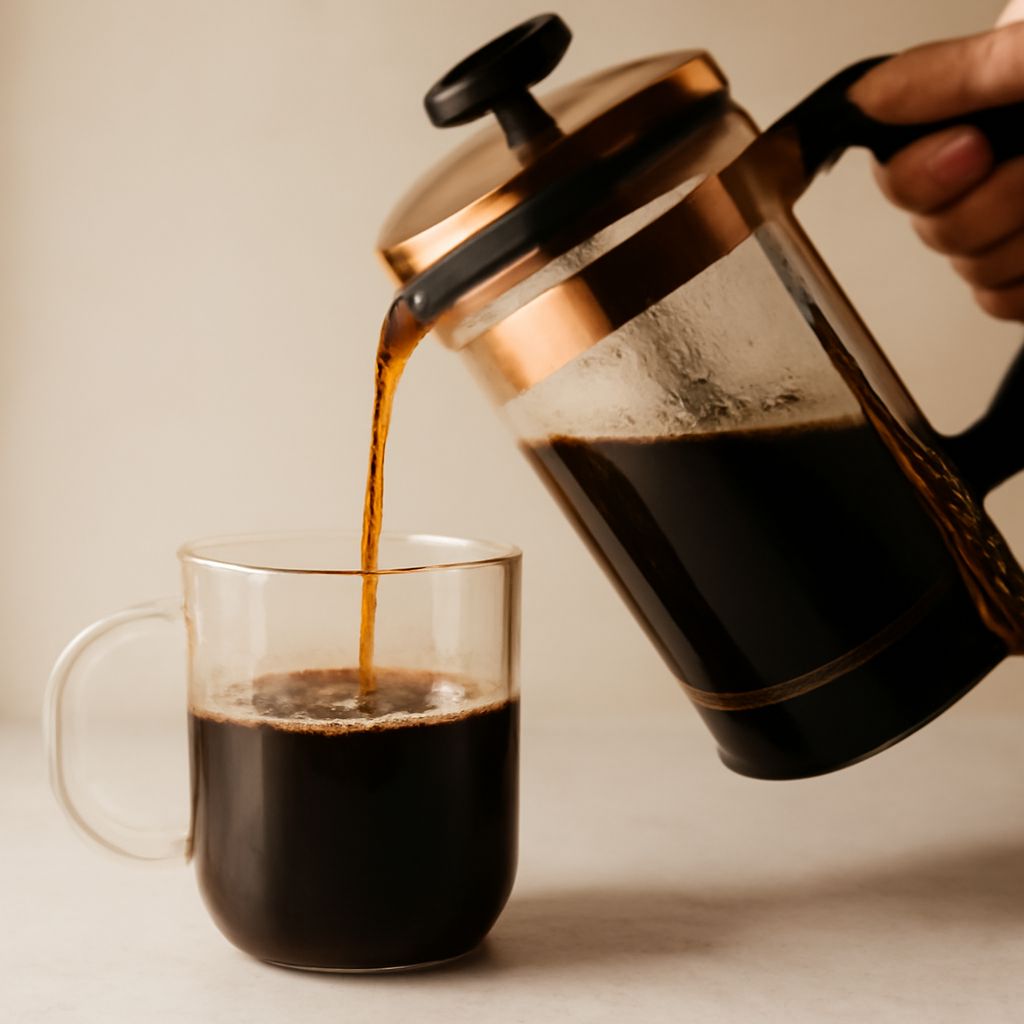
Can a French press make cold brew without a special coffee maker? Yes: steep coarsely ground coffee in cold water overnight, then lower the filter and pour. This French press method produces a cold coffee concentrate that you can dilute with water or milk to suit your glass.
The press is especially handy because its mesh filter separates most of the grounds from the liquid. You will need a little refrigerator space and patience, but the active work takes only a few minutes.
French Press Cold Brew: What You Need
For a small batch of concentrate, gather:
- 1/2 cup coarsely ground coffee, about 2 ounces by weight
- 2 cups cold, good-tasting water
- A clean French press with at least a 3-cup capacity
- A spoon and a clean covered pitcher or jar
The ratio is roughly 1 part coffee to 8 parts water by weight. A kitchen scale makes the recipe easier to repeat, since the volume of ground coffee varies with the beans and grind. A two-cup measure of water is 16 fluid ounces; leave some space at the top of the press for stirring and the lid.
For cold brew in a French press, use coffee you enjoy drinking. A medium or dark roast can give a rounded, chocolatey cup, while a lighter roast may bring fruitier notes. Start with fresh beans if you can, and grind them just before mixing. Water contributes most of the volume, so use filtered water if your tap water has a strong taste.
Grind, Mix, and Steep
Grind the beans coarsely, with particles resembling coarse sea salt. A fine espresso grind can pass through the mesh and make pressing difficult. If buying ground coffee, ask for a coarse French press grind. Even particles help the water reach the coffee more consistently.
Put the grounds into the clean carafe and pour in the water. Stir gently until all the coffee is wet, including any dry pockets near the bottom. Set the lid on top with the plunger raised; do not press yet. If the lid does not fit in your refrigerator with the plunger raised, cover the carafe and insert the lid when you are ready to filter.
Refrigerate for 12 to 16 hours. Begin with 12 hours and taste the finished drink; give the next batch a little longer if you prefer more intensity. Cold water draws flavor gradually, so an overnight rest lets the coffee develop. The Blue Bottle cold brew guide also uses a slow, hours-long steep.
Press Slowly and Transfer
When the steep is complete, fit the lid if necessary and gently lower the plunger straight down. Use steady, light pressure; the filter should move without force. If it sticks, lift it slightly and try again. Forcing it can send coffee spilling out or damage a glass carafe.
For cold brew coffee, French press filters provide a convenient first strain, though a little fine sediment may remain. Pour the liquid into a clean covered jar promptly: leaving it sitting on the grounds lets extraction continue. A few drops of coffee will remain trapped in the grounds, so the finished volume will be smaller than the water you added.
For a clearer drink, pour the filtered coffee through a damp paper coffee filter set in a funnel over a second container. This extra step takes time but catches more fine particles. Skip it if you like the fuller texture from the mesh. Making cold brew coffee in a French press gives you the choice of either finish.
Dilute and Serve
French press cold brew made at this ratio is a concentrate, so taste it before filling your glass. Start with equal parts concentrate and cold water, then adjust: add more water for a lighter drink or more concentrate for a stronger one. Ice will melt and dilute the drink as you sip, so begin a little stronger if the glass is packed with cubes.
Milk or a plant-based alternative can replace some or all of the water. For example, mix equal parts concentrate and milk over ice, then taste before adding sweetener. Simple syrup blends into a cold drink more readily than granulated sugar. If you prefer hot coffee, dilute the concentrate with hot water rather than heating the grounds in the press.
Keep the strained coffee covered in the refrigerator and pour out only what you plan to drink. Clean the carafe, mesh, and plunger after each batch, separating the filter parts according to the manufacturer’s instructions. Old grounds caught in the mesh can affect the flavor of the next brew.
Fix a Cloudy Cup
The most common snag is sediment at the bottom of the glass. If the coffee looks muddy or feels gritty, pour the remaining batch through a paper filter. Next time, use a coarser grind and press gently; the mesh will have fewer fine particles to catch. A little haze is normal for coffee filtered through metal, and a careful pour leaves much of the sediment behind.