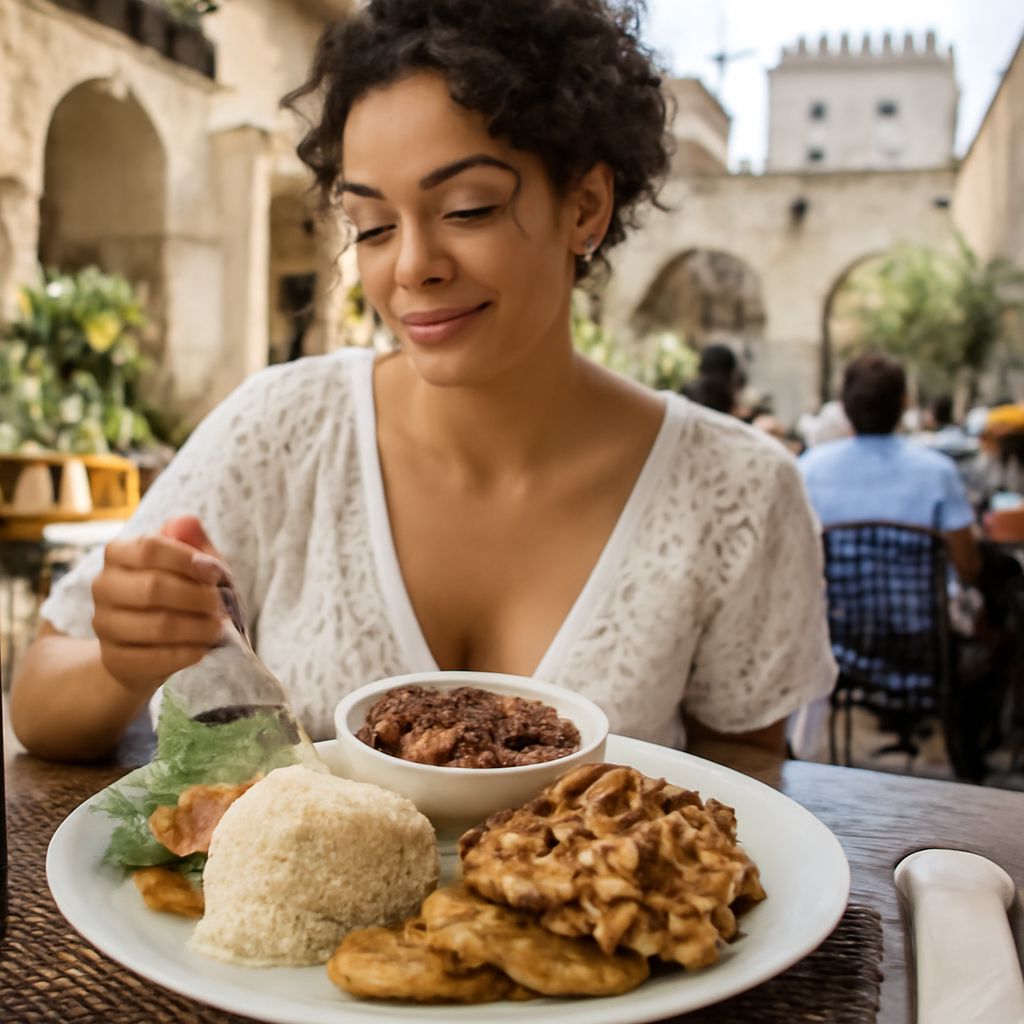
You are looking at a Dominican menu and see rice, beans, plantains, and several dishes whose names are new to you. Start with la bandera, a plate of rice, stewed beans, and meat, or choose mangú for a comforting meal centered on mashed plantains. Both offer an inviting introduction to the flavors of the Dominican Republic.
The island nation’s cooking brings together Indigenous, African, Spanish, and other influences. A meal can be as simple as a plate of rice and beans or as elaborate as a pot of stew shared at a gathering. The ingredients and preparations below will help you choose what suits your appetite.
Dominican Dishes for a First Meal
La bandera, literally “the flag,” commonly combines white rice, stewed beans, and meat such as chicken or beef. Salad or avocado may be served alongside. The rice absorbs the seasoned bean sauce, while the meat gives the plate its heartiness. Ask what the day’s meat is and whether the beans contain pork or stock if you avoid either ingredient.
Mangú is made by boiling green plantains and mashing them until soft. It is often served at breakfast with los tres golpes: fried eggs, Dominican salami, and fried cheese, usually with pickled red onions on top. The onions bring a sharp note to the mild, starchy plantains. Order the full plate when you are hungry, or ask which accompaniments are available separately for a lighter meal.
Sancocho is a substantial stew that can contain several meats and root vegetables such as yuca, plantain, and yautía. Recipes vary by household and occasion. This dominican republic food has a broth and tender pieces that make it satisfying for sharing, often with rice and avocado alongside. Because it takes time and a generous pot, it is especially suited to family gatherings and celebrations.
The Ingredients Behind the Plate
Rice and beans appear in many forms in dominican republic cuisine. Beans may be stewed with aromatics and seasonings until their sauce is thick enough to coat rice. Cilantro, peppers, onion, garlic, and oregano can all contribute flavor, though every cook has a particular hand. If you like a saucy meal, ask for some of the bean liquid over the rice.
Plantains change character as they ripen. Green plantains are starchy and can be mashed for mangú or fried twice as crisp tostones. Ripe plantains become softer and sweeter when fried, often appearing as maduros. Choose tostones for crunch and a savory dip; choose maduros when you want sweetness beside roast or stewed meat.
Yuca is another staple worth trying. Boiled until tender, it can be served with garlicky onions or as a side for meat. Its mild flavor and firm, substantial texture make a good counterpoint to a richly seasoned sauce. Ask how it is prepared if the menu offers both boiled and fried versions.
Snacks, Seafood, and Special Occasions
Quipe is a fried bulgur-and-meat snack with roots in the country’s Middle Eastern immigrant communities. The crisp shell gives way to a seasoned filling. It makes a useful appetizer to share while you wait for a main course; the center can be very hot, so let it cool briefly.
Empanadas, also called pastelitos in some contexts, are filled pastries that may contain meat, cheese, or other ingredients. They can be fried or baked depending on the preparation. Check the filling and size before ordering: a couple of small pastries might be a starter, while a larger one with a salad can be lunch.
Fish and seafood are another way to explore food in the dominican republic, especially in coastal settings. Pescado con coco, fish cooked with coconut, is associated with the Samaná area. The coconut sauce is rich and gently sweet, and rice is a natural companion. Ask which fish is available and whether the sauce contains shellfish if you have an allergy.
For a celebration or a generous family table, a pot of locrio can bring rice and a protein together with seasonings. Chicken is one popular choice. The browned rice at the bottom, called concón, is prized for its crisp texture; ask for a little if the pot has some available.
A Sweet Finish
Habichuelas con dulce turns beans into a sweet, spiced preparation with milk, sugar, and ingredients that can include sweet potato and raisins. It is particularly associated with Lent and Holy Week. Serve it warm or chilled according to preference, and try a small portion if the combination is new to you.
A simpler finish might be dulce de leche cortada, made by cooking curdled milk with sugar into tender, syrupy pieces. Its texture is distinct from smooth caramel-style milk sweets. Coffee or unsweetened tea balances the sweetness.
Put Together Your Meal
For a first lunch, choose la bandera with chicken, ask for a spoonful of bean sauce over the rice, and add a few maduros for sweetness. If you want a shared meal, begin with a quipe, then order sancocho with rice and avocado. Finish with a small serving of habichuelas con dulce when it is available.
For a lighter coastal plate, choose coconut fish with rice and a side salad. If crunch is what you want, add tostones rather than sweet plantains. These Dominican dishes give you a choice of textures and flavors without requiring a large table to try everything.