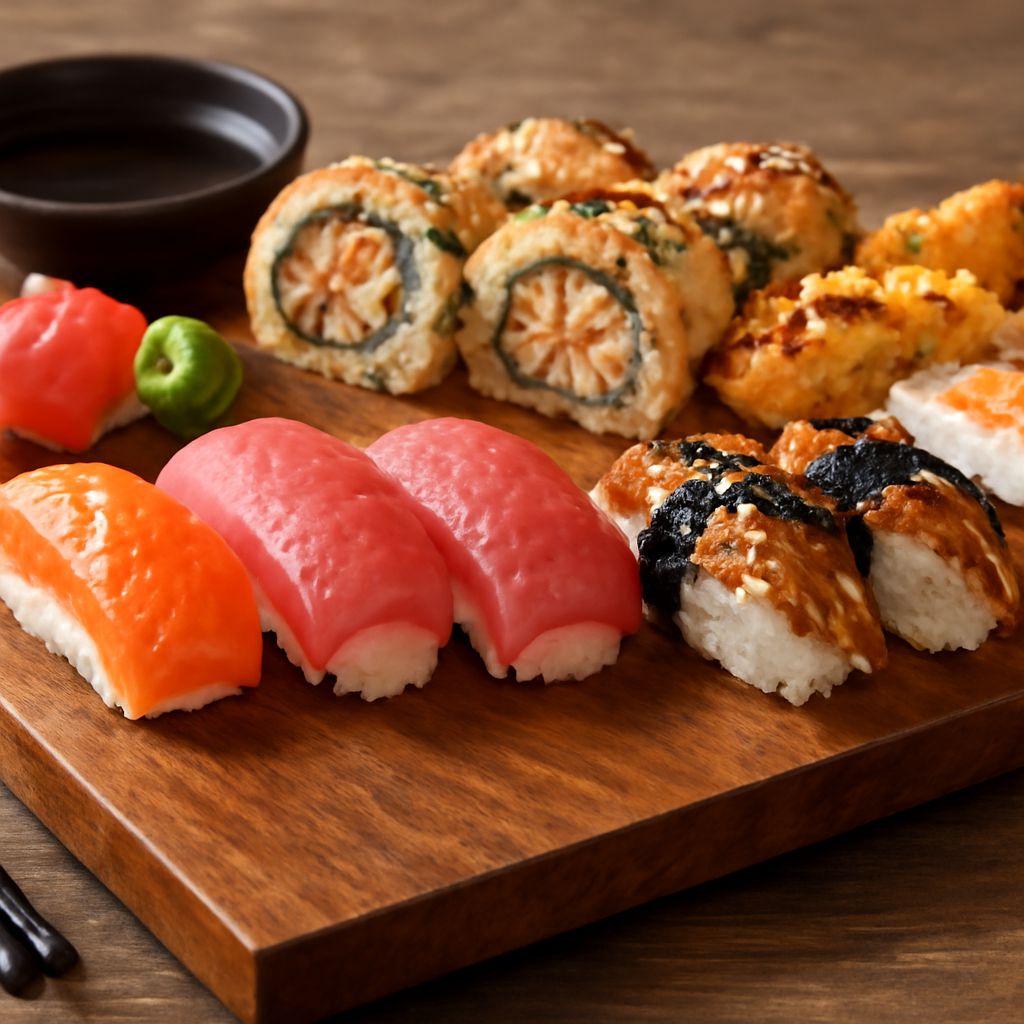
Cooked sushi is sushi made with ingredients that have been heated, such as tempura shrimp, grilled eel, baked scallops, cooked crab, omelet, or seared fish. If you want sushi flavors without raw seafood, this is the easiest place to start. It gives you the rice, vinegar, nori, sauces, and rolling styles people love, while keeping the protein fully cooked.
You’ll often see cooked sushi on menus in rolls, nigiri, and hand rolls. The exact name changes by ingredient and preparation, so knowing the common terms helps you order with confidence and avoid guessing.
What Cooked Sushi Means
In everyday dining language, cooked sushi means any sushi that uses fully cooked or heated seafood, meat, or egg. That can include fried, grilled, baked, steamed, or sautéed ingredients. The rice is still sushi rice, seasoned with vinegar, sugar, and salt, and the dish still follows sushi-style formatting.
This matters because “sushi” does not automatically mean raw fish. A roll can be made with avocado and cucumber, a cooked shrimp filling, or a baked seafood topping and still count as sushi. If you’re avoiding raw seafood for taste, texture, pregnancy precautions, or personal preference, cooked sushi gives you a wide range of options.
Cooked sushi also covers a few different experiences. Some versions are light and clean, like cucumber and tamago rolls. Others are rich and saucy, like baked seafood rolls or crunchy tempura rolls. Understanding the style helps you pick the right one for your meal.
What Is Cooked Sushi Called on Menus?
Menu names usually describe the ingredient and the preparation rather than using one single label. You may see names like tempura roll, eel roll, baked roll, cooked crab roll, or tamago nigiri. The name tells you what was cooked, but you should still scan the description for details.
Common menu words to know:
- Tempura — lightly battered and fried
- Baked — oven-heated, often with seafood and sauce
- Grilled or seared — cooked with direct heat
- Unagi — freshwater eel, usually grilled and glazed
- Tamago — sweet Japanese omelet
- Surimi or imitation crab — cooked seafood-style crab substitute
- Kani — crab, often cooked in many restaurant rolls
If you want a cooked option, look for those words first. If a roll includes raw fish, the description usually says so directly, but not always. When the menu is vague, ask whether the seafood is cooked before you order.
Common Types of Cooked Sushi Rolls
Cooked sushi rolls cover a lot of styles, but a few show up again and again. Knowing them makes menu reading faster and helps you pick based on flavor, texture, and richness.
Tempura rolls use fried seafood or vegetables, often shrimp. They’re crisp, warm, and usually paired with creamy sauces or avocado. If you like contrast, this is a popular entry point.
Eel rolls, usually made with unagi, are grilled and glazed with a sweet-savory sauce. The flavor is deeper and more caramelized than a simple fish roll. Eel is one of the classic cooked sushi names to recognize.
Baked rolls typically use cooked seafood mixed with mayo-based sauce, then baked until hot and lightly browned. They can be rich and satisfying, especially if you want a warm sushi option.
California-style rolls often include imitation crab, avocado, and cucumber. They’re one of the most familiar cooked sushi choices in American dining, though the crab element may vary by restaurant.
Tamago nigiri features a slice of Japanese omelet over rice, sometimes held with a strip of nori. It’s mild, slightly sweet, and a good choice if you want something simple.
Vegetable rolls can also fit here when they’re made without raw fish and rely on ingredients like avocado, cucumber, asparagus, or pickled vegetables. They’re not always the first thing people think of when they hear cooked sushi, but they belong in the wider conversation about safe, approachable sushi options.
How to Tell Whether Sushi Is Cooked
The fastest way to tell is to read the ingredients list instead of judging by the roll’s appearance. A roll can look browned, sauced, or crunchy and still contain raw fish. Likewise, a simple-looking roll may be fully cooked.
Use these checks:
- Look for ingredient keywords: tempura, eel, baked, seared, cooked crab, tamago, or grilled.
- Watch for raw-fish terms: tuna, salmon, yellowtail, snapper, or sashimi-style descriptions may signal raw seafood unless the menu says otherwise.
- Check the preparation word: “spicy” does not mean cooked, and “crunchy” does not guarantee it either.
- Ask a direct question: “Is the fish in this roll cooked?” is clearer than asking whether it’s safe or mild.
If you’re ordering for someone who avoids raw seafood, don’t rely on sauce or topping color. A baked topping may sit over raw fish, and a roll with avocado may still include raw tuna. The ingredient list is the only reliable guide.
Why Some Sushi Feels Expensive
Cooked sushi can cost more when it uses premium seafood, labor-heavy preparation, or multiple cooking steps. A roll with tempura shrimp, baked scallops, eel, and specialty sauce takes more work than a basic cucumber roll. That extra effort shows up in the final price.
Ingredient quality also affects cost. Fresh eel, large shrimp, scallops, and real crab are more expensive than simpler fillings. Specialty sauces, garnish, and texture layers can add to the sense that a roll is “fancier,” even when the ingredients are familiar.
Portion size matters too. Some cooked sushi rolls are large, rich, and built like a full entrée. Others are smaller and meant as a light bite. If a roll feels expensive, it may be because you’re paying for complexity, not just fish.
For you as a diner, the practical takeaway is simple: choose based on the experience you want. If you want comfort and value, a tamago or vegetable roll may be enough. If you want a more layered meal, baked or tempura rolls can justify the extra cost through flavor and texture.
Common Mistakes When Ordering Cooked Sushi
One common mistake is assuming every non-red fish roll is cooked. Color is not a reliable signal. Another is assuming “special” or “house” means safe for raw-fish avoiders. Those labels describe style, not ingredients.
Other mistakes to avoid:
- Skipping the ingredient list and ordering by image alone
- Assuming spicy means cooked when the fish may still be raw
- Overlooking toppings that sit on top of raw fish under the sauce
- Confusing imitation crab with real crab without checking the description
- Forgetting that “seared” can still mean partially cooked unless the menu specifies otherwise
If you want a fully cooked option, ask for it clearly. A simple request like “Please point me to fully cooked sushi rolls” saves time and prevents mistakes. You can also ask which rolls use tempura, baked seafood, eel, tamago, or cooked crab.
The easiest way to navigate cooked sushi is to start with the preparation words, then match them to the filling you want. From there, you can branch into related topics like sushi rice basics, the difference between sushi and sashimi, the role of nori, and how tempura and baked rolls differ in texture. If you’re building your sushi vocabulary, those follow-up topics make menu reading much easier.