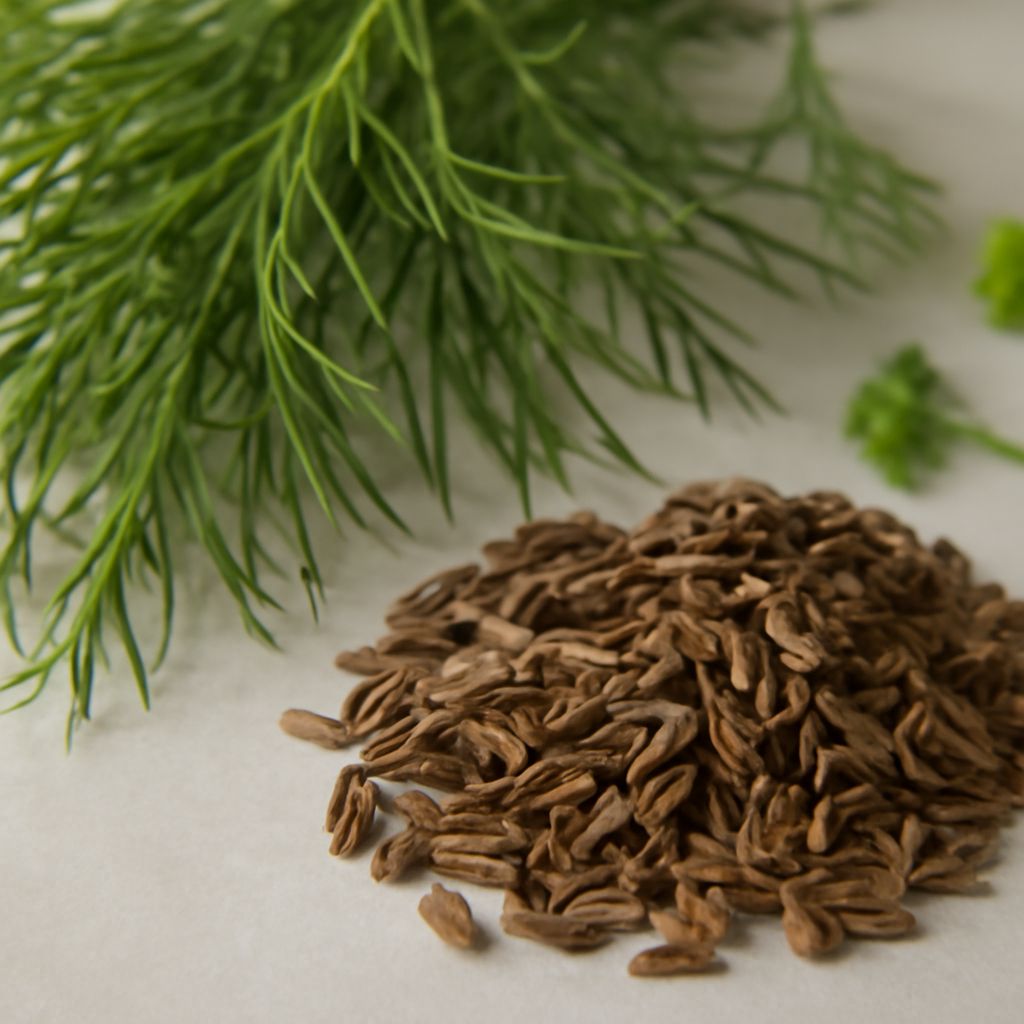
Dill weed vs dill can be confusing because “dill” is a broad name for the herb and plant. In cooking, fresh dill means the green fronds, while dill weed usually means those leafy fronds after they have been dried. Dill seed comes from a different part of the plant and has a distinctly warmer, sharper flavor.
Choose fresh dill for a bright, delicate finish; dried dill weed for convenient seasoning in cooked dishes; and dill seed for pickles, breads, cabbage, and other foods that suit its savory, caraway-like flavor.
Dill weed vs dill: fresh dill and dried dill weed
Fresh dill and dried dill weed come from the plant’s leafy growth: the fine, feathery fronds and tender upper stems. Fresh dill is sold as green sprigs. Dried dill weed is chopped or crumbled foliage with most of its water removed. Neither form is the seed.
- Fresh dill: Soft, green fronds with a lively, grassy flavor. Use the tender leaves and thin stems; discard thick, tough stems.
- Dried dill weed: Dehydrated leafy herb with a more muted, savory flavor. It is convenient for spice cabinets, soups, sauces, and baked dishes.
- Flavor difference: Fresh dill tastes brighter and more aromatic. Dried dill weed has less fresh, grassy character, but a teaspoon contains more herb material by volume because the water has been removed.
Fresh dill works especially well when you want its aroma to remain noticeable. Stir it into potato salad, cucumber salad, yogurt sauce, eggs, fish, or a finished soup. Add it near the end of cooking or just before serving, because prolonged heat dulls its fresh flavor.
Dried dill weed needs time to soften and release its flavor. Add it earlier in soups, braises, casseroles, sauces, and homemade seasoning blends. You can also stir it into a cold dressing or dip 10 to 15 minutes before serving so the herb has time to hydrate.
Dill vs dill weed: what the names mean
Dill can describe the entire plant, the herb as a general ingredient, or fresh dill in everyday recipe language. When a recipe simply says “dill,” check the ingredient list and instructions for clues. A bunch, sprig, or chopped amount usually indicates fresh dill. A measurement listed with dried spices usually indicates dried dill weed.
In this comparison, use dill weed to mean the dried leafy form. The word “weed” does not mean a different species or an inferior ingredient. It identifies the plant’s foliage, distinguishing it from the seeds.
The plant-part distinction matters:
- Fronds and tender leafy stems: These become fresh dill or dried dill weed.
- Mature seed heads: These produce dill seed, a separate culinary spice.
- Fresh seed heads: These may be used in pickling, but they are not the same as dried dill weed or dried dill seed.
If a recipe comes from a source that uses “dill” loosely, identify the expected form before measuring. Fresh and dried leafy dill can usually be converted with a reasonable starting ratio. Dill seed requires a different decision because it changes the flavor rather than simply supplying a more concentrated version of the same herb.
Dill weed vs dill seed: flavor and cooking uses
Dill seed is the dried mature fruit commonly called a seed in cooking. It has a firm texture and a warm, earthy flavor with notes that may remind you of caraway, celery, or mild anise. Dill weed has a softer, greener profile, so dill seed is not just a stronger version of the leafy herb.
Use dill seed when you want a spice that can stand up to long cooking or bold ingredients. Common uses include:
- Pickling cucumbers, green beans, beets, and other vegetables
- Seasoning cabbage, potatoes, beans, and lentils
- Adding savory flavor to rye bread and other baked goods
- Flavoring sausages, brines, vinegar, and robust stews
Whole seeds release flavor gradually, making them useful in brines and dishes that simmer. Lightly crush them with the side of a knife or a mortar and pestle when you want faster extraction. Toasting can make the flavor warmer and more pronounced, so use that step only when the dish can handle additional depth.
Dill seed does not provide the same fresh finish as dill weed. It can taste too woody or pungent in a delicate yogurt sauce, light cream sauce, or fresh herb salad. If a recipe’s character depends on the green aroma of dill, choose fresh dill or dried dill weed instead.
Dill seed vs dill weed: measurements and substitutions
For fresh dill and dried dill weed, use a cautious 3-to-1 starting ratio:
- 1 tablespoon chopped fresh dill = about 1 teaspoon dried dill weed
- 3 tablespoons chopped fresh dill = about 1 tablespoon dried dill weed
- 1 teaspoon dried dill weed = about 1 tablespoon chopped fresh dill
These amounts are starting points rather than strict rules. Fresh fronds vary in size, and dried dill loses aroma as it sits in the pantry. If your dried herb is old or faint-smelling, you may need a little more. If it is highly aromatic, begin with the lower amount and adjust after the dish cooks.
Apply the ratio to the form the recipe names. Do not measure a whole bunch of fresh dill against a loose handful of dried herb. Strip the fresh fronds, chop them, and measure the chopped leaves. For dried dill weed, measure the crumbled herb without packing it tightly.
Dill seed is not a direct substitute for dill weed. There is no dependable one-to-one conversion because the plant part, texture, and flavor are different. If you need to substitute it in a sturdy dish such as pickles, cabbage, potatoes, or a brine, start with about ¼ teaspoon lightly crushed dill seed for each 1 teaspoon of dried dill weed. Taste the dish and increase in small pinches only if the seed flavor fits.
For a delicate sauce, salad, or garnish, omit the seed rather than forcing the substitution. Add leafy dill late for a fresh result; add dried dill weed earlier for even seasoning; and add dill seed early enough for its flavor to infuse, while remembering that it will remain a distinct spice.