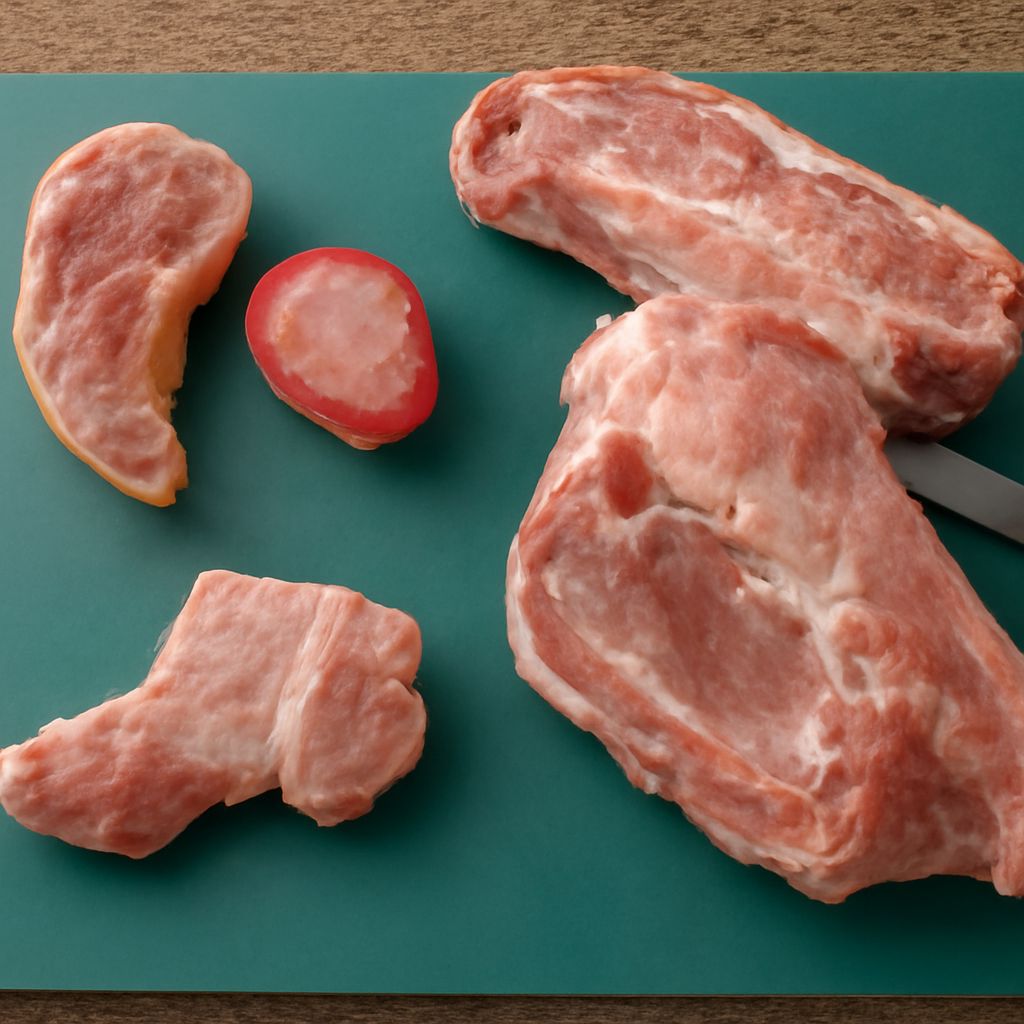
Pig cuts are easiest to choose by location. The shoulder and lower leg contain more connective tissue, so they become tender with slow, moist cooking. The loin and tenderloin are naturally lean and tender, making them better for quick cooking. Belly and ribs sit between those extremes, combining fat, muscle, and collagen that respond well to roasting, smoking, or braising.
Use this guide to identify the main pork cuts of meat, understand their texture, and choose a method that suits each one. Retail names can vary, so location matters more than the label alone.
Pig Cuts by Location: A Quick Shoulder-to-Leg Map
Looking at the animal from front to back, the major cuts of pig follow this map:
- Shoulder: The front quarter above and behind the front leg. It divides into the upper Boston butt and lower picnic shoulder.
- Loin: The long section along the back, from behind the shoulder toward the hip. It supplies loin roasts, chops, and the separate tenderloin muscle.
- Ribs: The curved bones beneath the loin and along the side. Back ribs sit closer to the loin; spare ribs extend from the belly.
- Belly and side: The underside behind the front leg. This fatty area becomes pork belly or bacon.
- Leg: The rear quarter around the hip and upper hind leg. A whole leg is commonly sold as fresh ham or cured ham.
- Smaller cuts: The cheek, lower legs, feet, and organ meats provide distinctive options such as jowl, hock, and trotters.
Location predicts how a cut behaves. Muscles that work hard, such as the shoulder and hock, develop dense connective tissue and benefit from low, slow heat. Muscles used less, such as the tenderloin, stay soft but contain little fat, so prolonged cooking can dry them out.
Pork Cuts from the Shoulder: Butt, Picnic, and Collagen-Rich Roasts
The upper shoulder is sold as Boston butt, pork butt, or blade roast. Despite the name, it does not come from the animal’s rear. It contains substantial marbling, exterior fat, and collagen, plus part of the shoulder blade in some roasts. You can smoke or roast it until the collagen dissolves and the meat pulls apart, or braise it for slices or shredded pork. Shoulder steaks, sometimes called blade steaks, also come from this section and need more cooking than loin chops.
The lower shoulder is the picnic shoulder, also called a picnic roast or arm roast. It includes more skin and connective tissue and often has a tapered shape. Treat it like butt: roast, smoke, or braise it until a fork slides easily into the meat. It can produce pulled pork, but its skin and bone may require trimming or extra cooking time.
Do not treat a shoulder blade steak and a loin blade chop as interchangeable. The shoulder version is darker, fattier, and more collagen-rich; the loin version is leaner and cooks faster. If a package label is unclear, identify whether the cut came from the shoulder or the back before choosing a cooking time.
Loin, Tenderloin, Chops, and Ribs: Keep Lean Cuts Distinct
The loin runs along the animal’s back and is relatively lean, with a modest fat cap. A whole pork loin may be sold as a center-cut loin roast, loin roast, or sirloin-end roast, depending on its position. Roast it whole, slice it into medallions, or cut it into chops. Moderate roasting, grilling, or pan-searing works well, but stop when the center is just cooked to avoid dryness.
The tenderloin is a narrow, separate muscle located underneath the rear portion of the loin. It is smaller, more uniformly tender, and leaner than pork loin. Retail packages may call it pork tenderloin or pork fillet. Sear, grill, or roast it quickly after removing the silverskin. A pork loin roast and tenderloin are not substitutes: the larger loin needs more time, while tenderloin can overcook quickly.
Loin chops have several names. Rib chops include a rib bone and come from the rib end. Center-cut chops contain a T-shaped bone and include loin muscle plus a small tenderloin section. Sirloin chops come from the hip end and may contain more connective tissue and several muscles. Thin chops suit quick pan cooking; thick, bone-in chops benefit from a hard sear followed by gentle oven heat.
Back ribs, also called baby back ribs or loin-back ribs, come from the upper rib cage next to the loin. They are smaller and usually leaner than spare ribs. Spare ribs come from the lower rib cage and belly side; St. Louis ribs are spare ribs trimmed into a more uniform rack. Both types can be smoked or roasted slowly, then finished with high heat. Braising also softens their connective tissue.
Belly, Side, Leg, and Smaller Parts of a Pig: Bacon, Ham, Hock, and Jowl
The belly is the fatty underside behind the ribs. Fresh pork belly may be sold as side pork, while cured and smoked belly is bacon. Its layers of fat and meat protect it during long cooking and render into a rich, crisp texture. Roast or smoke a slab, braise it, or slice it for pan cooking. Thin bacon needs only short, moderate heat; a thick belly slab needs time for the fat to render.
The hind leg is sold fresh as a fresh ham or leg roast, or cured as ham. Common retail sections include the inside or top round, outside round, eye of round, and shank end. These muscles are leaner than the shoulder, so a fresh leg is best roasted carefully, sliced thin, or braised when the cut contains more connective tissue. Cured ham is already preserved and may only need reheating, depending on the label.
The lower leg is the hock or shank. It is tough and rich in collagen, making it useful in braises, beans, soups, and stocks. The pork foot, also called a trotter, contains skin, bone, and connective tissue rather than much lean meat; simmer it to enrich broth. The cheek or jowl is fatty and flavorful. You can cure it as jowl bacon, render it, or braise it.
These are important parts of pork to recognize because they are rarely cooked like loin. Their value comes from fat, skin, bone, and collagen, not quick tenderness.
Match Cuts from a Pig to Cooking Methods: Sear, Roast, Braise, or Smoke
- Sear or grill: Choose tenderloin, thin loin chops, rib chops, or small portions of fresh belly. Use high heat briefly, then remove lean cuts before they dry out.
- Roast: Use pork loin, tenderloin, fresh ham, or a shoulder roast. Lean cuts need controlled heat and careful timing; shoulder needs a long cook to soften collagen.
- Braise: Choose butt, picnic shoulder, sirloin chops, hock, jowl, belly, or trotters. Add liquid and cook gently until connective tissue turns silky and the meat yields easily.
- Smoke: Butt, picnic shoulder, ribs, belly, and ham tolerate long exposure to low heat. Their fat and connective tissue help them remain moist while flavor develops.
- Render or crisp: Use bacon, jowl, belly trimmings, or skin. Gentle heat first melts fat; higher heat afterward creates browning and crisp edges.
As a practical rule, choose fast cooking for naturally tender, lean muscles and slow cooking for active muscles with visible connective tissue. Fat adds moisture and flavor, but it does not make a tenderloin behave like a shoulder; the cut’s location and structure still determine the best treatment.