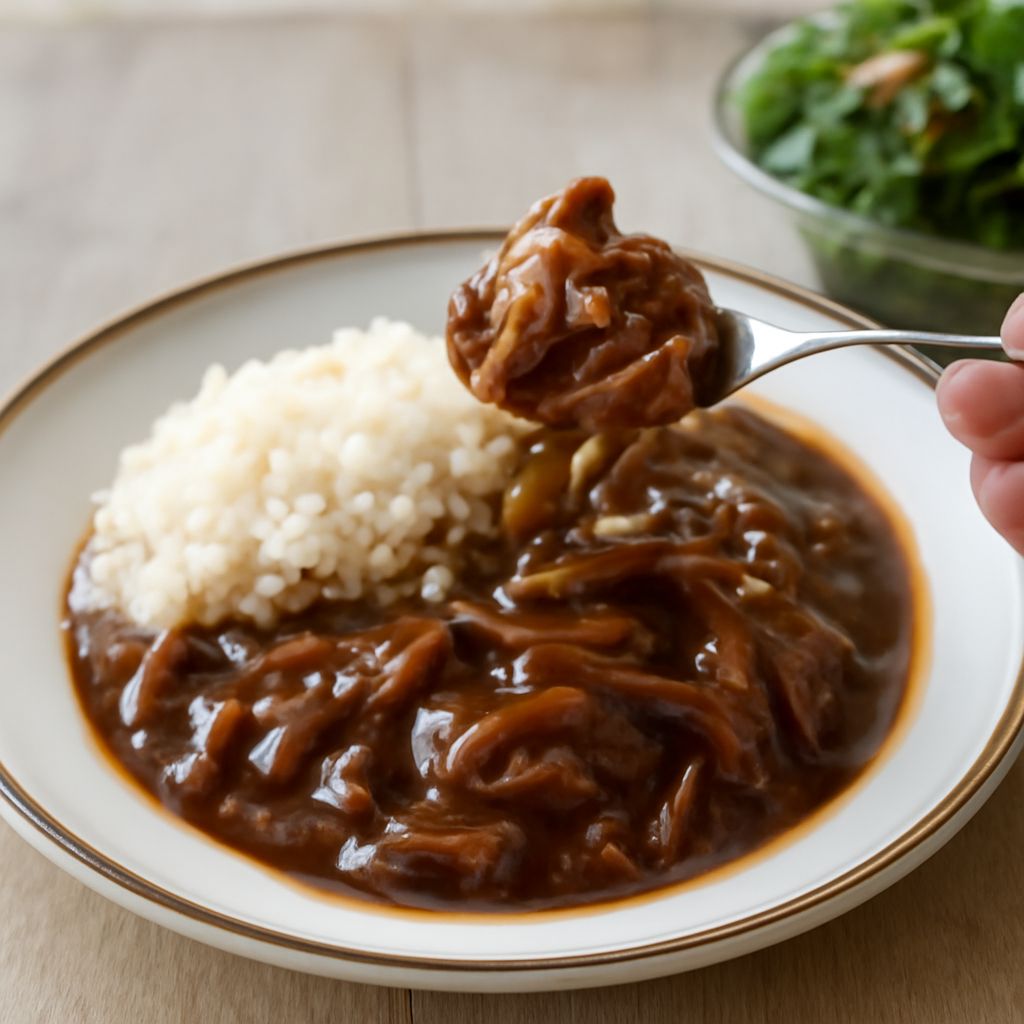
This demi-glace recipe gives you the classic method: roast beef bones, simmer them into brown stock, make an espagnole-style brown sauce, combine the two, and reduce the mixture by half. The finished sauce should be glossy, deeply savory, and concentrated enough to enrich a pan sauce, braise, or steak without tasting like plain gravy.
You will need most of a day for the traditional version, although the shortcut below turns 4 cups of quality stock into 1 cup of demi-glace-style sauce in about an hour. That faster method is a concentrated stock reduction, not classic demi-glace, because it skips the separate espagnole step.
Demi-Glace Recipe: Brown Stock, Espagnole-Style Sauce, and the Classic Half-Reduction
Classic demi-glace combines equal parts brown stock and espagnole sauce, then reduces the mixture by half. Brown stock supplies roasted beef flavor, collagen, and body. Espagnole, a classic French brown sauce, adds a browned roux, aromatic vegetables, and tomato for depth and a stable texture.
For about 2 cups of finished demi-glace, gather:
- 5 pounds beef or veal marrow and joint bones
- 1 large onion, 2 carrots, and 2 celery ribs, roughly chopped
- 2 tablespoons tomato paste
- 12 cups cold water, or enough to cover the bones
- 2 tablespoons unsalted butter or beef fat
- 2 tablespoons all-purpose flour
- 4 cups strained brown stock for the espagnole sauce, plus 4 cups for blending
- 1 bay leaf and a few parsley stems, tied with kitchen twine
- Salt, added only when you use the finished sauce
The yield varies with the size of your pot and the strength of your stock. Begin with about 8 cups of strained brown stock after simmering, and expect about 2 cups after the final reduction.
Build a Classic Beef Demi-Glace Base: Roast Bones, Add Aromatics, and Skim
- Roast the bones. Heat your oven to 450°F. Arrange the bones in a heavy roasting pan and roast for 40 to 50 minutes, turning once, until they are a deep mahogany brown. Pale bones produce a thin, mild stock; blackened bones make the finished sauce bitter.
- Brown the vegetables. Add the onion, carrot, and celery to the pan for the final 20 minutes. Stir once or twice so the vegetables caramelize without burning. Spread the tomato paste over the bones and vegetables during the last 5 minutes.
- Start the stock. Transfer everything to a stockpot. Pour a cup of hot water into the roasting pan, scrape up the browned fond, and add that liquid to the pot. Add the remaining cold water. Bring the pot slowly to a bare simmer, never a rolling boil.
- Skim repeatedly. During the first hour, use a ladle to remove gray foam and excess fat from the surface every 15 to 20 minutes. Continue simmering uncovered for 6 to 8 hours. Keep the liquid just hot enough for occasional bubbles; vigorous boiling emulsifies fat and makes the stock cloudy.
- Strain the stock. Add the bay leaf and parsley stems during the final hour. Strain the stock through a fine-mesh strainer into a clean pot or heatproof container. Do not press the solids, which can force sediment into the stock. Chill it if you are working ahead, then lift off the solidified fat.
- Make the espagnole-style sauce. Melt the butter or beef fat in a clean saucepan over medium heat. Whisk in the flour and cook for 4 to 6 minutes, stirring, until the roux is brown and smells nutty. Gradually whisk in 4 cups of strained brown stock. Add the herb bundle and simmer gently for about 1 hour, skimming any foam or fat. Strain again.
Your brown stock should feel lightly gelatinous when chilled and taste savory but not salty. The espagnole-style sauce should lightly coat a spoon before you combine it with the remaining 4 cups of brown stock.
How to Make Demi-Glace: Strain, Reduce, and Check the Final Yield
- Combine the sauces. Pour equal parts espagnole-style sauce and brown stock into a wide, heavy saucepan. For the target yield, use about 4 cups of each.
- Reduce slowly. Bring the mixture to a gentle simmer over medium-low heat. Reduce uncovered for 1 to 2 hours, skimming the surface as needed, until the 8 cups become approximately 2 cups. Stir occasionally, especially near the end, because the concentrated sauce can scorch.
- Check the consistency. Dip in a spoon and run your finger across the back. The line should remain clear, and the sauce should fall in a slow, glossy sheet rather than run like broth. When chilled, it should set softly like a firm gel.
- Strain and cool. Pass the hot demi-glace through a fine strainer into a shallow container. Cool it quickly, then refrigerate it. Remove any fat that rises to the surface before using.
The finished beef demi-glace should have intense roasted flavor, a smooth texture, and enough natural gelatin to add body without a floury taste. Keep it unsalted or lightly seasoned during preparation, since reduction magnifies salt. Whisk 1 to 2 tablespoons into a pan sauce, or loosen it with stock when you need a larger quantity.
An Easy Demi-Glace Recipe Shortcut: Reduce 4 Cups of Quality Stock to 1 Cup
For an easy demi-glace recipe without a full day of roasting and simmering, start with 4 cups of unsalted, gelatin-rich beef stock. Choose a stock that firms up slightly when chilled; a watery stock will reduce in volume but remain thin. This shortcut produces a concentrated stock sauce with demi-glace-like uses, but it is not the classic brown stock-and-espagnole preparation.
- Pour 4 cups of quality beef stock into a wide saucepan. Add a small piece of roasted onion or a sprig of thyme if the stock needs more aroma, but avoid adding salt.
- Bring the stock to a gentle simmer over medium heat. Reduce uncovered for 45 to 75 minutes, adjusting the heat so the liquid bubbles steadily without boiling hard.
- Skim foam and fat during the first 15 minutes. As the volume drops, watch the pan closely and stir more often to prevent scorching.
- Stop when about 1 cup remains and the liquid coats the back of a spoon. If it tastes harsh or salty, you reduced it too far; dilute it with a little unsalted stock.
- Strain the reduction if you added aromatics, then cool it. Use it immediately in a sauce or refrigerate it for several days.
This faster reduction is ideal when you need a concentrated base for steak sauce, mushroom sauce, or braised beef. It gains body from the original stock but does not contain the separately prepared espagnole sauce that defines classic demi-glace.