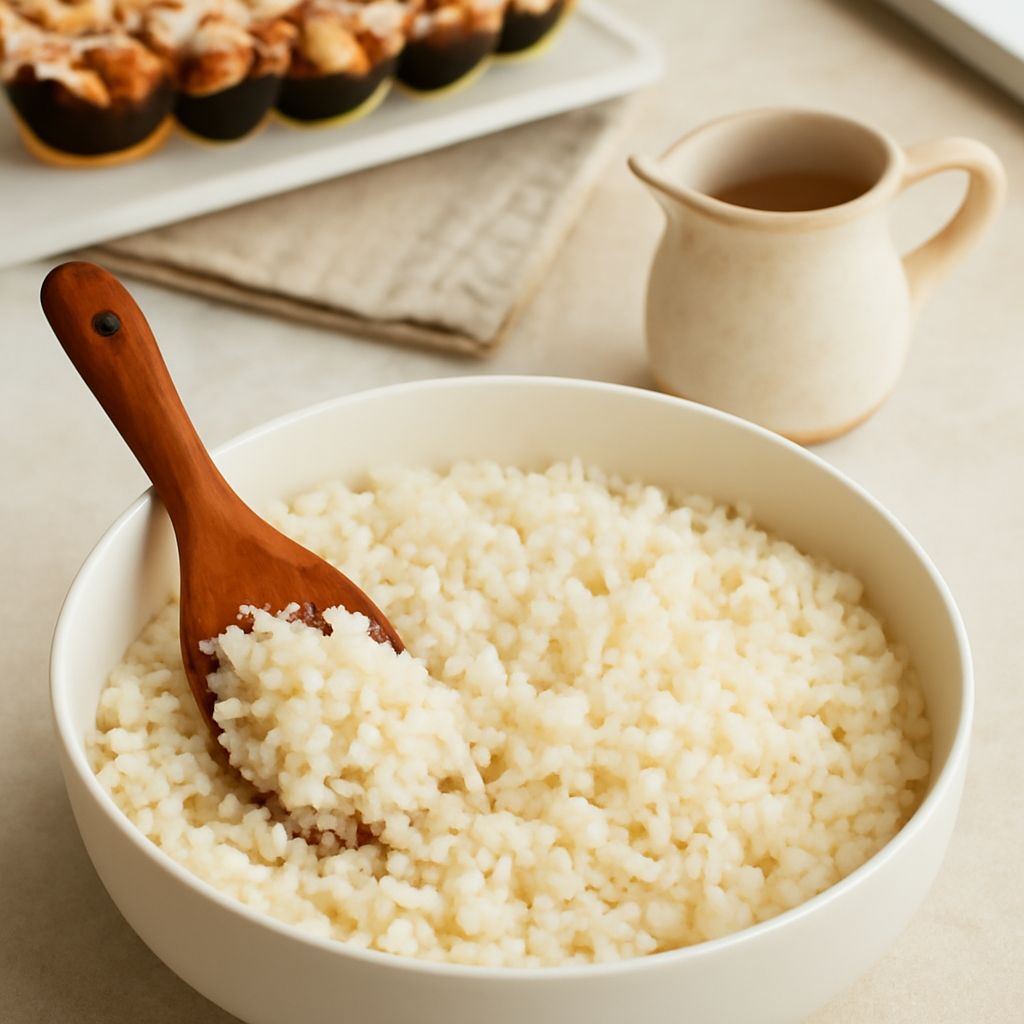
For reliable brown sushi rice, use 2 cups short- or medium-grain brown rice, 3 cups water, and a seasoning mixture of 1/3 cup unseasoned rice vinegar, 2 tablespoons sugar, and 1 teaspoon fine salt. You’ll get about 5 cups of cooked rice, enough for roughly 6 to 8 sushi rolls depending on how generously you fill them.
The bran layer makes brown rice slower to soften, firmer to chew, and less naturally sticky than white sushi rice. Rinse it well, soak it briefly, cook it for 45 to 55 minutes, and let it rest for 15 minutes before seasoning. Fold the vinegar mixture through the rice gently so the grains stay intact.
Brown Rice Sushi Recipe: 2 Cups Rice, 3 Cups Water, About 5 Cups Yield
This brown rice sushi recipe uses a little more water and a longer cooking time than a typical white-rice method. The finished grains should be tender enough to bite through but still slightly firm, with enough surface moisture to hold a roll together.
Ingredients
- 2 cups short- or medium-grain brown rice
- 3 cups water
- 1/3 cup unseasoned rice vinegar
- 2 tablespoons granulated sugar
- 1 teaspoon fine salt
Yield: About 5 cups cooked brown sushi rice, or enough for 6 to 8 standard maki rolls.
Equipment: A fine-mesh strainer, a heavy saucepan with a tight-fitting lid, a small saucepan or microwave-safe bowl, and a wide shallow bowl or baking dish for cooling.
Short- or medium-grain brown rice works best because its grains have more surface starch than long-grain brown rice. Even so, expect a looser, chewier result than white sushi rice. If you need especially neat rolls, use fillings that are not too wet and avoid packing the rice into a thick layer.
Choose and Rinse Brown Sushi Rice for a Softer Texture
Choose plain, unseasoned short- or medium-grain brown rice. Avoid instant brown rice, parboiled rice, and long-grain varieties for this method; their texture and starch profile make them less suitable for rolling. Brown rice labeled “sushi rice” is ideal, but regular short-grain brown rice also works.
- Measure 2 cups of rice into a fine-mesh strainer.
- Rinse under cool running water, gently rubbing the grains with your fingers, until the water runs mostly clear. This removes loose starch, dust, and bran particles that can make the cooked rice gummy.
- Transfer the rinsed rice to the saucepan and cover it with fresh water. Soak for 30 minutes, then drain thoroughly.
The soak gives water more time to penetrate the bran before cooking, which helps the center soften without leaving the outside broken or mushy. If you skip the soak, the rice may need an additional 5 to 10 minutes of cooking, and the finished grains may be noticeably firmer.
How to Make Brown Sushi Rice: Cook 45–55 Minutes, Rest 15
- Put the drained rice in a heavy saucepan with 3 cups fresh water. Swirl the pan once to level the grains, then cover tightly.
- Bring the water to a full boil over medium-high heat. As soon as it boils, reduce the heat to very low. Keep the lid on throughout cooking so steam does not escape.
- Cook for 45 to 55 minutes. Start checking at 45 minutes. The rice is ready when the grains are tender through the center, the water has been absorbed, and you see small steam holes across the surface.
- Turn off the heat and leave the covered saucepan undisturbed for 15 minutes. This rest is important: trapped steam finishes hydrating the bran and evens out moisture between the top and bottom of the pot.
Do not stir the rice during cooking. Stirring can release excess starch and break the softened grains. Do not remove the lid repeatedly, either; each opening releases steam and can leave the rice tough.
After the rest, check the texture before seasoning. Properly cooked sushi brown rice should bend slightly when pressed and should not have a hard, chalky center. If it is still crunchy, sprinkle 2 to 3 tablespoons of water over the rice, cover it, and cook over low heat for 5 to 10 more minutes. If the rice is wet at the end of cooking, leave the lid off for 3 to 5 minutes so excess steam can escape, but do not let it dry out.
Season, Fold, Cool, and Roll Gently: 1/3 Cup Vinegar, 2 Tbsp Sugar, 1 Tsp Salt
Make the seasoning while the rice rests. Combine the rice vinegar, sugar, and salt in a small saucepan over low heat, or warm them briefly in a microwave-safe bowl. Stir just until the sugar and salt dissolve. Do not boil the vinegar, because boiling drives off some of its clean acidity.
- Transfer the hot rice to a wide, shallow bowl or baking dish. Spread it into an even layer so steam can escape.
- Drizzle the warm vinegar mixture evenly over the surface.
- Use a rice paddle or wide spatula to cut down through the rice, then lift and fold it over itself. Turn the bowl as you work. Avoid circular stirring, pressing, or mashing.
- Continue folding until the seasoning is distributed and the grains look glossy. Separate large clumps with the edge of the paddle, but stop before the rice becomes paste-like.
- Cool the rice to room temperature, gently turning it once or twice to release steam evenly. The process usually takes 15 to 20 minutes in a wide dish.
Brown rice absorbs seasoning differently from white rice, so taste a small portion once it has cooled slightly. It should taste lightly sweet, pleasantly acidic, and salted enough to complement the filling without overpowering it. The nutty bran flavor will remain part of the finished rice; the vinegar should balance it rather than hide it.
Do not refrigerate the rice before rolling. Cold storage makes the grains hard and reduces their ability to cling. If you need to hold it briefly, cover it loosely with a clean, damp kitchen towel and use it within a few hours. Keep the rice at room temperature while you prepare the rolls.
To use the rice, place a sheet of nori shiny-side down on a bamboo mat. Dip your fingers in water, shake off the excess, and spread about 3/4 cup rice over the nori in a thin layer. Brown rice is less adhesive than white rice, so press gently enough to create an even surface without crushing the grains. Leave about 1 inch of bare nori at the far edge.
Add a modest line of filling across the lower third. Wet the exposed nori edge lightly, lift the mat, and roll forward with steady pressure. Compress the roll just enough to hold its shape; squeezing hard can force out the filling and turn the rice dense. Use a sharp, damp knife to cut the roll into pieces, wiping the blade between cuts.
For the most secure rolls, choose compact fillings such as cucumber, avocado, carrot, smoked salmon, or cooked shrimp. Avoid overfilling with watery vegetables or loose ingredients. Brown sushi rice will hold a roll when properly cooked and handled, but it will not have the identical stickiness or soft texture of short-grain white sushi rice.