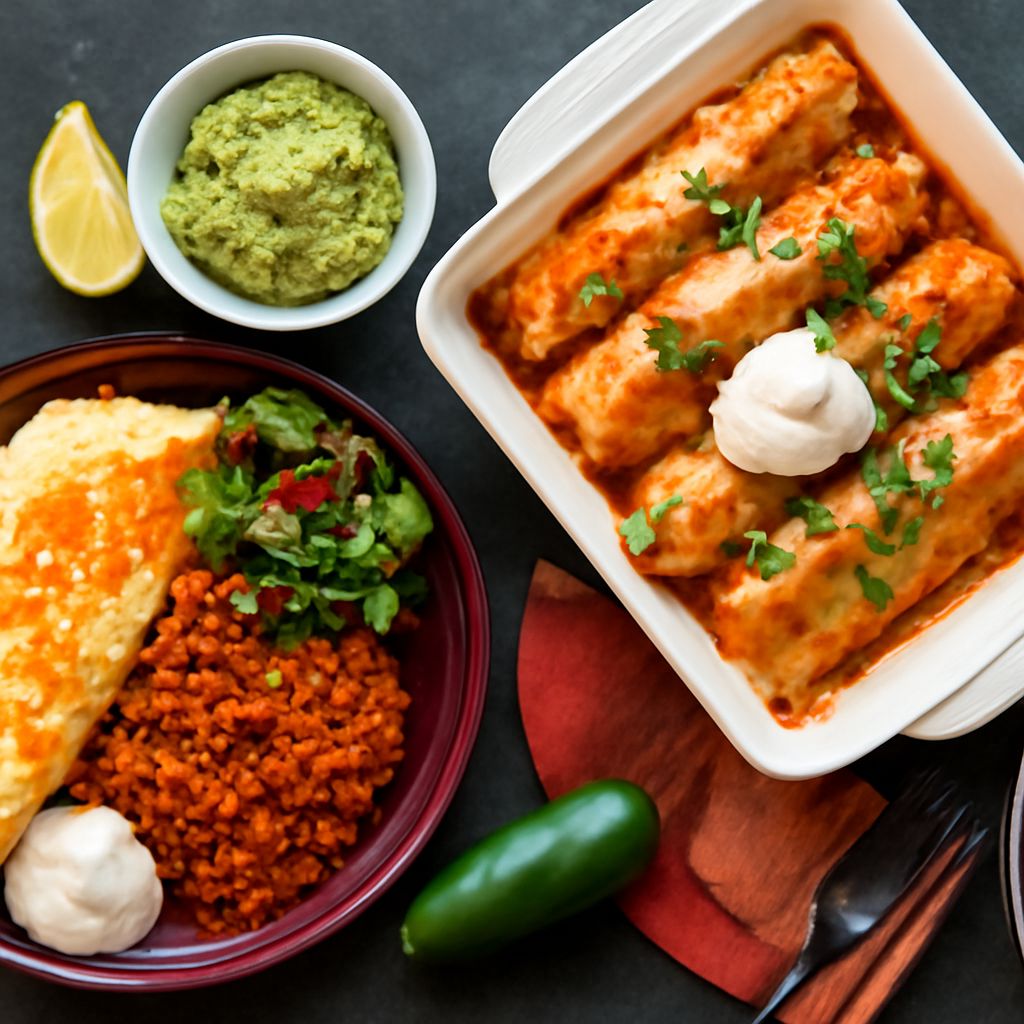
Burrito vs enchilada comes down to format and finishing: a burrito encloses its filling in a usually flour tortilla for hand-held eating, while an enchilada wraps filling in a typically corn tortilla, covers it with chile sauce, and usually goes to the oven before you eat it with a fork.
Both dishes can contain meat, beans, cheese, rice, vegetables, or similar toppings, so the filling alone does not tell you which one you are ordering. The tortilla, wrapping method, sauce, cooking process, and serving style make the clearer distinction.
Burrito vs enchilada: the difference in one sentence
A burrito is a sealed tortilla package designed to hold together as you eat it, while an enchilada is a rolled tortilla dish whose sauce and plated presentation are part of the main preparation.
That difference affects nearly every practical detail. You can usually pick up a burrito, carry it in foil, and eat it without utensils. You typically receive enchiladas on a plate, covered in sauce and cheese, with a fork or knife. A burrito often works as a complete individual meal; enchiladas commonly arrive as two or three smaller rolls with rice, beans, salad, or other sides.
The difference between enchilada and burrito starts with tortilla, filling, and wrapping
Tortilla: Burritos generally use large flour tortillas because flour tortillas are flexible, durable, and wide enough to hold a substantial filling. Some burritos use other sizes or corn tortillas, but the large flour tortilla is the familiar standard.
Enchiladas traditionally use smaller corn tortillas. Cooks often soften them briefly in oil or warm chile sauce so they bend around the filling without splitting. Flour tortillas can appear in some regional or restaurant versions, so tortilla type is a strong clue rather than an absolute rule.
Filling: You may find many of the same ingredients in both dishes. A burrito might contain carne asada, chicken, beans, rice, cheese, lettuce, salsa, and guacamole. An enchilada might contain shredded chicken, beef, cheese, beans, potatoes, or vegetables. The difference between enchilada and burrito is not simply “which ingredients go inside.” It is how those ingredients are enclosed and finished.
Burrito fillings tend to form a larger, layered meal inside one tortilla. Rice and beans add bulk, while cheese, salsa, sour cream, or vegetables add contrast. Enchilada fillings are often more focused because each tortilla holds a smaller portion, and the sauce supplies much of the moisture and flavor.
Wrapping: To assemble a burrito, you place the filling in the center or lower third of the tortilla, fold in the sides, and roll it forward so the ends are closed. The finished package stays intact in your hands. A restaurant may grill the folded burrito to brown the tortilla and help seal it.
To assemble an enchilada, you place filling along a softened tortilla, roll it around the filling, and set it seam-side down in a baking dish or on a plate. The ends usually remain open. A serving contains multiple separate rolls rather than one fully sealed package.
The difference between burrito and enchilada: sauce, cooking, and serving
Sauce: Chile sauce plays a central role in an enchilada. Red chile sauce, green chile sauce, mole, or another seasoned sauce coats the rolled tortillas and soaks into them during cooking. The sauce adds moisture, chile flavor, color, and the characteristic tender texture that makes the dish an enchilada.
A burrito may contain salsa, chile sauce, or another condiment inside, but the tortilla usually remains mostly dry on the outside. You may receive salsa, hot sauce, queso, or sour cream on the side. Some restaurants serve a burrito “wet,” covering it with sauce and cheese, but a wet burrito is not automatically identical to an enchilada. It can still use a large flour tortilla, remain fully enclosed, and preserve the burrito’s one-package structure.
Cooking: You can assemble and serve a burrito without baking it. The tortilla and fillings may be warm from the cooking line, and the completed burrito may receive a quick griddle toast. This keeps the outside relatively firm and makes the dish suitable for transport.
Enchiladas usually require an additional cooking step after assembly. Cooks arrange the rolls in a dish, cover them generously with chile sauce, add cheese or other toppings, and bake them until the filling is hot and the sauce bubbles. The tortillas soften as they absorb the sauce. Some preparations use a skillet or finish the rolls directly on a plate, but the sauced, heated presentation remains the defining idea.
Utensils and texture: You can normally eat a burrito with your hands because its folded tortilla contains the filling. Expect a soft center and a more structured exterior, especially when the burrito is lightly grilled. If it is heavily sauced, cut open, or filled beyond its capacity, you may need a fork.
Enchiladas are usually fork food. Sauce makes the tortilla tender, and cutting through several rolls releases filling onto the plate. Melted cheese, crema, onions, cilantro, and other toppings add soft, creamy, or fresh textures rather than the compact bite of a hand-held burrito.
Enchiladas vs burrito: which dish fits your meal?
- Choose a burrito for portability. Its sealed ends and sturdy flour tortilla make it the better choice for a commute, lunch break, picnic, or any meal you need to carry. Wrap it in foil if you want to retain heat and keep the filling contained.
- Choose enchiladas for a saucy meal. If you want chile flavor throughout the tortilla, a tender texture, melted cheese, and sauce on every bite, enchiladas provide that experience more directly.
- Choose a burrito for a compact, substantial portion. One large burrito can combine the main filling, rice, beans, and toppings in a single package. It is convenient when you want one self-contained entrée.
- Choose enchiladas for a plated portion style. Two or three rolls let you sample a filling with rice, beans, salad, or other sides. This format also works well when you prefer to eat slowly with a fork rather than manage one large handheld item.
- Choose based on texture. A burrito gives you a flour-tortilla wrap with distinct layers of filling. Enchiladas give you softened corn tortillas, absorbed chile sauce, and a more cohesive baked texture.
The phrase enchiladas vs burrito therefore describes more than two filling options. If you want a portable, enclosed meal, order a burrito. If you want rolled tortillas transformed by chile sauce and served hot on a plate, order enchiladas.