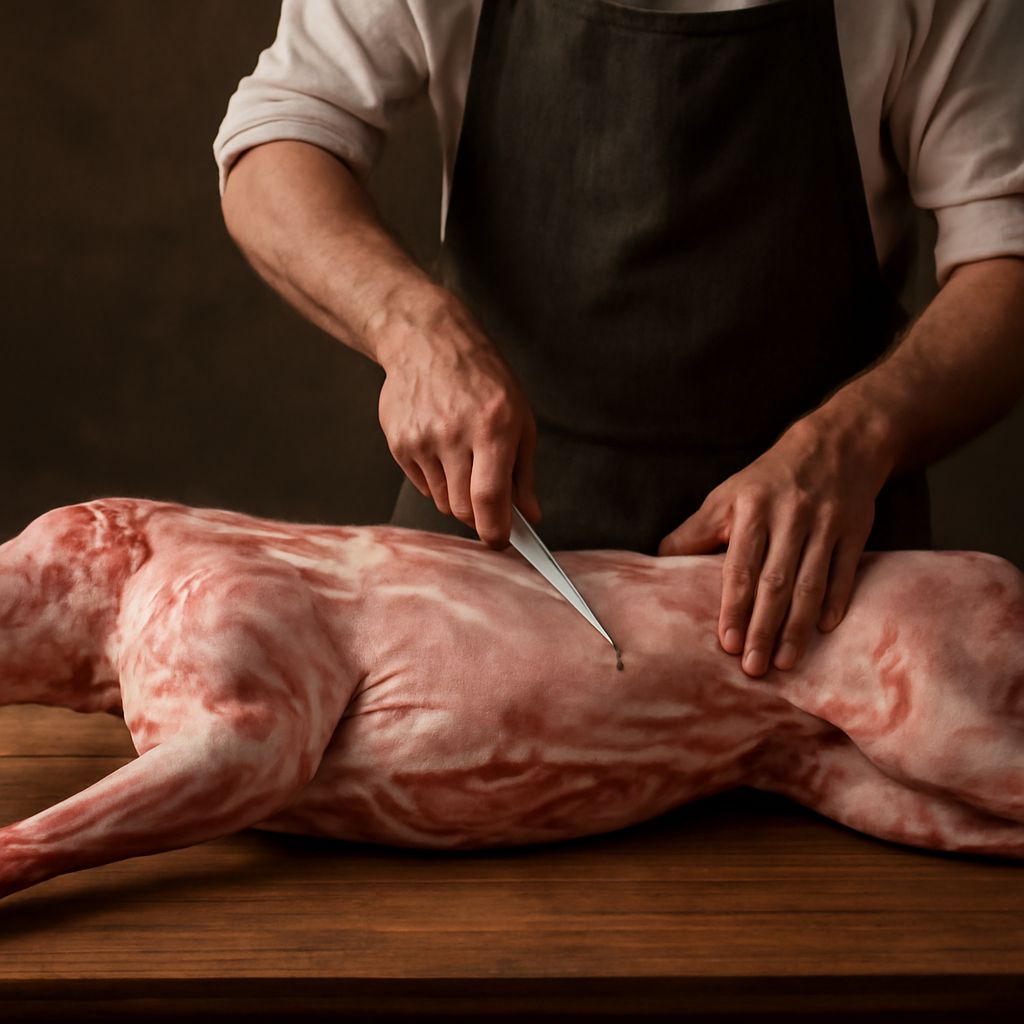
The different cuts of lamb vary in tenderness, fat, bone, and connective tissue, so the best cooking method depends on where the cut comes from. Tender loin and rack cuts suit quick, high heat; collagen-rich shoulder, neck, and shank need slow cooking to become soft.
Use this cuts of lamb chart as a quick reference, then match the cut to roasting, grilling, braising, or stewing. The names may vary by butcher: a rack can become rib chops, a leg can be butterflied, and shoulder may be sold as blade or arm roast.
Different Cuts of Lamb: Shoulder, Neck, and Shank
Shoulder and neck: well-used muscles for braising
The shoulder sits in the forequarter behind the neck and above the front leg. Because the animal uses these muscles frequently, shoulder contains more connective tissue than loin or rack. It also has useful fat and, in bone-in versions, a blade bone that adds flavor and body to the cooking liquid.
You may see shoulder sold as a shoulder roast, blade roast, arm roast, or boneless shoulder. Bone-in shoulder is especially forgiving: roast it slowly until the meat pulls apart, or braise it with stock, wine, or tomatoes. Boneless shoulder can be rolled and roasted, cut into stew meat, or butterflied for grilling, although it benefits from a marinade and careful cooking.
The neck runs between the head and shoulder. It contains small bones, seams of connective tissue, and flavorful meat rather than large, neat muscle sections. Neck slices or neck fillets work well in braises, stews, curries, and soups. Cook the meat until it yields easily from the bone; short cooking leaves the connective tissue chewy.
Shank: collagen-rich meat for slow cooking
The shank is the lower portion of the front or hind leg. It is comparatively lean but packed with collagen because the leg supports the animal. That combination makes it a poor choice for fast grilling and an excellent choice for a long, gentle braise.
Whole shanks are commonly braised in a covered pan until fork-tender. As collagen dissolves, it thickens the cooking liquid and gives the meat a silky texture. Foreshanks are usually smaller and leaner; hind shanks may be meatier. Either one needs more time than a tender lamb chop.
Cuts of Lamb Chart: Rack, Rib, and Loin
Rack and rib: tender, fatty, bone-in cuts
The rack comes from the upper rib section between the shoulder and loin. It contains a row of rib bones, a tender eye of meat, and a layer of fat that protects the meat during cooking. A whole rack may be trimmed and “frenched,” meaning the rib bones are cleaned for presentation. When cut between the bones, it becomes rib chops.
Rack and rib chops are among the most tender lamb cuts because the muscles do relatively little work. Their moderate marbling and external fat provide flavor, while the bone adds structure but does not require slow cooking. Roast a rack in a hot oven, or grill rib chops over high heat. Trim only excessive surface fat; removing all of it can leave the meat dry.
Loin: lean, tender, quick-cooking meat
The loin lies behind the rib section and before the leg. It produces loin chops, loin roasts, and sometimes boneless loin portions. These cuts have little connective tissue, a fine texture, and less fat than shoulder or breast.
Use loin chops for grilling, broiling, or pan-searing. Because the meat is lean, cook it quickly and avoid leaving it over high heat. A loin roast can be roasted whole and sliced across the grain. The loin is not the same as the tenderloin, which is a smaller, especially delicate muscle located inside the loin area.
Sheep Meat Cuts: Breast, Flank, and Leg
Breast and flank: fatty or firm cuts
The breast comes from the lower chest and often includes ribs, cartilage, and a substantial layer of fat. It is flavorful but not naturally tender. You can roast it slowly, roll and stuff it, or braise it until the fat renders and the connective tissue softens. A rack of breast needs longer cooking than a rack of ribs from the loin section.
The flank covers the abdominal area behind the breast. It is thinner and firmer, with less uniform tenderness than loin. Depending on the butcher, you may find it as a thin roast, strips, or part of a boneless preparation. Slow roasting, braising, stuffing, and mincing are more reliable than fast grilling. If you grill a thin flank cut, use high heat briefly and slice it across the grain.
Leg: a lean roast or grill-ready portions
The leg forms most of the hindquarter and is sold whole, as a half leg, boneless roast, leg steaks, or a butterflied leg. It is relatively lean, with a firm outer surface and moderate connective tissue. A bone-in leg retains moisture and flavor during roasting; a boneless leg cooks more evenly and is easier to portion.
Roast a whole leg for a traditional centerpiece, adjusting the cooking time to its size and desired doneness. A butterflied leg has more exposed surface area and suits grilling or roasting at high heat. Leg steaks can be grilled or pan-seared, but thick pieces should not be overcooked because the lean meat dries faster than shoulder.
Lamb and mutton: why age changes tenderness and cooking time
Lamb generally comes from a young sheep, while mutton comes from a more mature animal. The same primal location can therefore produce noticeably different meat. Lamb is usually milder and more tender; mutton has a deeper flavor, denser muscle, and more developed connective tissue.
Do not use lamb and mutton interchangeably when planning cooking time. A tender lamb loin can cook quickly, while a comparable mutton cut may need slower, longer treatment. Shoulder, neck, breast, and shank are particularly well suited to braising or stewing when sold as mutton.
Lamb Cuts Chart: Choose a Cut by Cooking Method
Roasting and grilling: match heat to tenderness
- Roasting: Choose rack, loin, leg, or shoulder. Use a hot oven and shorter cooking for rack and loin; use lower heat and more time for shoulder. Leg works with either a conventional roast or a butterflied high-heat preparation.
- Grilling: Choose rib chops, loin chops, leg steaks, or butterflied leg. These cuts have enough tenderness for direct heat. Keep the surface from burning before the center cooks, especially on thick leg portions.
- Quick cooking: Favor cuts with little connective tissue, including loin and rack. Their tenderness comes from the muscle itself, so extended cooking offers no advantage and can make them dry.
Braising and stewing: use time to soften connective tissue
- Braising: Choose shoulder, neck, shank, breast, or firm flank. Brown the meat first if you want a deeper crust, then cook it partly covered in liquid until a fork slides in easily.
- Stewing: Use trimmed shoulder, neck, shank meat, breast, or flank cut into even pieces. Keep the heat gentle and allow enough time for collagen to dissolve without boiling the meat aggressively.
- Bone-in cuts: Select shank, neck, shoulder, or breast when you want gelatin and a fuller cooking liquid. Boneless cuts are easier to portion, but they may need closer attention because they lose moisture more quickly.