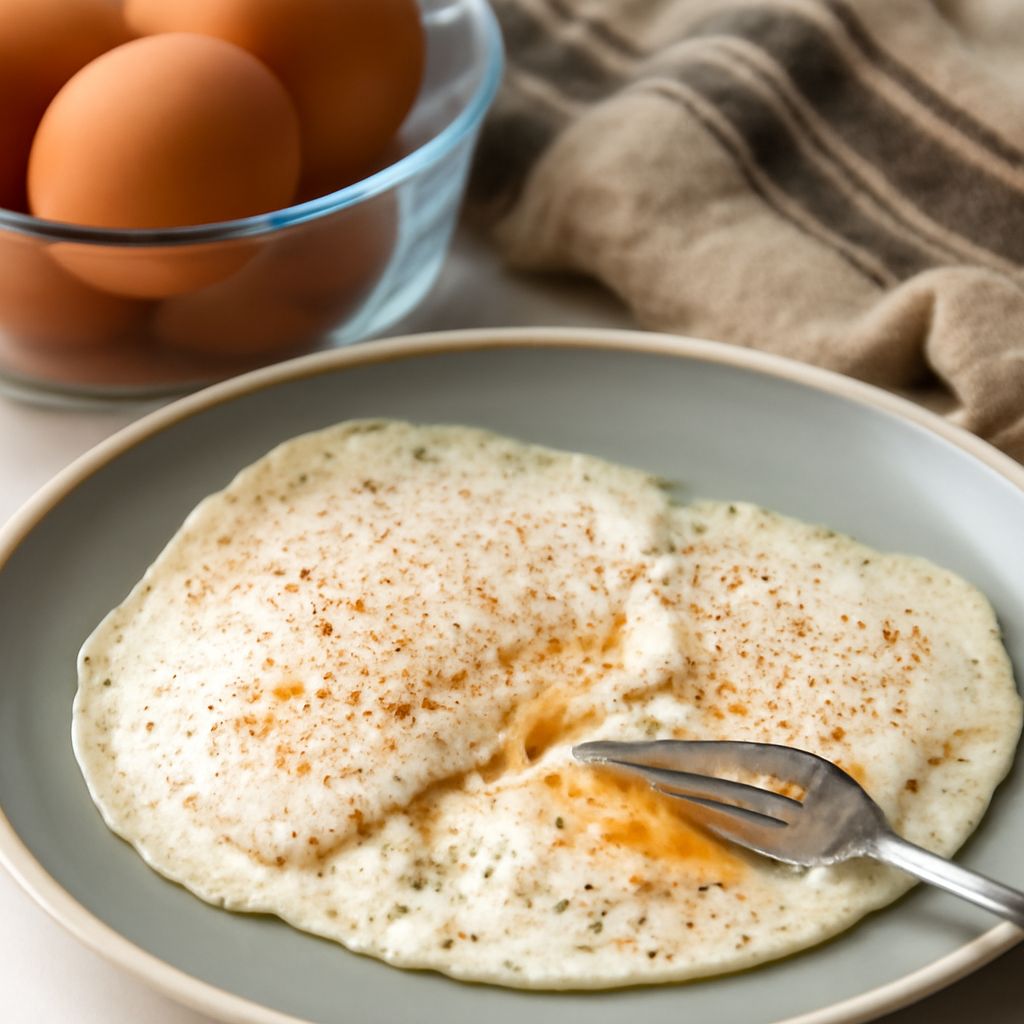
To cook eggs over easy, use moderate heat, enough butter or oil to help the egg release, and a brief second-side cook. The whites should be fully set, while the yolk remains warm, glossy, and runny.
For one egg, use an 8-inch nonstick skillet, 1 teaspoon of butter or neutral oil, a flexible spatula, and one large egg. Crack the egg into a small bowl first so you can slide it into the pan smoothly.
How to Cook Eggs Over Easy: Heat the Pan and Add the Egg
- Place the skillet over moderate heat. On a typical stovetop, this is medium-low to medium. Let the pan warm for about 1 minute.
- Add the butter or oil. Butter should melt and foam gently without turning brown. Oil should look fluid and lightly shimmer, not smoke.
- Slide the egg into the center of the pan. Keep the egg close to the surface as you add it to prevent the yolk from breaking.
- Cook without moving the egg for about 1 1/2 to 2 minutes. If the white spreads unevenly, gently nudge it into a round shape with the spatula.
Moderate heat gives the white time to set before the underside becomes tough or browned. If the butter browns immediately or the white crackles aggressively, lower the heat. If the white barely changes after 30 seconds, increase the heat slightly.
Know When the First Side Is Ready: Set Edges and a Glossy Top
The first side is ready to flip when the edges are opaque and firm, the white has mostly turned solid, and the egg moves when you gently shake the skillet. The area directly around the yolk may still look slightly translucent or glossy. That is normal and helps you keep the yolk runny.
Look for these visual cues:
- Set edges: The outer rim is white rather than clear and does not ripple when you tilt the pan.
- Mostly opaque white: The white is cooked beneath and around the yolk, with only a thin glossy layer on top.
- Loose egg: The egg slides a little when you shake the skillet. If it stays stuck, loosen it before attempting to flip.
- Intact yolk: The yolk should still look rounded and bright. Do not wait for it to turn pale or firm.
For a thicker white, cover the pan for 20 to 30 seconds during the first-side cook. The trapped steam sets the top without requiring higher heat. Remove the lid before flipping so condensation does not drip onto the egg or spatula.
Flip and Finish the Perfect Over-Easy Egg: 10–15 Seconds for a Runny Yolk
When the first side is ready, loosen the egg completely before flipping. Slide a wide, thin spatula under the egg, aiming beneath the yolk rather than only under the white.
You have two reliable flipping options:
- Single-spatula flip: Push the spatula fully under the egg, lift it just 1 to 2 inches, and turn your wrist in one quick motion. Lower the egg gently so the yolk does not strike the pan.
- Two-spatula flip: Slide one spatula under most of the egg and use a second spatula to steady the top or support the far edge. Turn the egg together, then lower it smoothly. This method is useful when the white is large, delicate, or slightly stuck.
Once flipped, cook the second side for 10 to 15 seconds over moderate heat. This short cook sets the thin layer of white around the yolk while leaving the yolk liquid. For an especially loose yolk, use about 10 seconds. Use closer to 15 seconds if the top still looks wet.
Transfer the egg to a plate immediately. A finished over-easy egg has completely set whites, a lightly cooked underside, and a warm yolk that flows when you cut into it. The yolk should not feel firm or look chalky. If you want a yolk with a slightly thicker outer layer but a liquid center, add only a few seconds, rather than cooking the second side for a full minute.
Fix Sticking or a Broken Yolk Without Overcooking the Egg
If the egg sticks before the flip, do not force the spatula underneath. Drizzle 1/2 teaspoon of oil or melted butter around the edge of the egg, then wait 10 to 15 seconds. Slide a thin spatula around the perimeter and gradually work underneath. A fully set edge usually releases more cleanly than a rushed one.
If the egg sticks after flipping, leave it in place and cook the second side for the normal 10 to 15 seconds. Scraping repeatedly can tear the white and break the yolk. Use a flexible spatula to lift the egg from underneath when you transfer it.
If the yolk breaks during the flip, lower the heat and finish the egg as quickly as possible. The exposed yolk will cook faster than an intact yolk, so check it after 5 to 10 seconds and transfer it as soon as the whites are set. It will still be soft, but it will not have the classic runny center of a perfect over-easy egg.
To prevent broken yolks next time, use a bowl-to-pan transfer, avoid cracking the egg directly against the skillet, and wait until the white releases before flipping. Keep the spatula flat, support the yolk from underneath, and make one confident turn instead of several small movements.