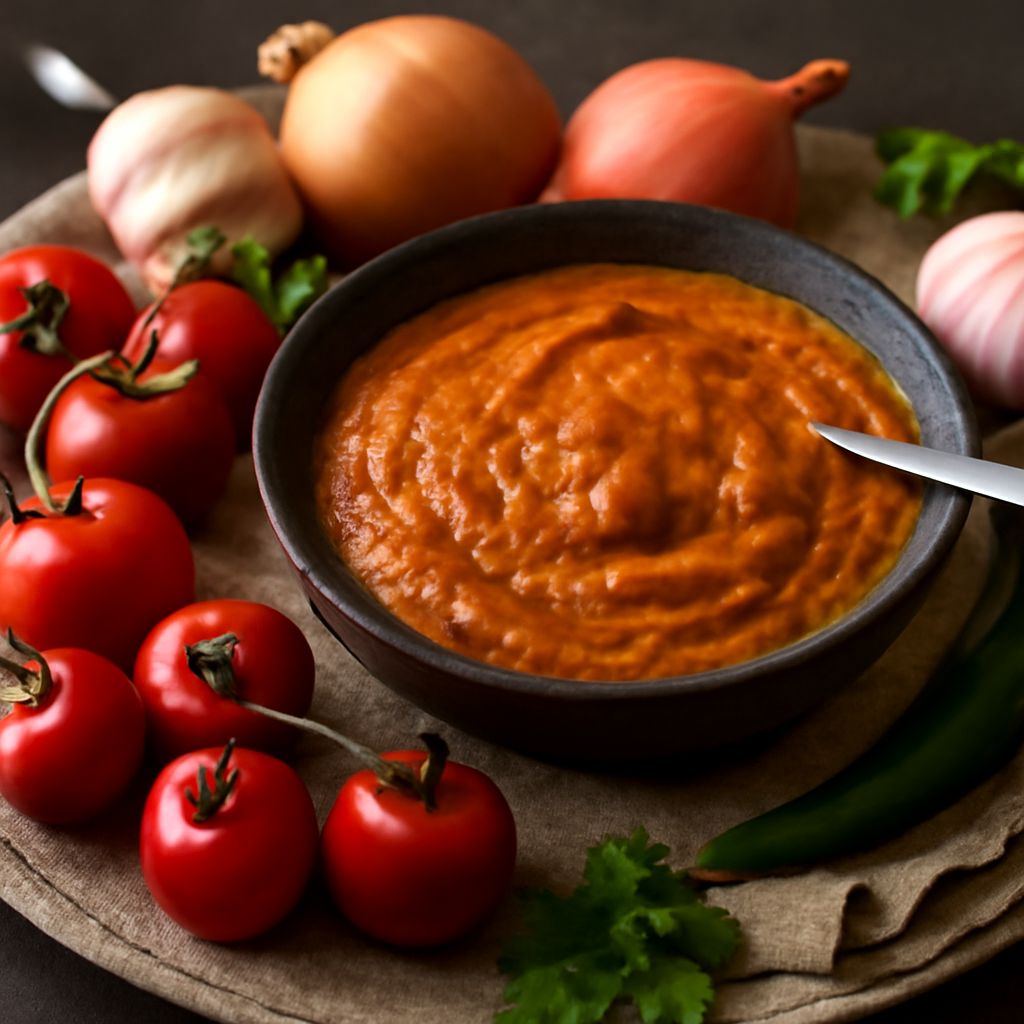
An Indian curry sauce recipe works best as a flexible starting point rather than a single universal formula. This Indian curry sauce uses onion, tomato, ginger, garlic, and spices to make about 2 cups of smooth, savory base for chicken, vegetables, chickpeas, paneer, or tofu.
You can serve the base as written or adjust it with dairy, coconut milk, nuts, stock, extra heat, or finishing spices. The method takes about 30 minutes, including chopping and simmering.
Indian Curry Sauce Recipe: 30-Minute Onion-Tomato Base
Makes: about 2 cups, enough for 4 servings with a main ingredient
- 2 tablespoons neutral oil or ghee
- 1 teaspoon cumin seeds
- 1 medium yellow onion, finely chopped
- 1 tablespoon grated fresh ginger
- 3 garlic cloves, minced
- 1 teaspoon ground coriander
- 1 teaspoon ground cumin
- 1/2 teaspoon turmeric
- 1 teaspoon Kashmiri chili powder or sweet paprika
- 1/2 teaspoon fine salt, plus more to taste
- 1 cup crushed tomatoes
- 1/2 cup water or unsalted stock
- Heat the oil or ghee in a wide skillet or saucepan over medium heat. Add the cumin seeds and cook for 30 seconds, until they sizzle and smell nutty.
- Add the onion. Cook for 8 to 10 minutes, stirring often, until soft and golden. Do not rush this step; pale, undercooked onion can leave the sauce sharp and thin.
- Stir in the ginger and garlic. Cook for 1 minute, just until fragrant and no longer raw-smelling.
- Add the coriander, ground cumin, turmeric, chili powder, and salt. Stir for 20 to 30 seconds. If the spices stick, add 1 tablespoon of water and lower the heat.
- Pour in the crushed tomatoes. Cook for 8 to 10 minutes, stirring occasionally, until the mixture is thick and glossy and oil begins to show at the edges. If it still smells strongly of raw tomato, keep cooking for another 2 minutes.
- Add the water or stock. Simmer uncovered for 5 to 7 minutes. Blend with an immersion blender for a smooth sauce, or leave it textured. Taste and adjust the salt.
The finished base should coat a spoon without being pasty. Use it immediately, or cool it quickly and refrigerate it for up to 3 days. If it becomes too thick while reheating, loosen it with water or stock.
What Is Indian Curry Sauce? Regional Styles and Uses
Indian curry sauce is a broad English-language term for a spiced preparation that coats meat, seafood, vegetables, legumes, or cheese. Indian curry sauces vary by region and dish, so no single base defines them all.
A North Indian onion-tomato gravy may use ginger, garlic, cumin, coriander, and garam masala. A korma can rely on yogurt, cream, or ground nuts for a pale, rich sauce. South Indian preparations often bring in coconut, curry leaves, mustard seeds, or tamarind, while Goan sauces may combine coconut with chile and vinegar. Some dishes are dry or lightly coated and do not use much sauce at all.
The recipe above is a practical restaurant-style base: a neutral foundation that lets you choose the final texture, richness, heat, and regional direction.
What Is in Curry Sauce? Measured Ingredients and Cooking Cues
Most curry sauce recipes balance five roles, although the exact ingredients change from dish to dish:
- Aromatics: Onion supplies sweetness and body; ginger and garlic add sharp, savory depth.
- Fat: Oil or ghee carries the flavor of spices. Ghee gives the sauce a rounder, buttery finish.
- Spices: Cumin and coriander create earthy warmth, turmeric adds color, and chili controls heat. Whole spices are usually bloomed in fat, while ground spices need moisture so they do not burn.
- Acid and body: Tomatoes provide acidity, liquid, and thickness. Yogurt, coconut milk, cream, or nuts can replace or supplement the tomato base.
- Liquid: Water or stock determines how much sauce you get and how easily it coats the main ingredient.
Cook the onion until genuinely soft and golden, then cook the tomato mixture until it thickens. These cues matter more than forcing a precise minute count: undercooked aromatics taste harsh, while scorched spices taste bitter.
How Curry Sauces Change with Dairy, Coconut, Nuts, and Stock
- Dairy: For a tangy, creamy sauce, whisk 1/2 cup plain yogurt until smooth and stir it in over low heat. Add it gradually so it does not split. For a milder, richer result, finish with 1/4 to 1/2 cup heavy cream or 2 tablespoons unsalted butter.
- Coconut: Add 1/2 to 1 cup unsweetened coconut milk for a softer, lightly sweet sauce. Use the smaller amount for body and the larger amount for a looser coconut curry. Simmer gently rather than boiling hard.
- Nuts: Blend 1/4 cup soaked cashews with 1/3 cup water, then stir the puree into the base. It makes the sauce thick, smooth, and mildly sweet, making it useful for a korma-style curry. Ground almonds create a slightly more textured finish.
- Stock: Add 1/2 to 1 cup stock when you need more volume or a lighter consistency. Unsalted stock gives you better control over the final seasoning. Simmer long enough for the sauce to coat the back of a spoon.
Adjust heat with a minced green chile, cayenne, or extra Kashmiri chili. Add finishing spices after the sauce has cooked: 1/2 teaspoon garam masala gives warm fragrance, while 1 teaspoon crushed dried fenugreek leaves adds a savory, restaurant-style aroma. Finish with cilantro, a squeeze of lemon, or a small spoonful of ghee to sharpen or round the flavor.
Curry Sauce Recipes: Adapt the Base into Different Curries
- Rich tomato chicken: Simmer 2 cups of base with 1/2 cup cream, 1 tablespoon butter, and 1/2 teaspoon garam masala. Add 2 cups cooked chicken and simmer for 5 minutes, until hot and coated.
- Chickpea curry: Add one drained 15-ounce can of chickpeas and 1/2 cup stock to 2 cups of base. Simmer for 10 minutes so the chickpeas absorb the spices. Finish with lemon juice or 1/2 teaspoon amchur.
- Cashew vegetable korma: Stir a cashew puree into 2 cups of base, then add 3 cups of par-cooked vegetables. Simmer for 6 to 8 minutes. The sauce should be thick enough to cling to cauliflower, peas, carrots, or potatoes.
- Coconut curry: Add 1 cup coconut milk, 1 sliced green chile, and 3 cups cooked vegetables, tofu, or shrimp. Simmer gently until the main ingredient is tender and the sauce is creamy. Add lime juice at the end.