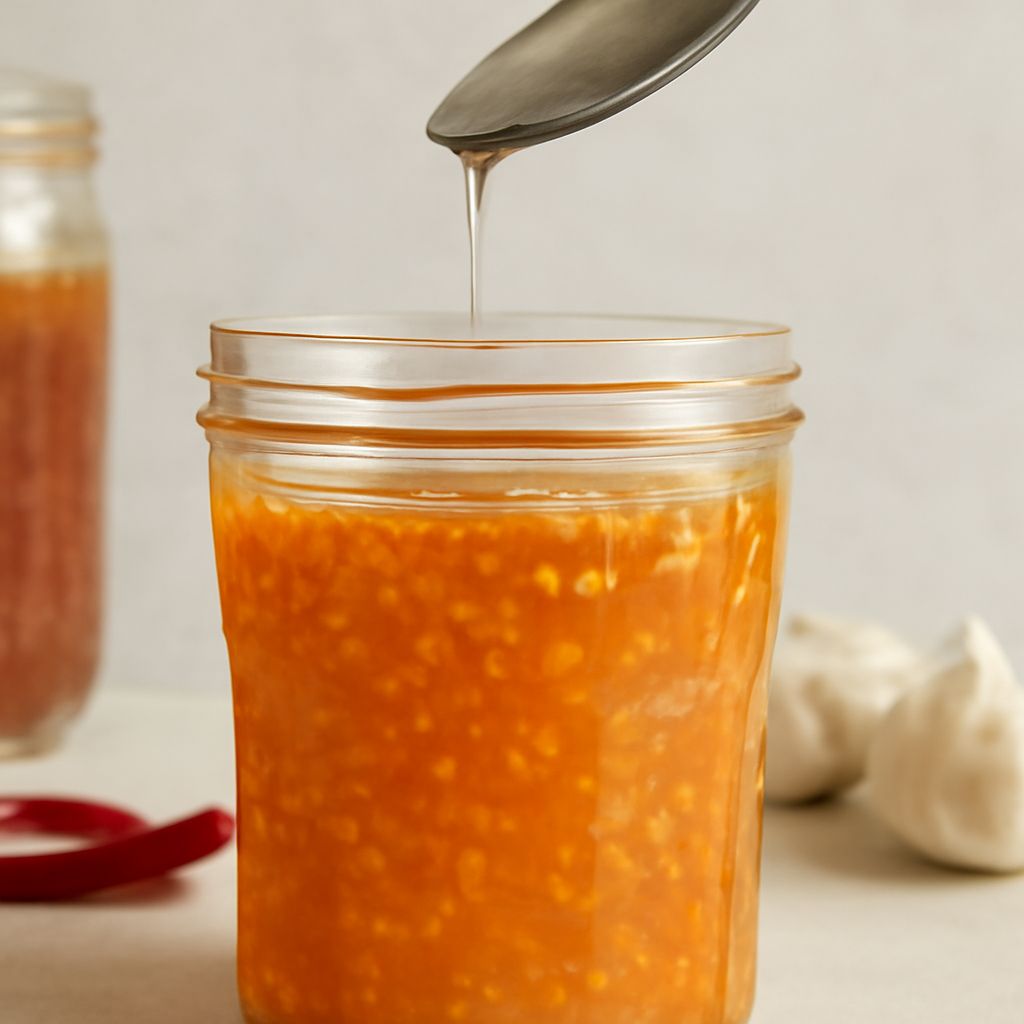
Vietnamese fish sauce is a concentrated fermented seasoning, not usually the finished sauce you serve for dipping. To make a nuoc cham-style table sauce, dilute fish sauce with water and balance it with sugar, lime juice or vinegar, garlic, and chile.
If you are searching for fish sauce in Vietnamese, you are generally looking for the bottled seasoning used in cooking. The recipe below turns that salty, savory ingredient into about ¾ cup of a pourable dipping sauce for spring rolls, grilled meats, noodles, rice bowls, and vegetables.
Vietnamese fish sauce in cooking: the concentrated seasoning
Vietnamese fish sauce is made by fermenting small fish, commonly anchovies, with salt. Over time, the mixture develops a deep umami flavor and a distinct aroma. The finished liquid ranges from pale gold to amber and tastes intensely salty, savory, and slightly sweet.
Use bottled fish sauce in small amounts to season food while it cooks. A few teaspoons can deepen a stir-fry, soup, marinade, fried rice, or braising liquid without adding the bulk of another ingredient. You can also mix it with sugar, acid, water, and aromatics to make a table sauce.
For the best flavor, check the label and choose a bottle whose main ingredients are fish and salt. Different brands vary in saltiness, sweetness, aroma, and intensity, so treat the first batch as a starting point rather than assuming every bottle measures identically. A stronger sauce may need more water or sugar in a dipping mixture; a mild one may need slightly more fish sauce.
Do not drink or serve the bottled seasoning straight as a typical dipping sauce. Its concentrated salt level can overwhelm food. It is designed to be used in measured amounts or balanced with other ingredients.
Bottled fish sauce versus a prepared dipping sauce
Bottled fish sauce is the base seasoning. A prepared nuoc cham-style sauce is a balanced mixture that may contain fish sauce, water, sugar, lime juice or vinegar, garlic, chile, and sometimes other additions such as grated carrot. The two are related, but they are not interchangeable.
Nuoc cham is a broad term used for prepared dipping sauces, so recipes differ by household, dish, and region. This fish-sauce-based version is sweet-sour, salty, aromatic, and thin enough to spoon or drizzle. Other prepared dipping sauces may use a different main ingredient or omit some of these elements.
Think of the distinction this way: add bottled fish sauce to food for seasoning, but put the diluted, adjusted sauce on the table for dipping. Replacing the finished sauce with straight fish sauce will make spring rolls, noodles, or grilled meat taste excessively salty.
Vietnamese fish sauce recipe: measured nuoc cham-style sauce
This Vietnamese fish sauce recipe makes approximately ¾ cup, or 12 tablespoons. It serves four to six people as a dipping sauce.
- ¼ cup Vietnamese fish sauce
- ¼ cup warm water
- 2 tablespoons granulated sugar
- 2 tablespoons fresh lime juice, or 1½ tablespoons unseasoned rice vinegar plus ½ tablespoon water
- 1 small garlic clove, finely minced
- ½ to 1 Thai chile, thinly sliced, or ¼ teaspoon red pepper flakes
- Pour the warm water into a bowl and stir in the sugar for 30 to 60 seconds, until the crystals dissolve. Warm, not hot, water helps the sugar blend quickly without dulling the fresh flavors.
- Stir in the fish sauce and lime juice. If you are using rice vinegar, add it with the additional water listed above.
- Add the garlic and chile. Let the sauce stand for 5 minutes so the aromatics can infuse the liquid.
- Taste with a clean spoon. The finished sauce should be salty but not harsh, sweet enough to soften the salt, bright from the acid, and lightly hot from the chile. It should remain thin and easy to pour.
For a smoother sauce, strain out the garlic and chile before serving. For a more rustic sauce, leave them in the bowl so their flavor continues to build. Make the sauce up to a few hours ahead and refrigerate it if needed; bring it close to room temperature before serving for a fuller flavor.
Balance and serve the sauce by taste
Adjust the sauce in small amounts because bottled fish sauce differs in strength. Add one teaspoon at a time, stir well, and taste again after each change.
- Too salty or intense: Stir in 1 tablespoon of water. Add more water gradually rather than adding a large amount at once, which can make the sauce flat.
- Not salty or savory enough: Add 1 teaspoon of fish sauce. If the sauce becomes too sharp after that adjustment, add a pinch of sugar or a splash of water.
- Too sour: Add ½ to 1 teaspoon of sugar, or dilute with 1 tablespoon of water. Sugar rounds the acid; water reduces its overall impact.
- Not bright enough: Add 1 teaspoon of lime juice or rice vinegar. Lime gives a fresher, fruitier flavor, while vinegar provides a cleaner, more consistent tang.
- Too sweet: Add ½ teaspoon of fish sauce and ½ teaspoon of lime juice or vinegar. Make both adjustments modestly so the sauce does not swing from sweet to salty.
- Not aromatic enough: Add another half clove of minced garlic and wait 2 to 3 minutes before tasting. Fresh garlic becomes more noticeable as it sits.
- Not spicy enough: Add sliced chile for a fresh pepper flavor or red pepper flakes for faster, more even heat. Remove some chile if the sauce becomes hotter than the food can support.
Serve the sauce with fresh or fried spring rolls, grilled pork or chicken, roasted vegetables, vermicelli bowls, steamed rice, lettuce wraps, or fried eggs. Spoon it over the dish for even coverage, or place it alongside so you can control each bite.