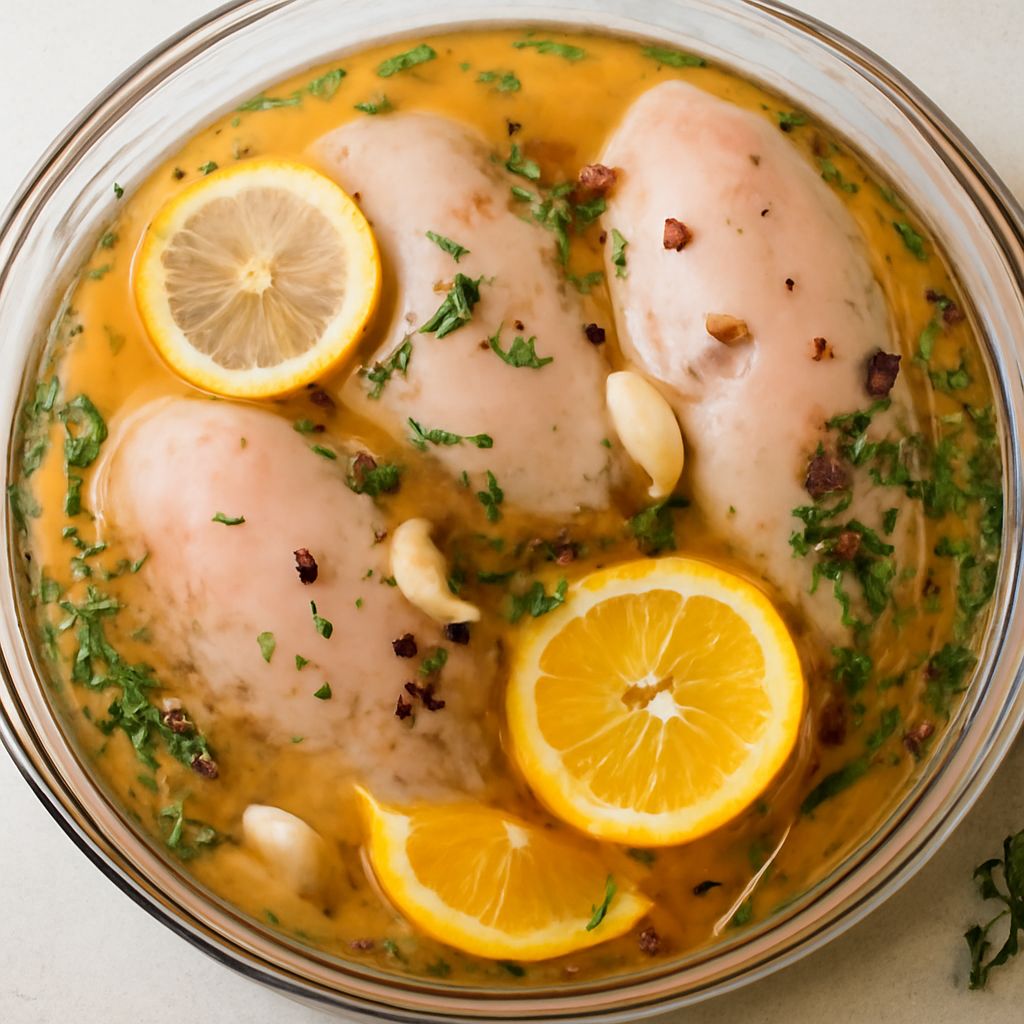
Learning how to brine chicken breast is straightforward: use 4 cups (950 mL) of water and 50 grams of kosher salt, then refrigerate the boneless breasts for 20 to 90 minutes, depending on thickness. Dry them thoroughly afterward and reduce any additional salt before cooking.
This short brine seasons the meat throughout and helps it stay juicy without the rubbery texture or oversalted flavor that can result from using a whole-bird brining schedule.
How to brine chicken breast: the quick method
Trim or pound the breasts to an even thickness
- Trim away loose fat, cartilage, or thin dangling pieces.
- If the breasts vary widely in thickness, place them between sheets of plastic wrap and gently pound the thickest areas until each piece is reasonably even.
- Use the breast’s thickest point to choose the brining time. An even piece cooks more consistently and is less likely to dry out at the edges before the center is done.
Dissolve the salt, chill the brine, and fully submerge the chicken
- Stir 50 grams of kosher salt into 1 cup of hot water until completely dissolved.
- Add 3 cups of cold water, then chill the mixture until it is cold to the touch. Do not add raw chicken to warm brine.
- Place the chicken in a nonreactive container or resealable food-safe bag. Pour in enough brine to cover every piece.
- Refrigerate while the chicken brines. Turn the pieces once if the liquid does not completely surround them.
Chicken breast brine ratio
Use 4 cups (950 mL) water and 50 g kosher salt for a 5% brine
This ratio gives you a moderate 5% brine, suitable for boneless chicken breasts. It is strong enough to season the meat without requiring a long soak. Keep the chicken submerged, but do not dilute the mixture with extra water unless you also adjust the salt.
Weigh the salt because kosher salt volume varies by brand
Measure the salt by weight whenever possible. Different kosher salt brands have different crystal sizes, so “1/4 cup” can represent noticeably different amounts. If you do not have a scale, check the salt package’s equivalent measurement rather than assuming every kosher salt measures the same by volume. Fine table salt is denser and saltier by volume, so do not substitute it cup for cup.
You can add peppercorns, garlic, herbs, or a small amount of sugar for flavor, but they are optional. Salt, water, temperature, and time determine the primary brining result.
How long to brine boneless chicken breast
- Thin or pounded breasts: Brine for 20 to 30 minutes.
- Breasts about 1 inch thick: Brine for 45 to 60 minutes.
- Very thick breasts: Brine for 60 to 90 minutes.
These times apply to boneless, skinless breasts. Do not use whole-bird brining times; they are much longer and can leave chicken breast excessively salty or soft. For consistent results, avoid brining boneless breasts for more than 2 hours.
If the breasts are particularly small or thin, start checking at the shorter end of the range. If you need to delay cooking, remove the chicken from the brine when the recommended time ends, then refrigerate it uncovered or loosely covered after drying.
Dry, season, and cook the chicken breasts
Pat the chicken thoroughly dry and skip or reduce added salt
Remove the chicken from the brine and discard the liquid. Pat every surface dry with paper towels. Drying helps the meat brown instead of steaming, especially in a skillet, on a grill, or in a hot oven.
Do not rinse the chicken unless you have accidentally over-brined it; rinsing can spread raw poultry juices around your sink and work area. Instead, remove surface salt with thorough drying. Before adding a rub or marinade, check its ingredients and omit added salt or use substantially less. Pepper, paprika, garlic, herbs, lemon, and unsalted spice blends can add flavor without pushing the finished chicken too salty.
Cook until the thickest part reaches 165°F (74°C), then rest before slicing
Cook the chicken using your preferred method until the thickest part reaches 165°F (74°C) on an instant-read thermometer. Insert the thermometer from the side into the center of the thickest portion for the most accurate reading. Let the breasts rest for about 5 minutes before slicing so the juices redistribute. The finished chicken should be moist, evenly seasoned, and easy to cut without a rubbery texture.