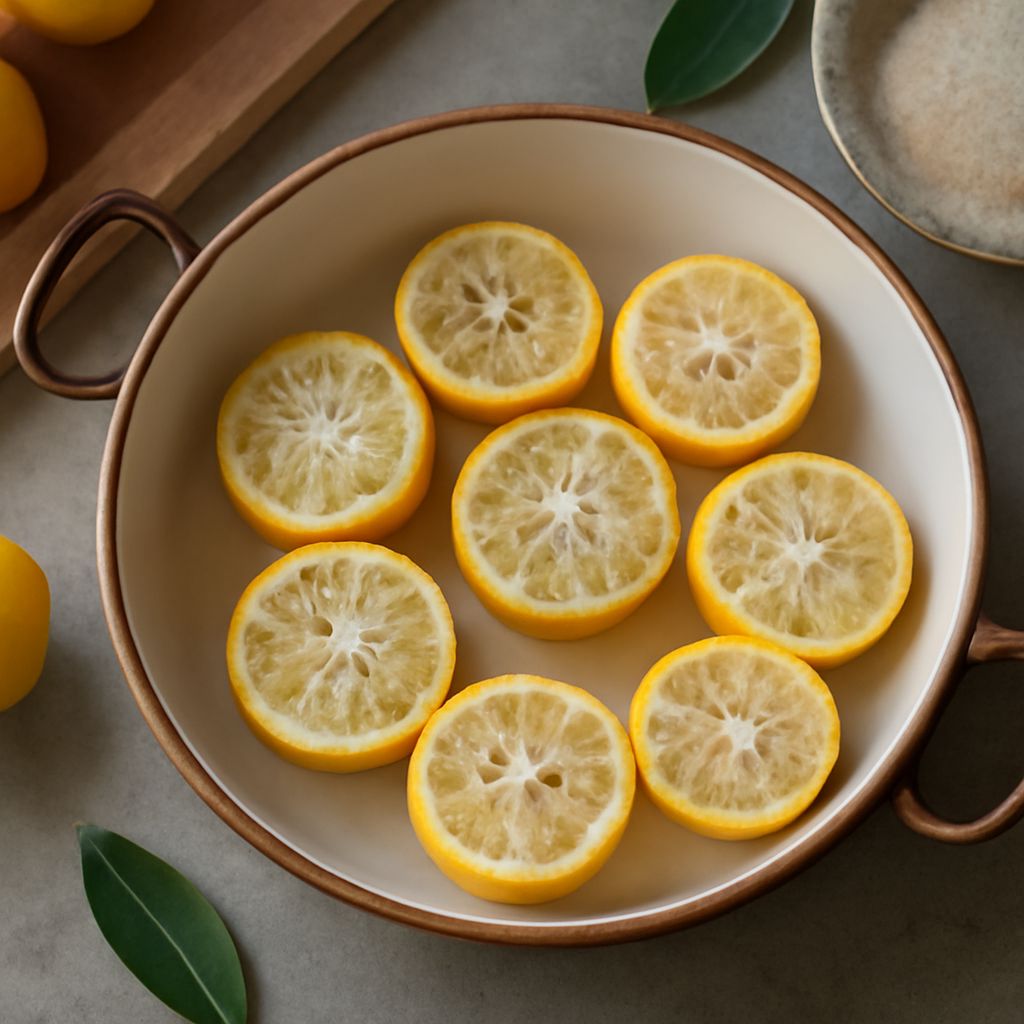
This guide shows you how to make preserved lemons with four lemons, kosher salt, and a clean 1-pint jar. You pack the quartered fruit tightly, press out enough juice to cover it, and cure it for 3–4 weeks until the rind becomes soft and aromatic.
The finished lemons add bright, salty, floral flavor to sauces, salads, grains, roasted vegetables, fish, and chicken. You use the tender rind as the main condiment; the flesh and seeds are usually discarded.
How to Make Preserved Lemons: 4 Lemons and 4 Tbsp Kosher Salt
Use this basic formula:
- 4 medium unwaxed lemons, about 1½ pounds total
- 4 tablespoons kosher salt
- 1 extra lemon, juiced if needed, to keep the fruit covered
Kosher salt gives you the right volume for this recipe. If you use fine table salt, measure by weight rather than replacing it tablespoon for tablespoon, because smaller crystals pack more densely. Choose firm, thin-skinned lemons without soft spots. Meyer lemons work well but produce a sweeter, more floral result.
Prepare 4 Lemons and a Clean 1-Pint Jar
- Wash and scrub the lemons under cool running water, then dry them thoroughly. Trim away the stem ends.
- Cut each lemon lengthwise into quarters, stopping about ½ inch from the bottom so the wedges remain attached. For easier packing, you can cut the lemons completely into quarters instead.
- Wash a 1-pint glass jar and its lid in hot, soapy water, rinse well, and let both air-dry. The jar should be tall enough to hold the lemons tightly without crushing them against the lid.
Do not use a metal container, which can react with the acidic juice. Keep the jar and your hands clean and dry before you begin.
Pack Salted Lemons, Press Firmly, and Cover with Juice
- Sprinkle 1 teaspoon of the kosher salt into the bottom of the jar.
- Open one lemon along its cuts and spoon about 1 tablespoon of salt into the center. Press the lemon closed and place it cut-side down in the jar.
- Repeat with the remaining lemons, adding any salt left in the bowl between layers. Press each lemon down firmly with a clean spoon or muddler before adding the next one.
- Once all four lemons are packed, press down repeatedly until their juice rises around the fruit. Leave about ½ inch of headspace.
- If the lemons are not fully submerged, pour in enough juice from the extra lemon to cover them. The fruit must stay beneath the liquid; exposed rind can dry out or develop mold.
Wipe the jar rim, seal it, and leave it at room temperature in a cool, dark place. The lemons should be compressed enough that the brine reaches the top, but do not force the lid closed against overflowing juice.
Turn and Cure for 3–4 Weeks Until the Rind Is Soft
For the first week, turn the sealed jar upside down and back again once a day. This redistributes the salt and juice. If the lemons rise above the brine, open the jar with clean hands or utensils, press them down, and add more fresh lemon juice as needed.
Begin checking at three weeks. The lemons are ready when the rind is soft enough to pierce easily with a fork, slightly translucent, glossy, and darker yellow. The brine should smell sharply lemony and salty, not rotten or yeasty. The flavor should be intensely citrusy, with a softened bitterness and a rounded saltiness.
Thin-skinned lemons may finish in three weeks; thick-skinned fruit can take four weeks or slightly longer. If you see fuzzy mold, pink or black discoloration, or an unpleasant odor, discard the entire batch rather than scraping the surface. Once cured, refrigerate the jar and keep the lemons submerged in brine.
Rinse the Rind Before Making Preserved Lemon Recipes
To use a lemon, remove one from the jar with a clean fork. Rinse it briefly under cool water to remove excess salt, then cut away the seeds and soft interior pulp. Pat the rind dry and slice it into strips, mince it finely, or leave it in larger pieces depending on the dish.
- Mince the rind into vinaigrettes, herb sauces, hummus, or grain salads.
- Slice it into tagines, couscous, braises, and roasted vegetables.
- Add thin strips to marinades for chicken, fish, or shrimp.
- Blend a small piece into mayonnaise, yogurt sauce, or compound butter.
Taste before adding more salt to a dish. The rind is concentrated, so start with 1 teaspoon minced preserved lemon, then add more as needed.