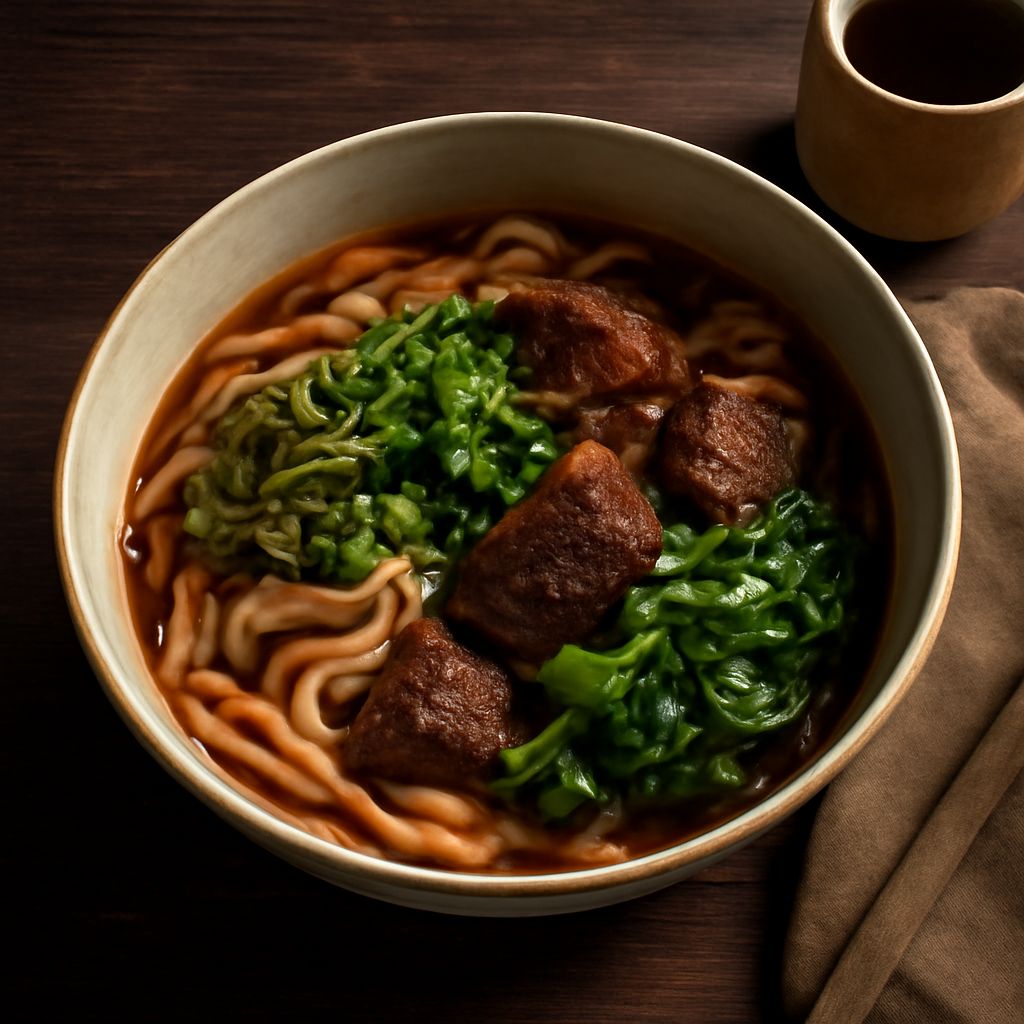
Chinese hand-pulled noodles are long strands made by shaping and stretching wheat dough by hand instead of cutting or extruding it through a machine. The technique depends on dough that is elastic enough to stretch, yet strong enough to hold together as you fold, pull, and divide it into strands. When done well, the noodles cook up chewy, springy, and slightly irregular in the best possible way.
If you’re trying to recognize hand-pulled noodles, look for motion in the noodle itself: the dough is folded, twisted, and pulled into strands in front of you. The method shows up in many regional Chinese styles, but the core idea stays the same—control the gluten, keep the dough supple, and turn one rope into many noodles with repeated pulls.
What Hand-Pulled Noodles Are
Hand-pulled noodles are a traditional wheat-noodle format made by stretching a single dough piece into increasingly thinner ropes, then folding and separating it into multiple strands. In Chinese cooking, you may also see them called Chinese hand-pulled noodles, especially when the dish is described for a wider audience. The defining feature is the technique, not one fixed shape or recipe.
Unlike cut noodles, which are sliced from a rolled sheet, or extruded noodles, which are forced through a die, hand-pulled noodles are formed by repeated manual stretching. That creates a texture that is usually chewier and more elastic than many machine-made noodles. It also gives the noodle a slightly varied thickness, which helps the finished bowl feel lively rather than perfectly uniform.
At the center of the method is flour with enough protein to build gluten, water, and often salt. Some doughs include alkaline ingredients or oil, but the real requirement is balance: too soft, and the dough tears; too stiff, and it resists stretching. A good hand pull noodle dough feels smooth after kneading, then relaxes during resting so you can work it without snapping it back.
How Dough Becomes Strands
The transformation starts with kneading. You work the dough until it becomes smooth and elastic, which develops the gluten network that lets it stretch. After that, resting matters as much as kneading. Resting gives the gluten time to relax, so the dough can lengthen without fighting you. If you skip this step, the dough may shrink back or tear during the pull.
The pulling sequence usually follows a repeated pattern:
- Knead the dough into a tight, smooth mass.
- Rest it until it feels relaxed and pliable.
- Roll it into a rope or log.
- Stretch the rope by hand, often using both ends.
- Fold it back on itself to double the strands.
- Repeat the pull-and-fold cycle until you reach the desired noodle count and thickness.
That fold is the key to strand formation. Each round doubles or multiplies the number of strands, turning one rope into two, then four, then eight, depending on the style and the cook’s control. The dough must stay aligned as you pull, so the strands stay even enough to cook at the same rate.
Technique is about tension management. If you pull too hard, the rope breaks. If you pull too gently, the strands may stay thick and uneven. Good noodle makers keep the dough under steady tension and use quick, confident movements. They often dust lightly with flour to prevent sticking, but not so much that the dough dries out and loses elasticity.
Different regions and cooks use slightly different methods. Some favor a faster, more dramatic stretch; others use shorter pulls with more rest between cycles. What matters is that the dough stays workable and the strands separate cleanly. That is what turns a lump of dough into handpulled noodles with the classic springy bite.
Styles, Cooking, and Texture
Chinese hand-pulled noodles appear in several recognizable styles. Some are wide and ribbon-like, while others are thin and almost threadlike. A famous example is lamian, a Lanzhou-style noodle often pulled into long, uniform strands and served in clear beef broth. Other regional versions may be thicker, broader, or intentionally more rustic.
The cooking step is short. Once the strands are pulled and portioned, they usually go straight into boiling water or broth. Because fresh hand-pulled noodles are elastic and relatively porous, they cook quickly and can overcook fast. You want them tender but still springy, with a chewy center rather than a soft, mushy finish.
Texture is one of the main reasons people seek out hand-pulled noodles. Properly made noodles have a distinct bounce when you bite into them, plus a slight pull as you chew. They should not feel gummy. If the dough was underdeveloped, the noodles may break in the pot. If it was overworked or too dry, they can turn dense or tough.
They’re often served in broth, stir-fried, or topped with sauced meats and vegetables. The best pairings are usually dishes that let the noodle’s texture stand out: clear soups, spicy broths, lamb or beef toppings, scallions, chili oil, or simple braises. Because the noodle itself carries so much texture, heavy sauces are less necessary than with flatter pasta shapes.
When you compare hand-pulled noodles with cut or extruded noodles, the differences are easy to feel. Cut noodles tend to have a cleaner, more uniform edge. Extruded noodles are usually highly consistent in diameter. Hand-pulled noodles are slightly variable, and that variation is part of the appeal. It signals that the noodle was formed in real time by hand, not pressed through a machine.
How to Recognize the Technique
If you’re trying to tell whether a bowl uses hand-pulled noodles, start with shape and texture. The strands often vary a little in thickness, and you may see both narrow and slightly broader pieces in the same bowl. That variation is normal. It reflects the pull sequence and the manual division of dough, not sloppy cooking.
You can also look at the noodle’s surface. Hand-pulled noodles often have a slightly matte, flour-dusted finish before cooking and a springy, resilient bite after cooking. In the kitchen, the giveaway is the process itself: the cook repeatedly stretches, folds, and separates the dough in front of you. That visible sequence is the clearest sign you’re watching Chinese hand-pulled noodles being made.
- Hand-pulled: strands are created by stretching and folding dough by hand.
- Cut: strands come from slicing a rolled sheet.
- Extruded: strands are pushed through a mold or die.
If you want to identify a hand pull noodle on a menu, read for words like pulled, stretched, fresh, or la mian. In the bowl, expect a chewy, elastic bite and a shape that feels handmade rather than mechanically uniform. That combination of process, texture, and slight irregularity is the signature of the technique.