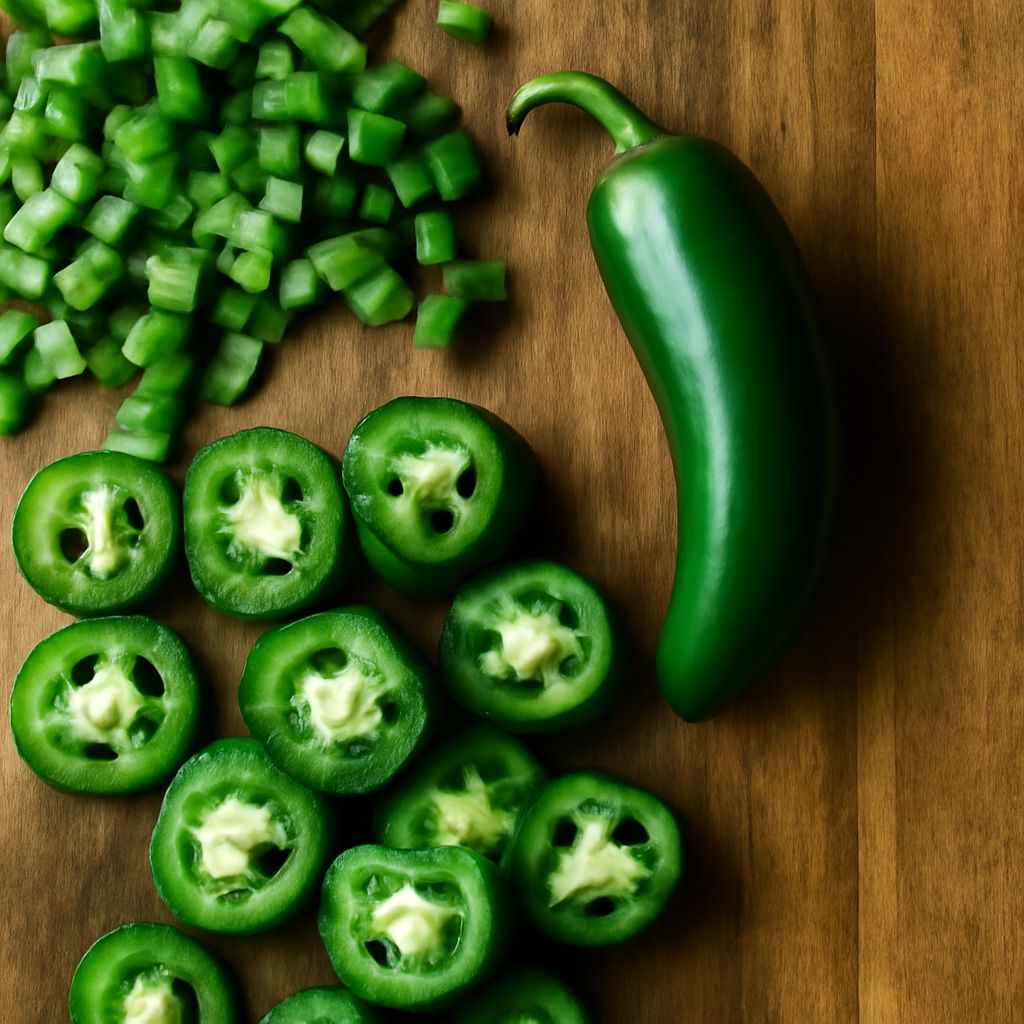
To learn how to cut a jalapeno safely, start with a dry pepper, a stable cutting board, and a sharp chef’s knife. Keep it whole for rings, or stem and halve it lengthwise before removing the seeds and membranes for strips or dice.
A curled-finger grip keeps your fingertips away from the blade while the pepper’s flat side prevents it from rolling. Decide whether you want concentrated heat in each bite or a milder, cleaner cut before you start.
How to cut a jalapeno: stabilize, stem, and halve it
- Rinse the jalapeno under cool water and dry it thoroughly. Moisture can make the skin slippery.
- Place it on a cutting board with the stem pointing away from you. If the board slides, set a damp kitchen towel underneath it.
- For strips or dice, hold the pepper with your nonknife hand using a claw grip: curl your fingertips inward and keep your knuckles facing the blade. Slice straight down just below the stem to remove the cap.
- Set the pepper cut-side down, then slice it lengthwise from the rounded end through the stem end. Keep the knife’s edge on the board as much as possible and use controlled, even strokes.
Do not force the knife through a soft or stubborn spot. A sharp blade should move through the pepper without excessive pressure. If you are making rings, leave the pepper whole after removing the stem and skip the lengthwise halving step.
How to cut jalapenos: keep or remove seeds and membranes
Most capsaicin-bearing tissue is concentrated in the pale inner membranes, also called the ribs or placenta, where the seeds attach. The seeds themselves contain little capsaicin, but they become hot when coated by those membranes. Leaving the membranes in gives you more concentrated heat and a slightly firmer, chewier texture. Removing them distributes less heat through the finished dish and leaves a cleaner bite.
- Place each jalapeno half cut-side up.
- Use the tip of your knife to trace under the pale membrane from the stem end to the tip.
- Lift out the membrane and attached seeds in one piece. For less heat, scrape away any remaining pale tissue with a spoon or knife tip.
- Leave the membrane and seeds intact when you want hot, sharply flavored pieces. Remove only the seeds when you want to preserve more of the pepper’s inner structure but reduce crunch.
Keep the halves steady by pressing them gently against the board with your curled fingertips. Avoid scraping aggressively into the green flesh; that removes usable pepper and can make the pieces uneven.
How to cut jalapeno peppers into rings, strips, or dice
Rings: Use a stemmed but unhalved pepper. Lay it horizontally and hold it near the tip with your claw grip. Slice crosswise into rounds about ⅛ to ¼ inch thick. Continue toward the stem, then discard the stem and end piece. Leave the inner membrane in place for hot rings, or push the membrane and seed cluster out of each round for a milder topping. Rings work well on nachos, sandwiches, tacos, and pickled peppers.
Strips: Use a halved pepper with the seeds and membranes removed or retained. Place the half cut-side down so its flat surface cannot roll. Slice lengthwise into strips about ¼ inch wide, keeping your knuckles ahead of the blade. Make the cuts parallel for even cooking. Wider strips stay more substantial in sautés and fajitas; thinner strips soften faster and spread the heat through a dish.
Dice: Start with a halved, seeded pepper. Set it cut-side down and make several lengthwise cuts ⅛ to ¼ inch apart, stopping just before the stem end if the cap remains attached. Turn the pepper a quarter turn, keep your fingers curled, and cut crosswise at the same spacing. You will produce small, even cubes for salsa, guacamole, sauces, and soups. For a finer dice, make the cuts closer together, but keep the pepper flat so the knife does not shift.
Clean the knife, board, and hands after cutting
Capsaicin clings to surfaces and skin, so do not touch your eyes, nose, or face while cleaning. Wash the knife, cutting board, and any bowl that held the pepper with hot water and dish soap; wiping with a damp cloth alone can spread the oil. Wash your hands thoroughly with dish soap, including around your fingernails. If your skin still burns, wash again with soap and cool water. Remove disposable gloves by turning them inside out, then wash your hands anyway.