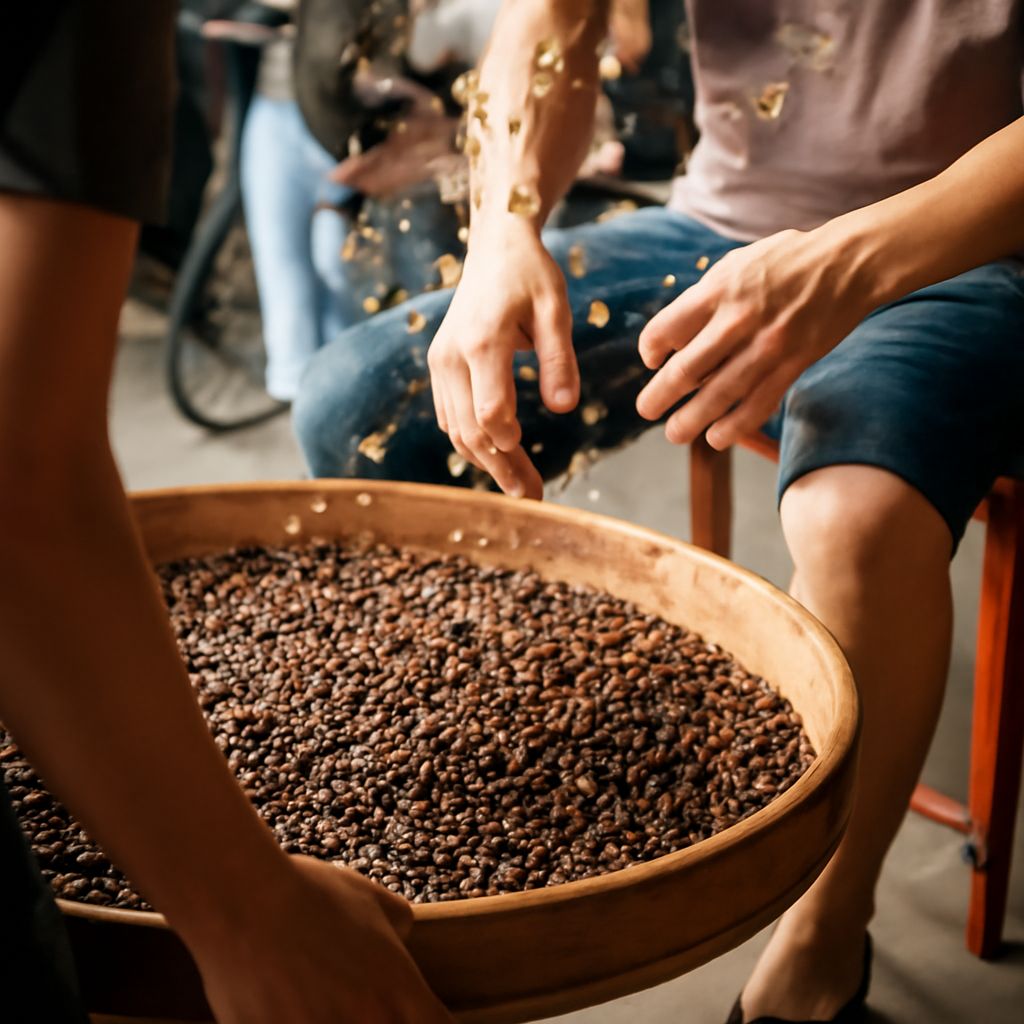
To roast coffee, you heat green beans in a controlled drum roaster, track their temperature and aroma, and remove them at the flavor stage you want. The process moves through drying, Maillard browning, first crack, development, and sometimes second crack. Heat intensity and total time determine whether the cup emphasizes acidity and origin character or deeper sweetness, bitterness, and roast flavors.
A roaster manages more than a final temperature. You also watch the rate at which the beans heat, listen for cracking sounds, smell changes in the exhaust, and cool the batch quickly when the roast reaches its endpoint.
How to Roast Coffee: Drying and Browning
Begin with green coffee beans, which contain moisture and have a dense, grassy structure. A drum roaster tumbles them through heated air and a hot metal surface, keeping the batch moving so it heats evenly. During the first stage, the beans absorb energy and release water. This drying stage is usually marked by a fresh, grassy smell that shifts toward hay, straw, or bread.
As the beans lose moisture, their temperature rises more quickly and their color changes from green to yellow and then light brown. The beans are not developing their final roast character yet; they are becoming ready for the reactions that create it. If you apply heat too aggressively at this point, the outside can scorch while the center remains underdeveloped. If you heat too slowly, the roast may taste flat or baked.
Next comes Maillard browning, a series of reactions between amino acids and sugars. These reactions create many of the aromas associated with roasted coffee, including toast, nuts, caramel, malt, and chocolate. The roaster controls this stage by adjusting heat and airflow. The smell becomes sweeter and more rounded, while the beans continue to expand and lose moisture.
Coffee Bean Roasting: First Crack and Beyond
As internal pressure builds from steam and expanding gases, the beans begin to split with sharp popping sounds. This is first crack. It often sounds like popcorn, although the timing and volume vary by bean size, density, moisture, and processing method. First crack signals that the beans have become porous enough for rapid expansion and that the roast is entering its most decisive phase.
During first crack, you reduce or carefully manage the heat so the beans do not race past the intended endpoint. You may also adjust airflow to control smoke and carry away chaff. Sensory cues become especially useful: the sharp crackling fades, the aroma changes from toasted grain to caramel or fruit, and the bean temperature continues to rise at a slower rate.
Some roasts proceed toward second crack, when the beans’ structure fractures again as trapped gases and oils move through the increasingly brittle cells. The sound is usually finer and faster than first crack. Reaching or passing second crack produces more pronounced caramelized, smoky, and bitter notes, while masking more delicate flavors. Many dark roasts end near this stage, but the exact endpoint depends on the roaster’s time, heat, and desired cup profile.
Development and Roast Levels: How Roast Coffee Beans Gain Flavor
Development is the period after first crack and before the beans leave the roaster. It may last from roughly 10% to 25% of the total roast time, though no single percentage suits every coffee. Too little development can leave the cup sharp, grassy, or thin. Too much can flatten acidity and origin character, making the coffee taste roasty or bitter.
Light roast coffee generally leaves the roaster soon after first crack. With controlled development, it can preserve bright acidity, floral or fruit notes, and distinctive characteristics from the coffee’s growing region. Medium roast coffee receives more development, balancing acidity with sweetness and body. You may taste caramel, nuts, chocolate, or dried fruit while still recognizing the bean’s origin.
Dark roast coffee continues farther, often approaching or entering second crack. Longer exposure to heat reduces acidity and emphasizes body, bitterness, bittersweet chocolate, smoke, and toasted flavors. Roast level is not defined by bean color alone: you judge it by the endpoint, development time, internal structure, aroma, and brewed flavor. Two beans with a similar surface color can taste very different if one reached that color faster or developed longer.
Cooling and Resting Roasted Coffee
When the batch reaches its target endpoint, drop it into a cooling tray immediately. Strong airflow and agitation should bring the beans close to room temperature within about three to five minutes. Rapid cooling stops most chemical development; leaving hot beans in the drum allows residual heat to push the roast darker and can create uneven, bitter flavors.
Freshly roasted beans then release carbon dioxide in a process called degassing. They may taste sharp or muted immediately after roasting because the escaping gas interferes with extraction. Resting for several days usually produces a more balanced cup. Many coffees taste ready between three and seven days after roasting, while very light roasts may benefit from longer. Store the rested roast airtight, away from heat and light, and grind it just before brewing.