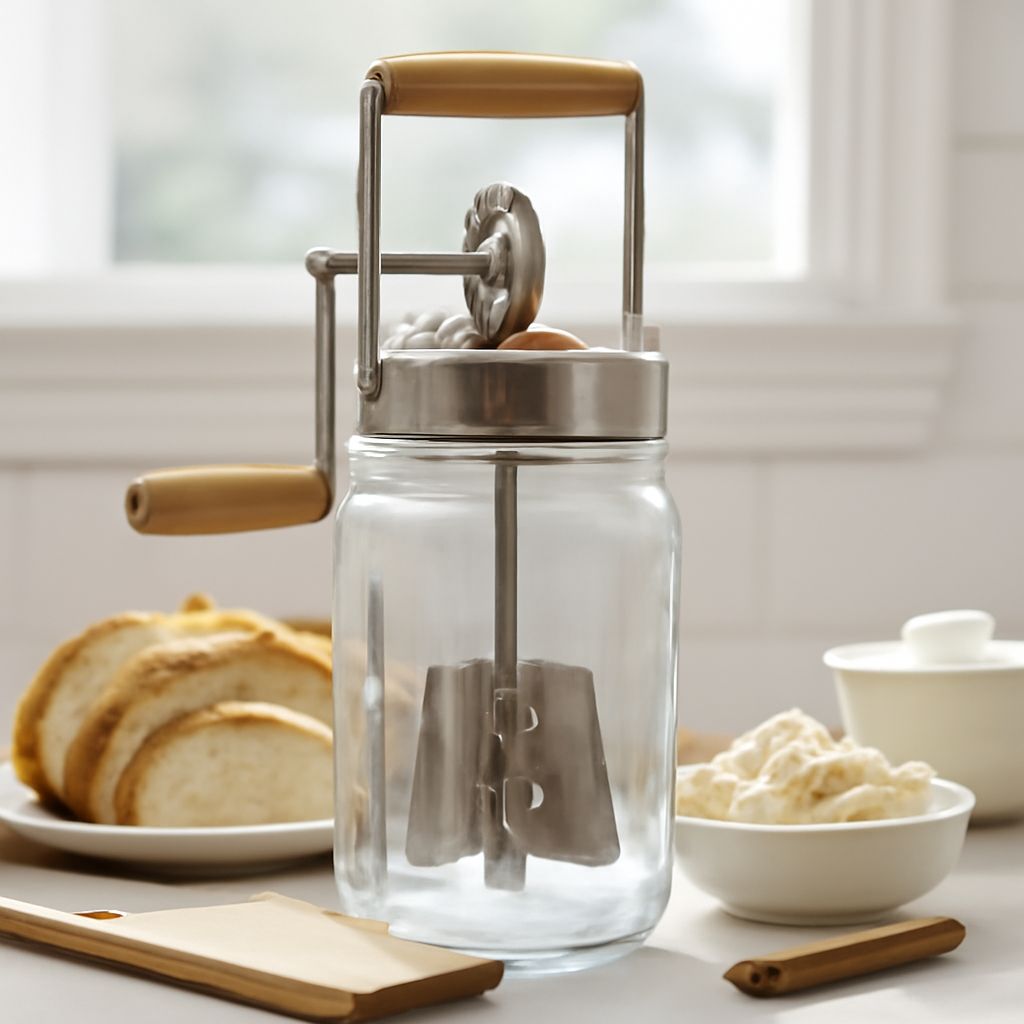
To churn butter, start with cold heavy cream and agitate it until the fat separates from the liquid. With 2 cups of cream, you can use a jar, hand mixer, stand mixer, or small churn; the process usually takes 5 to 15 minutes, depending on the method and temperature.
Follow the texture changes closely. The cream moves from liquid to whipped peaks, then breaks into yellow butter grains and thin buttermilk. Draining, washing, and kneading remove residual liquid so the finished butter stays firm and keeps longer.
How to Churn Butter from 2 Cups of Cream
Gather 2 cups of heavy cream, a large bowl, a fine-mesh strainer, ice-cold water, and ¼ to ½ teaspoon of fine salt if you want salted butter. Keep the cream cold, but not frozen; about 45°F is ideal. Warmer cream may separate quickly but can produce softer butter.
- Choose your method. Pour the cream into a jar no more than half full, a mixer bowl, or a small churn. The extra space lets the cream move.
- Agitate the cream. Seal the jar and shake it firmly. For a mixer, begin on low speed, then increase to medium once the cream thickens. A churn should move steadily without splashing.
- Watch for separation. Continue until distinct yellow grains float in a pale liquid. Stop as soon as the grains collect into a mass.
- Drain the buttermilk. Pour the contents through a strainer and press the butter gently to release liquid. Save the drained buttermilk for baking or pancakes.
- Wash and work the butter. Rinse it with cold water, press and fold it, then replace the water until it stays nearly clear.
- Season and shape. Knead in the salt, press out remaining water, and form the butter into a block or covered container.
What Happens While Cream Churns
During churning butter, agitation damages the membranes around the cream’s fat globules. At first, the cream looks unchanged. It then thickens like whipped cream, forming soft peaks. As you continue, the peaks become firmer and slightly grainy.
The whipped cream eventually collapses. Small yellow flecks appear, followed by larger grains that clump together. At this stage, the bowl contains two distinct parts: butterfat in solid grains and a watery, milky liquid called buttermilk. The change can happen suddenly, so reduce the mixer speed or stop shaking briefly when the cream begins to look lumpy.
Churn Until Butter Separates
Keep agitating until the butter grains clearly separate from the buttermilk. If you stop at the whipped-cream stage, you have not finished; the butterfat is still holding liquid in its structure.
In a jar, firm shaking may take 8 to 15 minutes. A hand or stand mixer often takes 5 to 10 minutes, while a churn varies with its design. If nothing separates after several minutes of firm agitation, let the cream warm slightly for a few minutes and continue. Avoid overheating it, because very soft butter is harder to wash and work.
Wash, Work, and Season the Butter
Drain the buttermilk as soon as the butter forms. Pour cold water over the butter grains, then press them gently with a spatula or clean hands. Drain the cloudy water and repeat with fresh cold water until the runoff is mostly clear. Cold water firms the butter and helps carry away trapped milk solids.
Next, fold and press the butter repeatedly. Do not whip it; the goal is to squeeze out pockets of water without warming the fat. If liquid beads appear on the surface, keep working and drain it away. Add salt only after washing, then knead until evenly distributed. Unsalted butter has a clean, mild flavor; salted butter is better for spreading and generally resists spoilage slightly better.
How Butter Churning Affects Texture and Keeping Quality
Residual buttermilk makes butter softer, wetter, and more perishable. It can also create streaks or pockets that spoil before the rest of the butter. Thorough cold-water washing produces a cleaner, firmer texture and improves keeping quality, but it does not make butter shelf-stable.
Wrap the finished butter tightly and refrigerate it. For longer storage, freeze it in a sealed container. If the butter smells sour, tastes rancid, or develops discoloration, discard it rather than trying to wash it again.