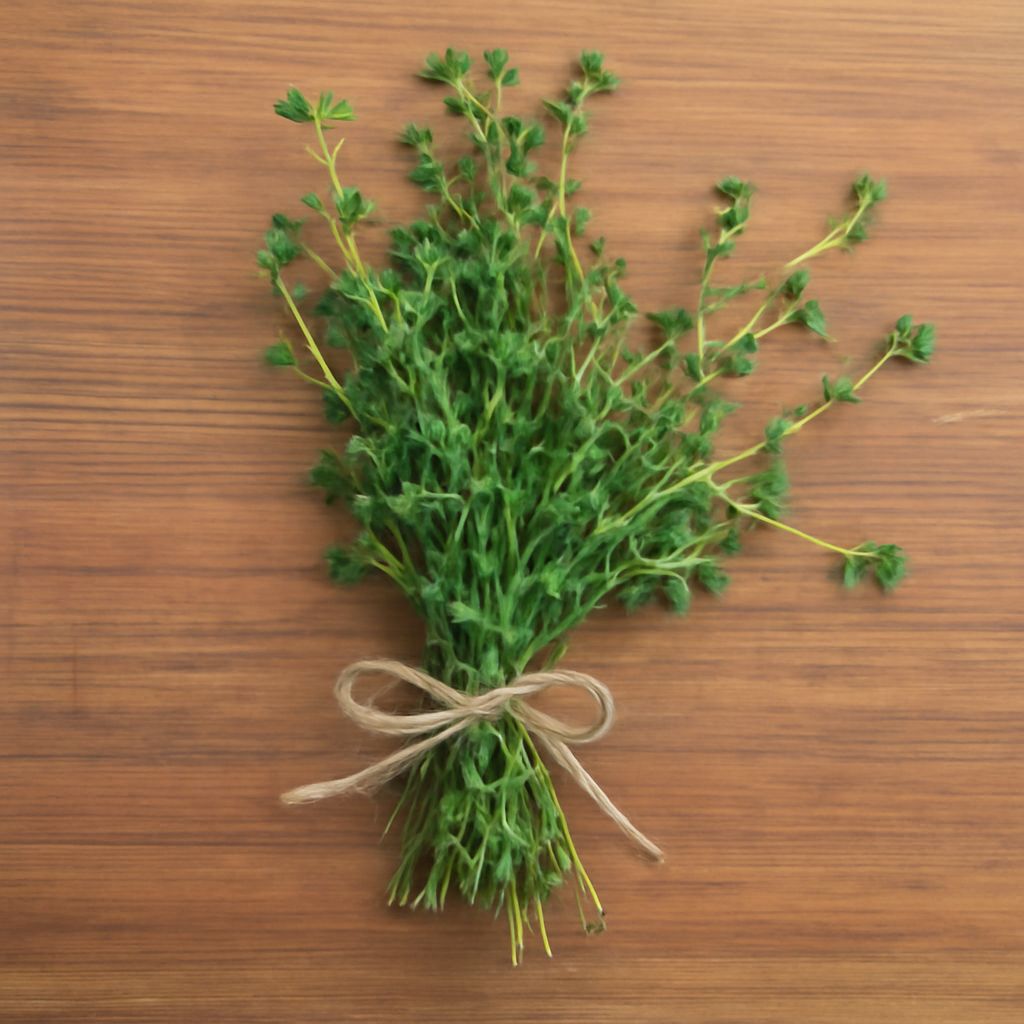
A sprig of thyme is a small section of fresh thyme stem with leaves attached. In most recipes, it means one leafy stem about 3 to 4 inches long, although size and leaf density vary.
You can use the sprig whole to flavor soups, sauces, and braises, or strip off the leaves for dishes where you want thyme distributed throughout. For a rough substitution, one typical sprig yields about 1/2 to 1 teaspoon of fresh leaves, equal to approximately 1/4 to 1/3 teaspoon of dried thyme.
What Is a Sprig of Thyme?
A thyme sprig is the tender, green upper portion of a thyme plant. It has a narrow stem covered with small leaves arranged in pairs. The stem becomes thicker and woodier toward the base, so you generally use the leafy section rather than a bare, rigid stem.
When a recipe calls for one or more thyme sprigs, select stems that look fresh and leafy, ideally about the length of your finger. A short, sparsely covered stem contributes less thyme than a long, bushy one. That variation is why a sprig is a practical visual measure rather than an exact number of leaves.
If the recipe will be blended, strained, or simmered for a long time, small tender stems are usually fine to include. For a finished dish with a smooth texture, remove the leaves from the stem first.
How to Strip Thyme Leaves from the Stem
Stripping thyme means pulling the leaves away from the woody stem before you chop or measure them.
- Rinse the thyme and pat it dry. Wet leaves are harder to grip and can slip from the stem.
- Hold the stem near its tip with one hand. With the other hand, pinch the stem between your thumb and forefinger just below the top leaves.
- Pull your fingers down the stem in the direction opposite the leaf growth. The leaves should separate and collect between your fingers.
- Discard the bare stem, then mince the leaves if your recipe calls for chopped fresh thyme.
If the stem bends rather than releasing its leaves, start closer to the tip or use a younger stem. Very woody stems can be difficult to strip cleanly; in that case, slide a fork tine along the stem or pick off the leaves individually.
When to Use Thyme Sprigs Whole
Use a whole thyme sprig when you want its flavor to infuse a dish without leaving loose leaves behind. Add it to stock, soup, stew, gravy, beans, tomato sauce, or a pan of roasted vegetables. The heat and moisture draw flavor from both the leaves and the tender stem.
- For soups and braises: Add the sprig early so it has time to infuse, then remove it before serving.
- For sauces: Simmer the sprig in the liquid and lift it out before you finish or strain the sauce.
- For a bouquet garni: Tie thyme with parsley stems and a bay leaf in kitchen string or place the bundle in cheesecloth, then remove the bundle at the end.
Count a whole sprig as an infusion ingredient, not as a precise amount of loose thyme. If you want a stronger, more noticeable herbal flavor, strip the leaves and add them directly instead.
Fresh and Dried Thyme Conversions
For an average 3- to 4-inch thyme sprig, estimate 1/2 to 1 teaspoon of fresh thyme leaves. Using the common fresh-to-dried herb ratio of 3 to 1, that equals about 1/4 to 1/3 teaspoon of dried thyme.
- 1 fresh sprig: about 1/2 to 1 teaspoon fresh leaves, or 1/4 to 1/3 teaspoon dried thyme
- 3 fresh sprigs: about 1 1/2 to 3 teaspoons fresh leaves, or 1/2 to 1 teaspoon dried thyme
- 1 tablespoon fresh leaves: about 1 teaspoon dried thyme
These amounts are estimates because thin, short stems produce fewer leaves than long, dense ones. If you are replacing fresh thyme with dried, begin with the lower amount, especially in a delicate sauce. Dried thyme has a concentrated flavor and needs time to soften, so add it early during cooking rather than sprinkling it on at the end.