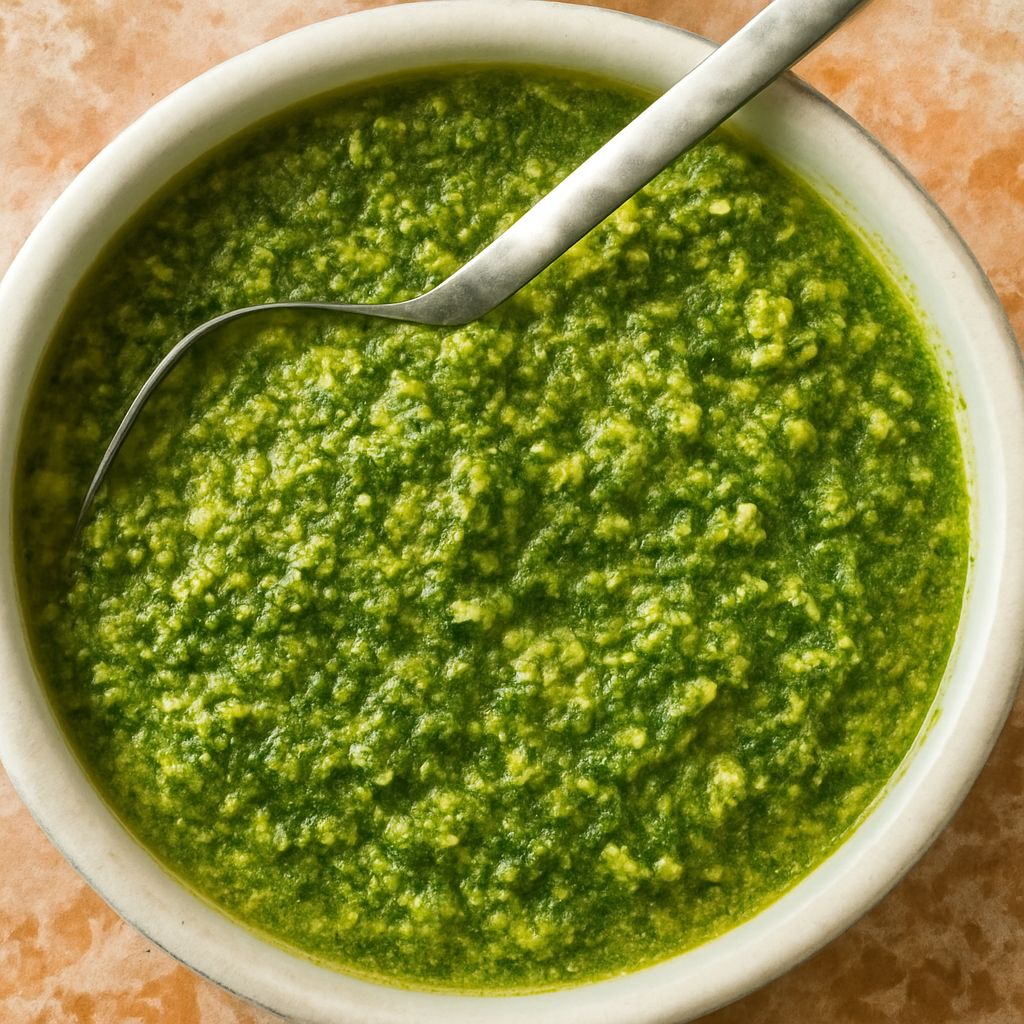
This authentic pesto recipe makes about 1 1/4 cups of bright Genovese sauce, enough for 12 ounces of pasta. You combine fresh basil, pine nuts, garlic, two cheeses, salt, and extra-virgin olive oil without cooking the mixture.
For the freshest color and texture, use a mortar and pestle. A food processor also works when you pulse briefly and keep the ingredients cool.
Authentic Pesto Recipe: Yield, Ingredients, and Ratios
Yield: About 1 1/4 cups, or 6 servings with pasta
- 2 cups loosely packed fresh basil leaves, about 50 g, washed and thoroughly dried
- 1/3 cup pine nuts, about 45 g
- 2 medium garlic cloves, peeled
- 1/2 teaspoon coarse sea salt
- 1/2 cup finely grated Parmigiano-Reggiano, about 45 g
- 1/4 cup finely grated Pecorino Romano, about 20 g
- 1/2 cup extra-virgin olive oil, 120 ml, plus more if needed
Use small, tender basil leaves when possible. They give you a sweeter, more traditional flavor than large, mature leaves. Dry the leaves completely because excess water makes the pesto thin and encourages browning.
Italian Pesto Recipe: The Mortar or Processor Method
- Make the garlic paste. Add the garlic and salt to a large mortar. Pound and scrape until smooth. The salt helps break down the garlic and seasons the pesto evenly.
- Add the pine nuts. Pound them into the garlic until you have a coarse, creamy paste. Do not toast them; raw pine nuts keep the flavor delicate and traditional.
- Work in the basil. Add a small handful at a time. Press and rotate the pestle rather than striking aggressively, scraping the sides until each addition breaks down before adding more.
- Blend in the cheeses. Stir or pound in the Parmigiano-Reggiano and Pecorino Romano until evenly distributed.
- Finish with oil. Slowly work in the olive oil while stirring until the pesto is glossy and spoonable.
For a processor method, add the garlic, salt, and pine nuts first. Pulse five or six times, then add the basil and pulse in short, one-second bursts, scraping the bowl as needed. Add the cheeses, then drizzle in the oil while pulsing just until combined. Stop as soon as the basil is chopped; continuous processing creates friction and can make the sauce warm, bitter, or dull green.
Keep the Mixture Cool for Bright Italian Pesto
Keep the basil, bowl, blade, and mortar cool while you work. If your kitchen is warm, chill the processor bowl and blade for 10 minutes before starting. Work quickly, use short pulses, and never cook the basil mixture over direct heat. Heat darkens basil and drives off its fresh aroma.
The finished pesto should look green and lightly textured, with tiny visible flecks of basil and pine nut. It should fall from a spoon slowly rather than sit as a stiff paste. If it looks dry, add olive oil one tablespoon at a time. If it looks oily, stir in a little more grated cheese.
Adjust, Loosen, Serve, and Store the Sauce
To serve with pasta, cook 12 ounces of dried pasta in well-salted water. Before draining, reserve at least 1 cup of the starchy cooking water. Put the drained pasta in a large bowl or back in the warm pot with the heat off. Add about 3/4 cup pesto and toss, adding reserved water 1 tablespoon at a time until the sauce coats every strand. The water loosens the pesto and helps it emulsify without heating the sauce directly.
Taste and adjust with more salt, cheese, or a small splash of olive oil. Toss pesto with trofie, trenette, linguine, or short pasta, and add potatoes or green beans for a classic Ligurian-style plate.
Refrigerate unused pesto in an airtight container for up to 4 days. Press a thin film of olive oil over the surface before covering to limit air exposure. For longer storage, freeze it in small portions for up to 2 months. Thaw it in the refrigerator and stir in freshly grated cheese before serving.