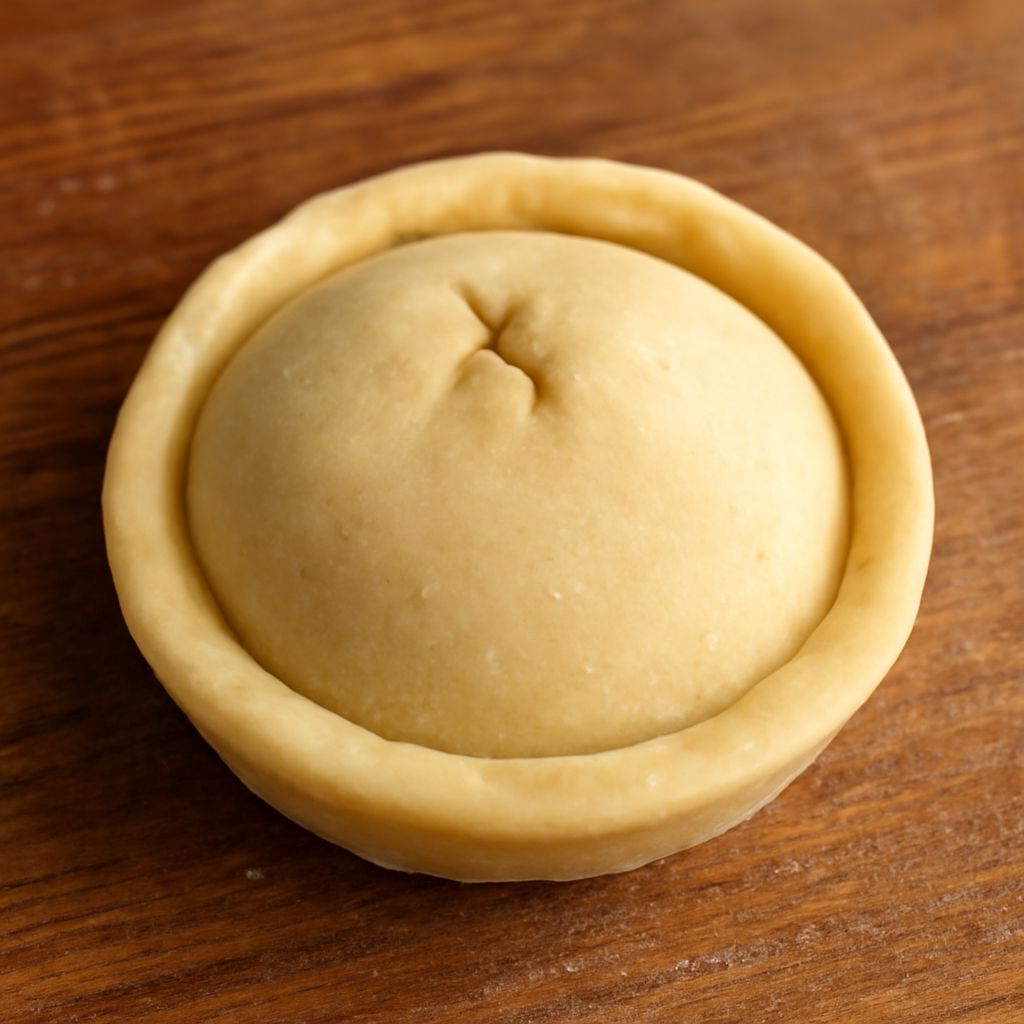
These Russian dumplings use thin, elastic unleavened wrappers and a compact beef-and-pork filling. This recipe makes about 50 pelmeni with clear instructions for mixing the dough, sealing each dumpling, boiling a fresh batch, or freezing them for later.
Keep the dough covered while you work, and pinch out trapped air before sealing. That gives you sturdy dumplings that stay closed in boiling water.
Russian Dumplings: Dough and Filling (Makes 50)
For the dough:
- 3 cups (375 g) all-purpose flour, plus more for dusting
- 1 teaspoon fine salt
- 1 large egg
- 3/4 cup (180 ml) warm water
For the filling:
- 1/2 pound (225 g) ground beef
- 1/2 pound (225 g) ground pork
- 1 small yellow onion, finely grated or minced
- 1 1/2 teaspoons kosher salt
- 1/2 teaspoon black pepper
- 2 tablespoons ice water or cold beef broth
Whisk the flour and salt in a large bowl. Add the egg and most of the warm water, then stir until shaggy. Add the remaining water only if dry flour remains. Knead for 8 to 10 minutes, until the dough feels smooth, firm, and elastic rather than sticky. Cover it and rest for 30 minutes.
While the dough rests, combine the beef, pork, onion, salt, pepper, and ice water. Mix just until the ingredients hold together. The filling should be moist but firm enough to portion; avoid overmixing, which can make it dense.
Pelmeni Dough: Mix and Roll It Thin
Divide the rested dough into four pieces and keep three covered. Roll one piece on a lightly floured surface until it is about 1/16 inch (1.5 mm) thick. You should see the work surface faintly through the dough, but it should not feel fragile or tear when lifted.
Cut rounds with a 2 1/2- to 3-inch cutter. Gather the scraps, cover them, and reroll them once. If you use a pasta machine, roll the dough to a thin but workable setting, then cut the sheets into rounds. Dust the rounds lightly with flour and cover them with a towel so their edges do not dry out.
Shape the Pelmeni Dumplings with Tight Seals
- Place about 1 teaspoon of filling in the center of each dough round. Do not overfill; the edges need a clean sealing area.
- Fold the round over the filling to make a half-moon. Press around the mound to push out air, then pinch the edges firmly together.
- Bring the two pointed corners together over the filling and pinch them to form the classic compact shape.
- Set each dumpling on a floured baking sheet without letting the pieces touch.
If an edge feels dry, dab it with a little water before pinching. A properly sealed dumpling has no visible gaps, and the filling sits comfortably inside without stretching the wrapper.
Boil, Freeze, and Serve Fresh or Frozen
Bring a large pot of generously salted water to a gentle boil. Cook in batches so the water keeps moving freely. Lower fresh pelmeni dumplings into the pot and stir once carefully to prevent sticking. When they float, continue boiling for 2 to 3 minutes, until the wrappers look tender and the filling is cooked through. Fresh dumplings usually take about 5 to 7 minutes total.
For freezing, arrange the uncooked dumplings in a single layer on a floured or parchment-lined baking sheet. Freeze until solid, about 2 hours, then transfer them to an airtight freezer bag. Keep them frozen for up to 2 months and cook them directly from frozen; do not thaw them first.
Frozen dumplings need about 3 to 5 minutes after they float, or roughly 7 to 10 minutes total, depending on size. Cut one open to check that the center is hot and no longer pink. Serve immediately with sour cream, butter, black pepper, vinegar, or fresh dill. You can also lift the boiled dumplings into a skillet with butter for lightly browned edges.