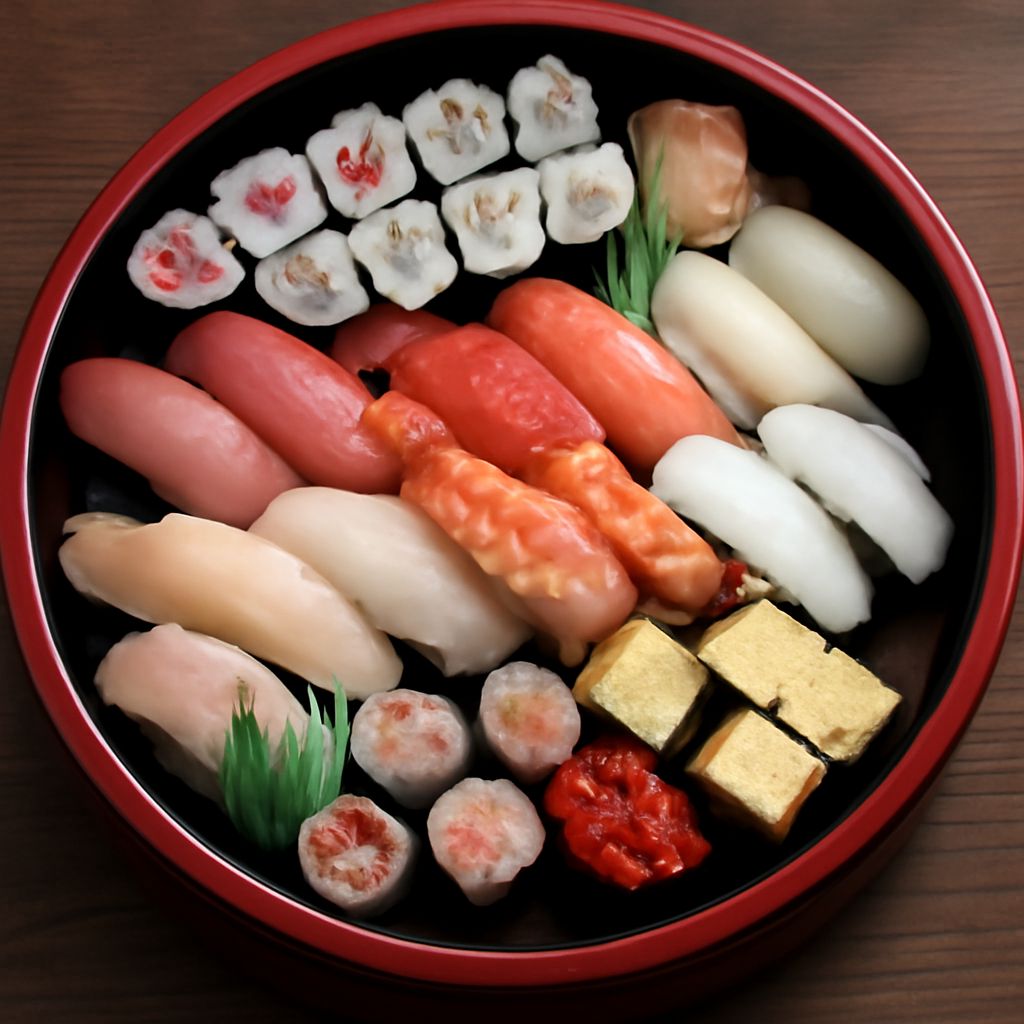
Is sushi raw fish? No—not always. Sushi is built around seasoned rice, and its topping or filling may be raw seafood, cooked seafood, egg, tofu, or vegetables. Raw fish is one type of sushi ingredient, not the definition of sushi.
So, is sushi raw? Only some sushi is raw. The easiest way to tell is to identify the ingredients and understand the difference between sushi and sashimi.
Is Sushi Raw Fish? The Short Answer
Sushi may contain raw fish such as salmon, tuna, yellowtail, or scallop. You commonly see these ingredients in nigiri, which pairs a slice of seafood with a small mound of rice, or in maki, which rolls rice and fillings inside or around nori seaweed.
However, many familiar sushi items use cooked ingredients or no seafood at all. A shrimp tempura roll, eel nigiri, California roll made with imitation crab, cucumber roll, and avocado roll can all be sushi without containing raw fish.
What Makes Sushi Sushi? Seasoned Rice Is Key
The defining feature of sushi is seasoned rice. Sushi rice is typically short-grain rice flavored with rice vinegar, sugar, and salt. The rice may be shaped by hand, rolled in nori, or served in a bowl with toppings.
Raw fish can sit on top of the rice, mix into a roll, or appear alongside other fillings, but it is not required. A dish that contains raw fish without seasoned rice is generally not sushi. This distinction helps explain why sushi can include such a wide range of ingredients.
Common sushi formats include:
- Nigiri: Seasoned rice topped with an ingredient, such as raw tuna, cooked shrimp, or cooked eel.
- Maki: Rice and fillings rolled with nori, including salmon rolls, cucumber rolls, and tempura shrimp rolls.
- Temaki: Hand-rolled, cone-shaped sushi filled with rice and ingredients.
- Inari: Seasoned rice tucked into a sweet, fried tofu pouch, usually without fish.
Is Sushi Raw? Raw, Cooked, and Vegetarian Examples
Whether sushi is raw depends on the specific item. Menus often combine raw, cooked, and vegetarian choices in the same meal.
- Raw seafood: Salmon nigiri, tuna sashimi-style rolls, yellowtail rolls, and raw scallop sushi use uncooked seafood. These are the options most associated with raw fish.
- Cooked seafood and other ingredients: Ebi, or shrimp, is commonly cooked before serving. Unagi and anago are cooked freshwater and saltwater eel. Tempura shrimp, cooked crab, imitation crab, smoked fish, and tamago, a cooked sweet egg omelet, are also common fillings or toppings.
- Vegetarian or vegan ingredients: Cucumber, avocado, pickled radish, asparagus, mushroom, and tofu can create sushi with no fish. A cucumber maki, avocado roll, or inari sushi is not raw fish sushi.
Some rolls combine categories. For example, a roll may contain raw salmon with avocado, while another uses cooked shrimp with cucumber. Read the menu description or ask the server if you need to know whether a particular filling is raw.
Is All Sushi Raw? Sushi vs. Sashimi
Is all sushi raw? No. Sushi may be raw, cooked, vegetarian, or vegan. The presence of seasoned rice—not the presence of raw fish—separates sushi from other Japanese dishes.
Sashimi is thinly sliced raw fish or seafood served without seasoned rice. Sashimi may come with soy sauce, wasabi, and garnishes, but the seafood itself is the main dish. Because it has no sushi rice, sashimi is not sushi.
Nigiri can cause confusion because it may look similar to sashimi. The difference is simple: raw salmon placed directly on a plate is sashimi; raw salmon placed on seasoned rice is nigiri sushi. A cooked or vegetable topping on that same rice is still sushi, even though it contains no raw seafood.