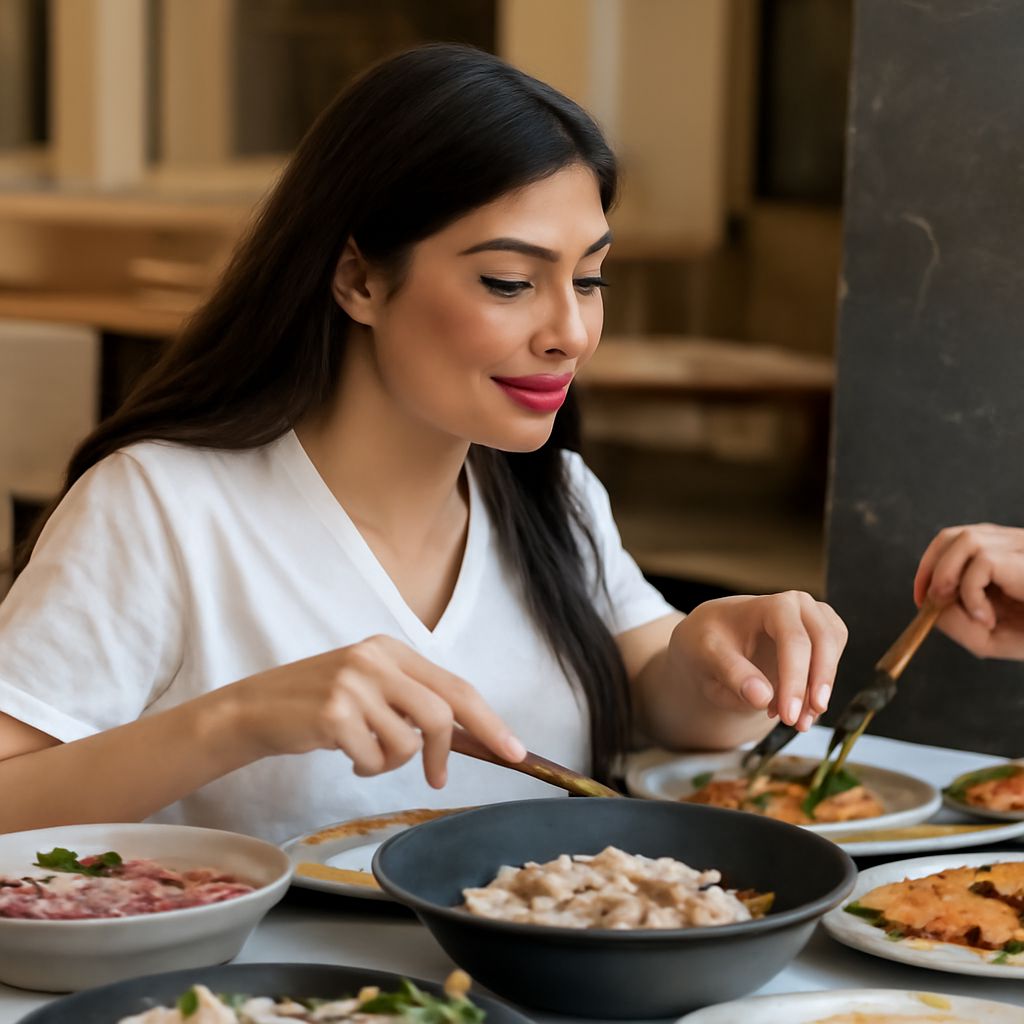
Iraqi food reflects the farming, river, and trading history of Mesopotamia. Across Iraq, you find rice, wheat, dates, freshwater fish, eggplant, onions, herbs, and warming spices used in meals that range from simple bread-and-stew combinations to elaborate family feasts.
Iraqi cuisine has its own regional character, shaped by Arab, Kurdish, Turkmen, and other Iraqi traditions. Although some ingredients and techniques overlap with neighboring countries, dishes such as masgouf, quzi, kubba, and tashreeb belong to a distinctly Iraqi food culture.
Iraqi Food Staples: Rice, Bread, Herbs, and Sour Flavors
Rice is central to many Iraqi meals. You may see long-grain rice served plain, colored with saffron or turmeric, or cooked with stock and layered with meat, vegetables, nuts, and raisins. Rice often supports the main dish, but it can also be the centerpiece of a celebratory platter.
Wheat appears most visibly in samoon, Iraq’s familiar diamond-shaped bread. You can use its crisp crust and soft interior to scoop up stew, grilled meat, or a thick sauce. Flatbreads also accompany meals, especially when you want to stretch a shared dish across the table.
Iraqi cooks build flavor with dried lime, tamarind, pomegranate molasses, and vinegar, bringing a noticeable sour edge to rich dishes. Fresh mint, parsley, cilantro, and dill add brightness, while cardamom, cinnamon, cumin, black pepper, and allspice provide warmth. Onions, garlic, and dried limes frequently connect these flavors without making every dish taste the same.
Iraqi Cuisine: Quzi, Tashreeb, and Everyday Stews
Quzi is a celebratory dish of slow-roasted lamb served over rice. Depending on the region and household, the rice may include toasted nuts, raisins, hard-boiled eggs, or vegetables. You are most likely to encounter quzi at weddings, holidays, and large family gatherings, where its size and presentation suit a communal feast.
For an everyday meal, try tashreeb, a layered dish of torn bread soaked with broth and topped with meat, chickpeas, or vegetables. The bread absorbs the seasoned liquid while retaining enough texture to make the dish satisfying. Chicken tashreeb and lamb tashreeb are common variations, and the balance of broth, bread, and toppings changes from one cook to another.
Stews, often called tashreeb-style when served over soaked bread or timman when paired with rice, make up much of the home table. You may find okra with tomato, eggplant with meat, green beans with lamb, or beans simmered with onions and spices. These dishes are practical, filling, and designed to be shared rather than portioned as separate entrées.
Grilled and Stuffed Dishes: Masgouf, Dolma, and Kubba
Masgouf is Iraq’s signature grilled fish, traditionally made with a large freshwater carp. The fish is split, seasoned simply, and cooked beside an open fire until the flesh turns tender and the skin becomes smoky. It is especially associated with the Tigris, riverside dining, and leisurely gatherings. You may receive it with rice, bread, pickles, onions, and fresh herbs.
Dolma consists of vegetables stuffed with a seasoned rice mixture, sometimes combined with meat. Eggplant, zucchini, peppers, onions, and grape leaves may all appear in the same pot. Iraqi dolma is often slow-cooked with a sour, savory sauce, so the vegetables become tender and the filling absorbs the cooking juices.
Kubba combines bulgur or rice with a filling such as minced meat, onions, and spices. You can find fried, boiled, baked, or broth-based versions, including oval croquettes and layered trays. Its crisp exterior, tender grain shell, and aromatic filling make it useful as a snack, starter, or substantial part of a meal.
Samoon, Dates, Kleicha, and Iraqi Meal Traditions
Dates connect everyday Iraqi food with the country’s ancient date-palm culture. You may eat them plain with tea, chop them into desserts, or serve them beside savory foods. Date syrup also adds concentrated sweetness to breads and pastries. Iraq’s long agricultural history along the Tigris and Euphrates helps explain why dates, grains, and legumes remain so important.
Kleicha are spiced pastries commonly filled with dates, walnuts, or coconut. Their patterned surfaces and cardamom- or rose-scented fillings make them especially popular for Eid, weddings, and visits with guests. Families often prepare trays in advance and offer them with tea or Arabic coffee.
Meal traditions emphasize hospitality and abundance. You may begin with samoon, pickles, herbs, and small shared plates, then move to rice, stew, fish, or stuffed vegetables. Everyday cooking favors adaptable pots and leftovers, while holidays bring out quzi, elaborate dolma, grilled masgouf, and trays of kleicha.