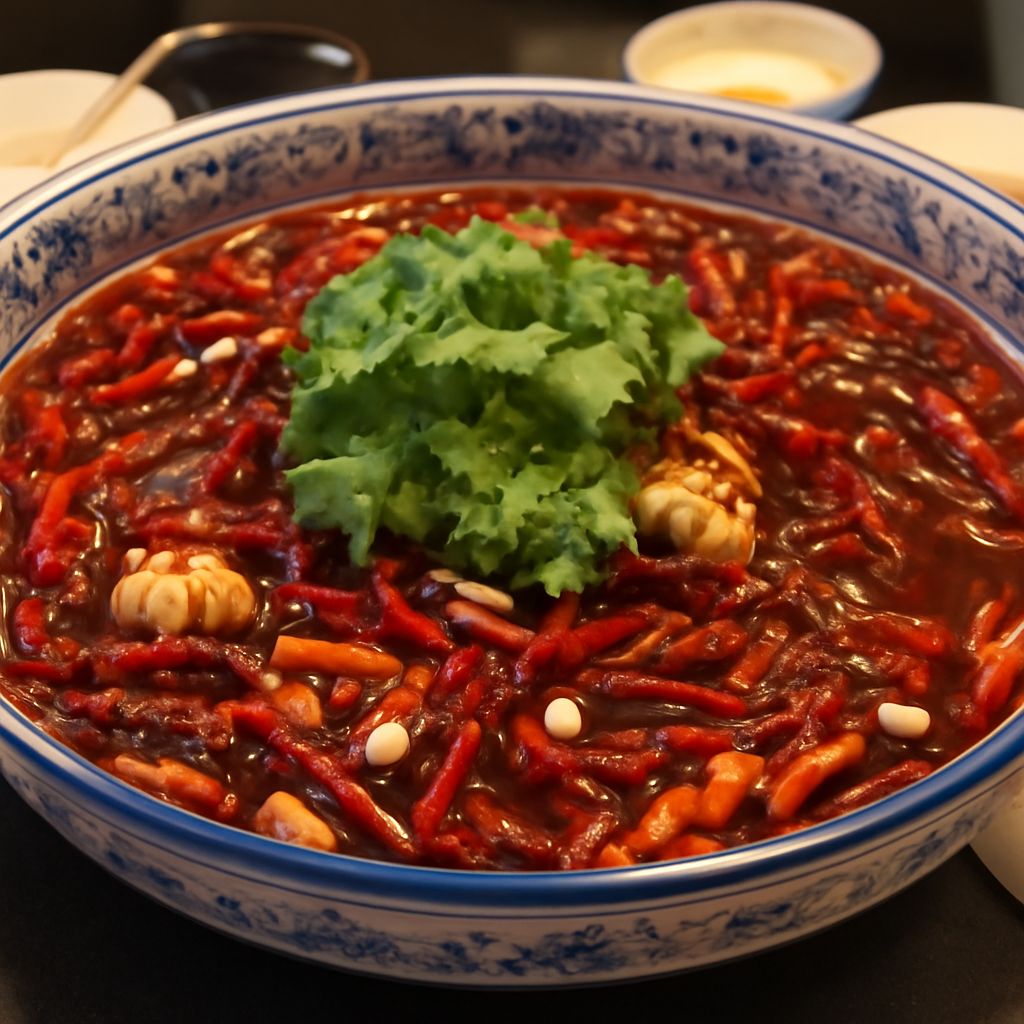
Sichuan boiled fish (shui zhu yu) is a four-serving dish of tender white fish poached in a spicy, savory broth and finished with dried chiles, Sichuan pepper, and sizzling oil. The fish stays delicate while the layered seasoning delivers the dish’s signature fragrance and heat.
Despite the literal wording, water boiled fish is not unseasoned fish simmered in water. The water-boiled method refers to the staged cooking process: build a chile-rich broth, gently poach the fish, then pour hot oil over the spice topping. You may also see the dish labeled “szechuan fish.”
What Sichuan boiled fish means
The Chinese name shui zhu yu means “water-boiled fish,” but the cooking liquid is a seasoned broth rather than plain water. Doubanjiang, ginger, garlic, soy sauce, and Sichuan pepper create a savory base. Bean sprouts or napa cabbage sit underneath the fish, absorb the broth, and add texture.
The final oil pour is essential. Dried red chiles and Sichuan peppercorns are placed over the cooked fish, then covered with very hot oil. The heat blooms their aroma and creates a fragrant chile-and-pepper layer without boiling the fish aggressively.
Prepare the broth and 600 g fish for four servings
Yield: 4 servings. Prepare the following ingredients:
- 600 g boneless white fish fillets, such as cod, tilapia, sea bass, or catfish
- 200 g mung bean sprouts or thinly sliced napa cabbage
- 1 tablespoon neutral oil for the broth
- 2 tablespoons doubanjiang, or Sichuan chili bean paste
- 3 garlic cloves, thinly sliced
- 15 g fresh ginger, cut into fine matchsticks
- 2 scallion whites, sliced
- 900 ml low-sodium chicken stock or water
- 1 tablespoon light soy sauce
- 1/2 teaspoon sugar
- 1/2 teaspoon salt, plus more only if needed
- 1 egg white
- 1 tablespoon Shaoxing wine
- 2 tablespoons cornstarch
- 1 tablespoon cold water
- 12 to 15 dried red chiles, snipped into pieces
- 2 teaspoons whole Sichuan peppercorns
- 80 ml neutral oil for the finish
- 2 scallions, thinly sliced, for garnish
Cut the fish across the grain into 5 mm slices. Remove any pin bones and pat the slices dry. Keeping the pieces similar in thickness helps them finish at the same time.
Velvet and gently poach the fish
- Heat 1 tablespoon oil in a wide pot over medium heat. Add the doubanjiang, garlic, ginger, and scallion whites. Stir for 1 to 2 minutes, until the paste darkens slightly and smells aromatic.
- Pour in the stock, then add the soy sauce, sugar, and salt. Bring the broth to a gentle simmer and cook for 8 minutes so the aromatics and chile paste infuse the liquid.
- Add the bean sprouts or napa cabbage. Simmer for 1 minute, then transfer the vegetables to a large heatproof serving bowl. Keep the broth barely simmering.
- While the broth cooks, toss the fish with the egg white, Shaoxing wine, cornstarch, and 1 tablespoon cold water. Mix gently until each slice looks lightly coated. Rest for 15 minutes. This velveting layer protects the fish and gives it a smooth, tender texture.
- Slide the fish into the broth in two batches. Keep the liquid at a gentle simmer rather than a rolling boil. Poach each batch for 60 to 90 seconds, turning the slices once, until opaque and just firm. Thick pieces may need another 30 seconds.
Lift the fish out with a slotted spoon and arrange it over the vegetables. Ladle enough broth around the fish to nearly cover it. If the broth boils hard, the fish can break apart and the coating may turn tough.
Finish water-boiled fish with dried chiles, Sichuan pepper, and hot oil
Arrange the dried chile pieces and Sichuan peppercorns in an even layer over the fish. For a milder bowl, remove some chile seeds; for more heat, leave them intact. Scatter the sliced scallions on top.
Heat the 80 ml finishing oil in a small saucepan over medium-high heat until it shimmers. A small piece of chile should sizzle immediately when dropped into the oil, but the oil should not smoke heavily. Carefully pour it over the chiles and peppercorns. The topping should crackle, release a deep roasted fragrance, and lightly darken without burning.
Serve the Sichuan water-boiled fish immediately with plenty of broth and vegetables. The finished slices should be opaque, moist, and tender, while the top remains aromatic, gently numbing from the pepper, and bright with chile heat.