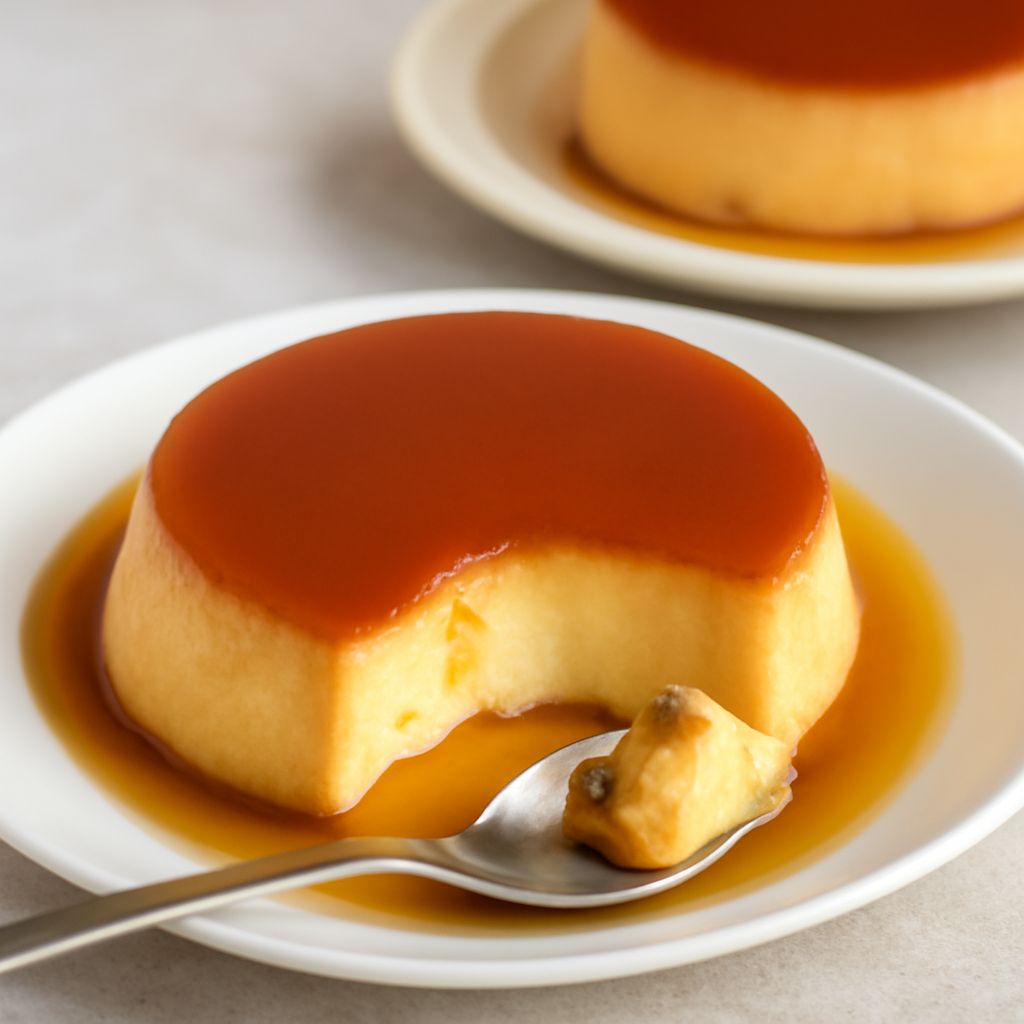
How do you make a smooth custard that turns out under its own glossy caramel sauce? Cook the sugar just until golden, mix the eggs gently, and bake the custard in a hot-water bath. This simple recipe for flan makes six servings and is easy to prepare ahead, giving the dessert time to chill before you turn it onto a plate.
The caramel goes into the dish first and hardens as it cools. During baking and chilling it softens into a sauce, ready to run over the custard when you invert it. Have a rimmed serving plate ready to catch every spoonful.
Flan Recipe Easy Enough for a First Custard
This version follows the proportions and baking method in the American Egg Board’s classic flan. You will need a small heavy saucepan, a medium saucepan, a mixing bowl, a whisk, a 9-inch flan dish or pie plate, and a larger baking pan that holds the dish without its sides touching. Allow about 20 minutes of preparation, 35 to 40 minutes of baking, and several hours to chill.
Ingredients:
- 1/2 cup granulated sugar, for the caramel
- 6 large eggs
- 1 can, 14 ounces, sweetened condensed milk
- 1 can, 12 ounces, evaporated milk
- 1/2 teaspoon vanilla extract
- Very hot water, for the baking pan
Set the empty flan dish on a heat-safe surface before you start the caramel. Once the sugar reaches the right color, you will want to pour it promptly. Keep oven mitts nearby: melted sugar is extremely hot and sticks to skin.
Make the caramel
Place the sugar in the small heavy saucepan over medium heat. Watch it carefully as it melts and becomes golden brown. Once it reaches a deep golden color, remove the pan from the heat immediately and pour the caramel into the flan dish. Holding the dish with oven mitts, quickly tilt it to coat the bottom evenly.
The syrup hardens quickly, sometimes with a little crackling sound. That is expected: the hard layer will soften as the custard cooks and chills. Let it stand while you prepare the filling. If the sugar turns very dark and smells burned, start again with fresh sugar; burned caramel can give the finished dessert a bitter taste.
A light-colored saucepan makes the change in color easier to see. Stay at the stove, especially near the end, because golden sugar can darken rapidly. Set the hot pan on a heat-safe surface after pouring and let it cool before cleaning.
Mix the custard gently
Heat the oven to 350°F. Combine the condensed and evaporated milks in the medium saucepan and heat until steaming and very hot, but not bubbling. Meanwhile, beat the eggs with the vanilla in a bowl just until blended. Slowly stir the hot milk into the eggs, a little at a time at first, then add the rest in a steady stream.
Gentle mixing keeps excess air out of the custard, while adding the hot milk gradually helps the eggs warm evenly. If you see foam on top, skim it off before pouring. In this recipe, flan gets its smooth texture from patient mixing and even heat. Straining the mixture through a fine sieve into the caramel-lined dish can catch any small bits of cooked egg.
The clear sequence makes this flan recipe easy to follow: caramel first, milk and eggs second, then the water bath. Set the filled dish inside the larger baking pan, taking care that water will not reach the custard.
Bake, cool, and unmold
Place the larger pan on the center oven rack. Carefully pour very hot water into the outer pan to within about 1/2 inch of the top of the flan dish. Slide the rack in gently so water does not splash into the custard. The water bath cushions the dish from direct heat, helping its edges and center cook more evenly.
Bake for 35 to 40 minutes. The edges should be set and the center may still jiggle slightly. Insert a thin knife about 1 inch from the center; it should come out clean. If custard clings to it, bake a few minutes longer and check again. The egg flan will continue to firm as it cools; excessive baking can make it curdle.
Carefully lift the dish from the water bath using oven mitts and cool on a rack. Refrigerate once cooled, within two hours of baking, until fully chilled and firm, at least 4 hours. Keep the custard covered in the refrigerator until you are ready to serve.
Run a thin knife around the edge. Place a rimmed platter over the dish, hold both securely, and invert in one confident movement. Lift the dish slowly, letting the caramel run onto the plate. If it sticks, briefly dip the bottom of the dish in warm water to loosen the caramel, dry it, and try again.
If the finished custard has many holes or a grainy texture, it may have been mixed too vigorously or baked too long. Next time, blend without whipping, use the water bath, and check for a clean knife and a slight center jiggle near the end of baking.