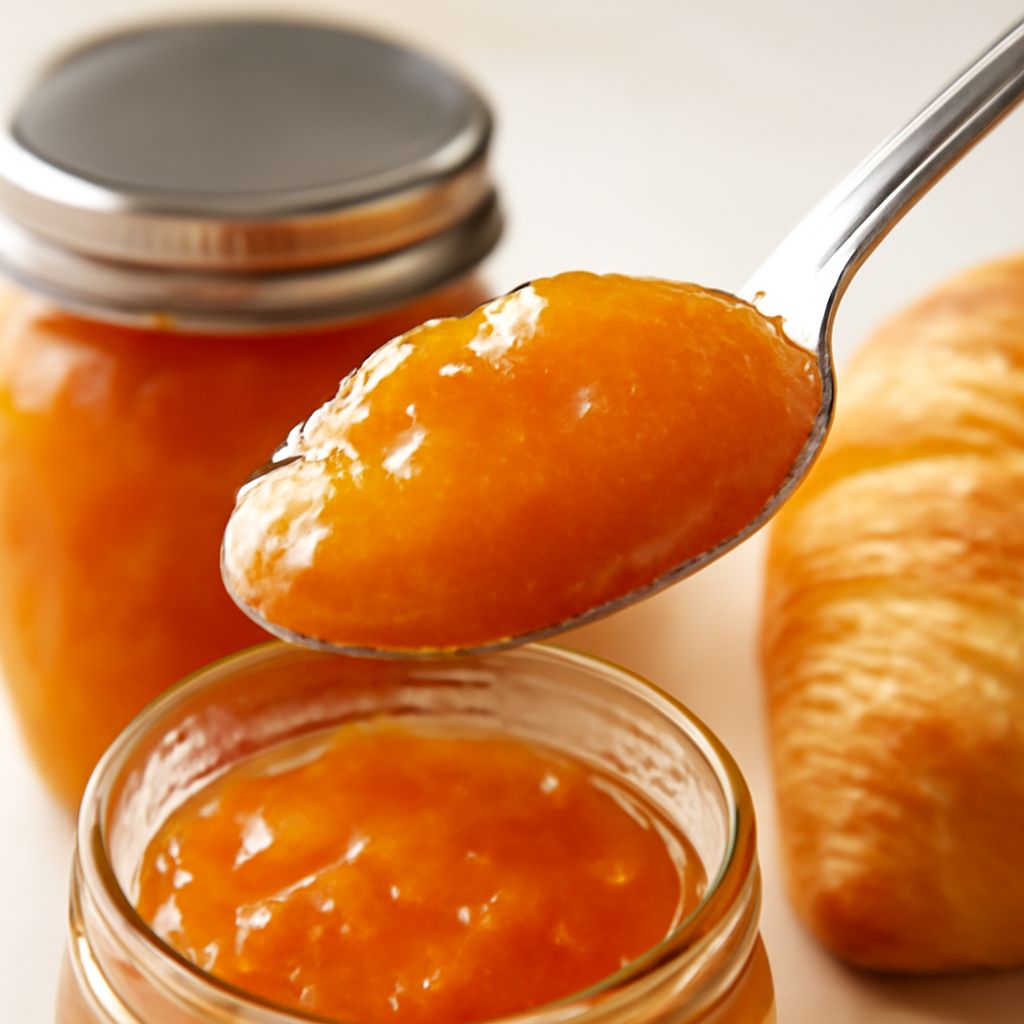
A basket of ripe peaches is sitting on the counter, and you would like to save their flavor for breakfast. This recipe for peach preserves turns crushed fruit, sugar, and lemon juice into a thick, sunny spread without added commercial pectin. Here is how to prepare peach preserves and keep the finished jars in the refrigerator.
The method comes from the National Center for Home Food Preservation’s jam without added pectin. Its peach version makes a crushed-fruit jam, so expect a soft, spreadable texture rather than large slices suspended in syrup.
How to Make Peach Preserves Without Added Pectin
The source yields about six to seven half-pint jars. Set aside time to prepare and cook the fruit, then refrigerate the filled jars. Cooking time varies with the fruit and pan, so use the cold-plate or temperature test below instead of relying on a fixed number of minutes.
You will need a large saucepan, measuring cups and spoons, a potato masher, a long-handled spoon, a ladle, and clean, sterilized jars with lids. A candy or jelly thermometer is helpful, but the cold-plate test also works. The University of Minnesota Extension recommends sterilized jars for refrigerated cooked fruit spreads because they do not receive a canning heat treatment.
Ingredients:
- 5 1/2 to 6 cups peeled, pitted, crushed ripe peaches, measured after crushing
- 4 to 5 cups granulated sugar
- 2 tablespoons lemon juice
Use the quantities in this tested peach preserves recipe; do not reduce the sugar or lemon juice. Choose sound, fully ripe yellow peaches for flavor. Wash and rinse the fruit thoroughly without soaking, then remove the skins and pits, cut the flesh into pieces, and crush it. Measure the crushed fruit rather than estimating from whole peaches: the amount in the measuring cup is the amount that goes into the pan.
Cook and test the set
Place a small plate in the freezer before you start if you plan to use the cold-plate test. Put the measured peaches into the large saucepan, add the sugar and lemon juice, and stir. Bring the mixture to a boil while stirring rapidly and constantly. Continue boiling and stirring as it thickens; a large pan gives the bubbling fruit room to rise, while steady stirring helps keep it from scorching.
For these peach preserves, no pectin is added: the fruit mixture thickens as it cooks and continues to firm as it cools. Watch the pan closely as the mixture becomes thicker, and scrape across the bottom with your spoon so the fruit does not catch.
To test without a thermometer, remove the pan from the heat. Put a small amount of the hot mixture on the chilled plate and return the plate to the freezer for a few minutes. If the sample gels, the batch is ready. If it remains runny, return the pan to the heat, cook a little longer, and test again on a cold plate. Removing the pan from the heat during the test prevents the rest of the batch from cooking past the desired point.
Alternatively, use a jelly or candy thermometer. At sea level, the center lists 220°F as the target; at 1,000 feet it lists 218°F, and at 2,000 feet, 216°F. Higher elevations have lower targets. Consult the source’s full elevation table for your location and make sure the thermometer measures the mixture rather than touching the bottom of the pan.
Remove the finished mixture from the heat and quickly skim off any foam. Ladle into the prepared sterilized jars and close them. Refrigerate promptly; this method is for refrigerator storage, not a shelf-stable seal.
Store and serve
The university’s guidance for cooked refrigerated fruit spreads gives a refrigerator life of up to one month. Keep the jars refrigerated, use a clean spoon each time, and label them with the preparation date. This batch is generous, so check that you have refrigerator space before you begin. If you see mold, discard the entire affected jar.
For old fashioned peach preserves at breakfast, spoon a little onto warm toast or a biscuit. The soft fruit is also lovely stirred into plain yogurt or served beside a slice of pound cake. Its sweetness is concentrated, so a small spoonful goes a long way.
Learning how to make peach preserves lets you watch the fruit change from a loose mixture into a glossy spread. This recipe for preserves made with peaches produces a soft texture suited to spooning. As it cools, the texture will become firmer than the hot sample in the pan. Leave the finished jar chilled before judging how readily it spreads.
If the cooled test on your plate stays liquid instead of gelling, return the pan to the heat and cook a little longer, stirring constantly. Test another small sample on a cold plate; once it gels, fill the jars and refrigerate them.