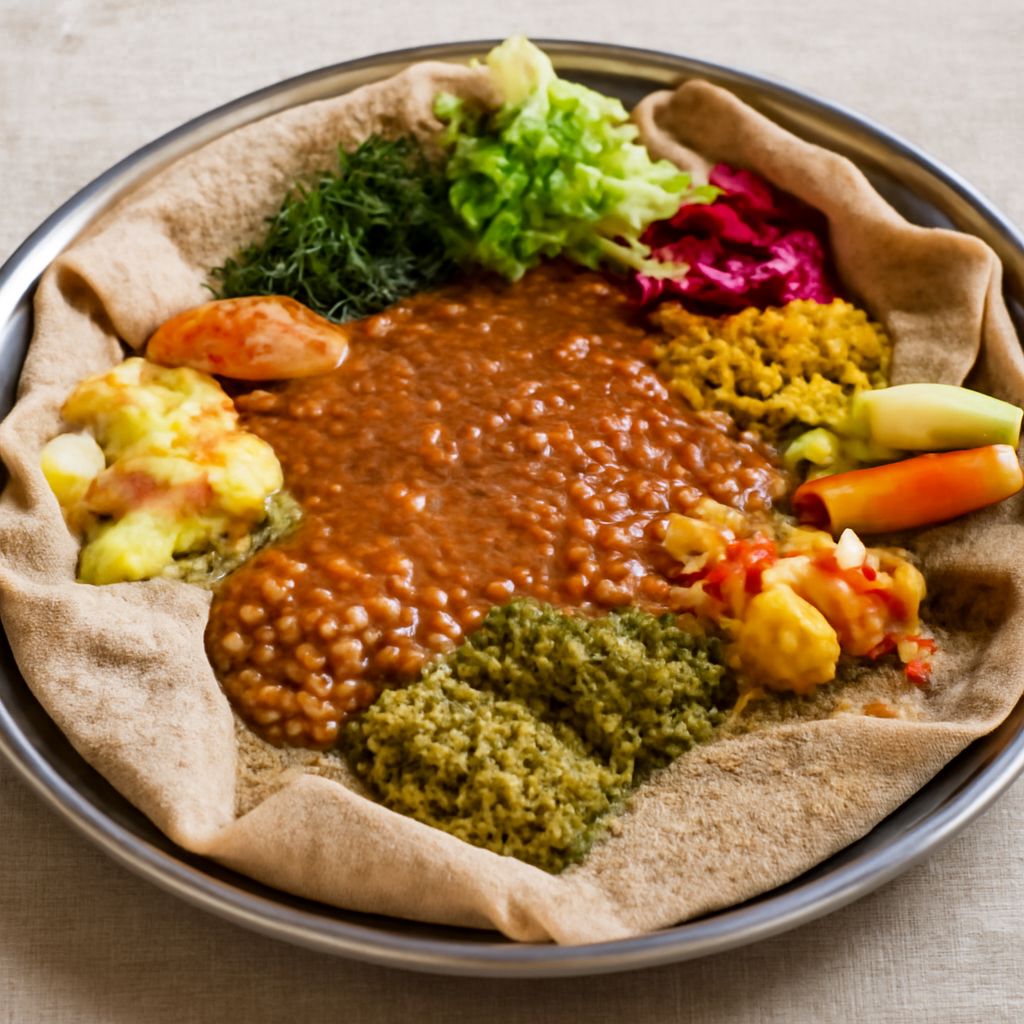
The tiny holes on injera’s surface are made for catching sauce. This soft Ethiopian and Eritrean flatbread gets its pleasantly sour flavor from fermented batter, and its flexible texture makes it both a base for a meal and a way to scoop it up. This recipe for injera bread uses teff flour, a little starter, and time to develop that character.
The batter takes several days to ferment, but cooking each round is quick. A covered skillet stands in for the large griddle used in many kitchens, producing smaller breads that are easy to make at home.
Injera bread recipe: ingredients and equipment
For about eight small rounds, you will need a clean large bowl or jar, a loose-fitting cover, a small saucepan, and a 10-inch nonstick skillet with a lid. Begin with an active teff sourdough starter, often called ersho: it should be bubbly and pleasantly sour. A starter made from a previous successful batch is a practical choice.
- 2 cups teff flour
- 2 1/2 cups drinking water, plus more as needed
- 1/4 cup active teff starter
- 1/2 teaspoon fine salt, or to taste
- A little neutral oil for the skillet, if needed
Use clean utensils and a container large enough for the batter to rise. This injera bread recipe uses only teff, whose earthy, slightly nutty flavor is central to the result. Fermentation time changes with the warmth of the room and the strength of the starter, so follow the signs as well as the clock.
Mix and ferment
Whisk the flour, 2 cups of the water, and the starter together until no dry pockets remain. The batter will be thick but pourable. Cover the container loosely and leave it at room temperature, out of direct sunlight, for about two to three days. Leave room at the top for expansion; the cover should allow gas to escape while keeping the batter protected.
During fermentation the mixture may separate, with liquid above the flour. That is normal. Look for small bubbles and a clean, tangy aroma. When the batter is active and sour-smelling, it is ready for the next step. Discard it and begin again if you see mold, pink or orange discoloration, or smell putrefaction. Sourness and bubbles alone do not establish safety, so use a healthy starter, clean equipment, and drinking water.
An authentic injera recipe can vary by household, flour, and fermentation practice. This recipe for fermented injera uses a cooked portion of batter, called absit, before the final rest. The step helps give the finished bread its soft, cohesive texture.
Cook the absit and adjust the batter
Stir the fermented mixture together. Scoop out 1/4 cup into the small saucepan and whisk it with the remaining 1/2 cup water. Cook over medium heat, stirring constantly, until it becomes a thick, smooth paste, about 2 to 4 minutes. Remove from the heat and let it cool until warm rather than hot.
Whisk the paste back into the remaining batter, then cover loosely and rest for about one hour, until bubbles return. Add the salt and enough water, a little at a time, to make a thin, pourable batter resembling heavy cream. Lift the whisk: the batter should fall in a continuous ribbon and spread readily in the pan. Too thick, and it will make a heavy round; too thin, and it can tear.
When making injera, cook one small test round before adjusting the whole batch. Add a spoonful of water if it refuses to spread. If it runs like water and tears when lifted, whisk in a little teff flour and let the batter rest briefly before trying again.
Cook the rounds
Heat the skillet over medium heat. If necessary, wipe it with a very thin film of oil; the surface should not be slick. Pour about 1/3 cup batter in a spiral from the outside toward the center, then tilt the skillet only if needed to fill gaps. The layer should be thin and even.
As the batter cooks, bubbles rise and open into the characteristic holes, sometimes called eyes. When most of the surface has changed from shiny to matte and the holes have appeared, cover the skillet. Cook for another minute or two, until the top is set and the edges lift easily. Injera is cooked on one side; do not flip it. Slide it onto a plate and let it cool before stacking. Repeat, adjusting the heat if the underside darkens before the top sets.
Flour choices and serving
This teff-based recipe for injera produces a deep, earthy flavor. Some cooks blend teff with wheat or other grains; wheat can make the bread milder and change its elasticity, and it adds gluten. A blend still needs fermentation to develop the sour flavor. An unfermented shortcut produces a different kind of pancake.
Lay a round on a platter and spoon lentils, vegetables, or a stew on top. Serve additional pieces rolled or folded alongside. Tear off a piece and use it to gather a little filling; the porous surface absorbs the sauce while the underside stays smooth.
If the holes do not appear
The likeliest setback is a smooth, heavy surface with few bubbles. Check that the batter was active after its final rest and that it pours in a thin layer. If it is thick, whisk in a little water and test another round; if the skillet is too cool, give it time to heat before pouring again. Keep the lid off until the holes have formed, then cover to finish cooking the top.