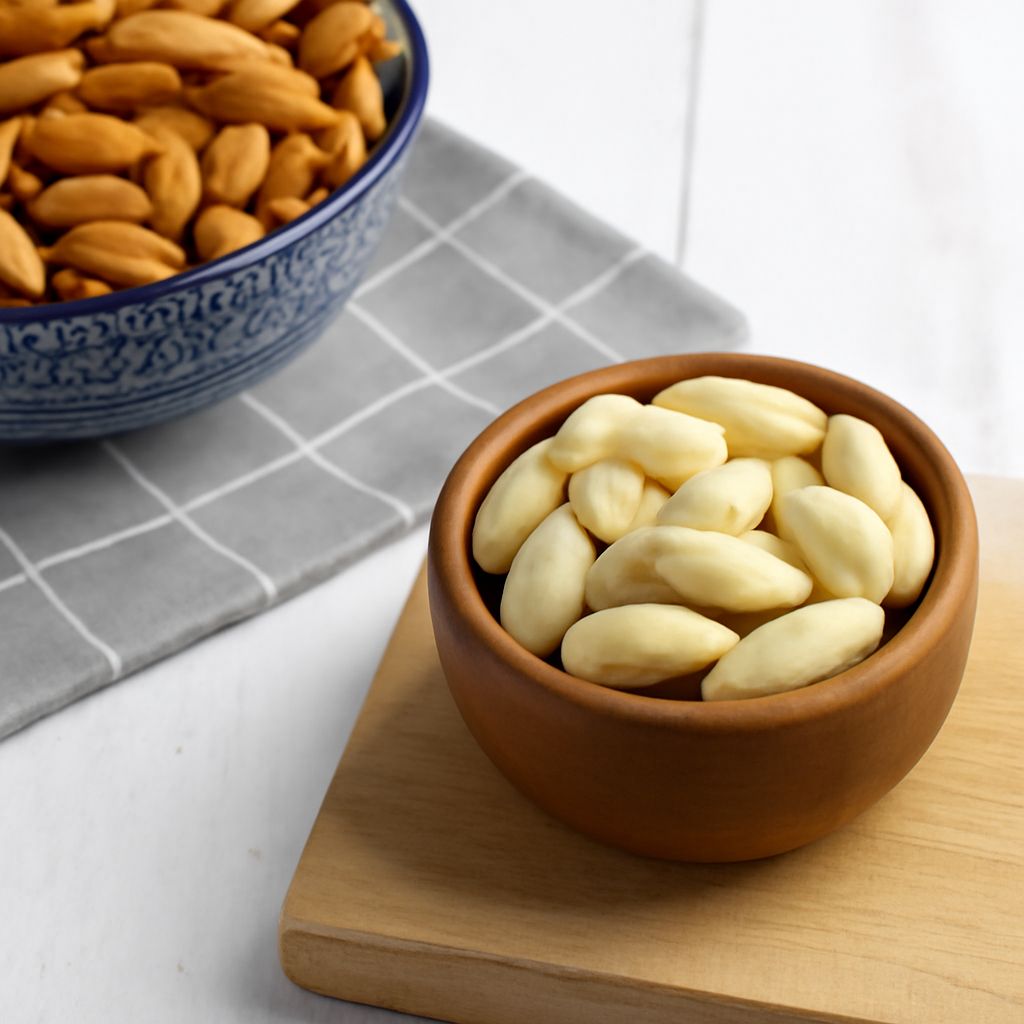
If you want peeled almonds for baking, grinding, or a smoother finish, the fastest method is to blanch almonds in boiling water, cool them briefly, then slip off the skins. The whole process takes only a few minutes, and the key is to drain them quickly enough that the kernels stay warm but not so hot that you can’t handle them.
Use whole raw almonds, water, a pot, a strainer, and a clean towel. An optional bowl of cool water can help if you want to stop the cooking fast, but you do not need an ice bath for this method.
How to Blanch Almonds Step by Step
To blanch almonds, bring a pot of water to a rolling boil. Use enough water to cover the almonds by at least an inch. Add the almonds and boil them for 30 to 60 seconds only. The skins should look a little looser, not fully split or wrinkled for minutes on end.
- Measure the almonds. Start with raw, unsalted whole almonds. This method works best when you are peeling a batch you plan to use right away.
- Boil the water. Fill a pot with enough water to submerge the almonds completely, then bring it to a full boil.
- Add the almonds. Drop them into the boiling water and stir once so they heat evenly.
- Watch the timing. Boil for 30 to 60 seconds. For smaller almonds, closer to 30 seconds is often enough. If you leave them much longer, they can start to soften instead of just loosening the skins.
- Drain immediately. Pour the almonds into a strainer as soon as the time is up. Do not let them sit in the hot water.
- Cool just enough to handle. Rinse under cool running water or place them in a bowl of cool water for a minute or two. You want them cool enough to touch, but still warm enough that the skins slip off easily.
The easiest cue for blanching almonds correctly is a simple slip test: pinch one almond between your fingers and squeeze the wider end. If the skin pops off with little resistance, you are ready to peel. If it still clings tightly, give the almonds another 15 seconds in hot water, then drain again.
Peel, Dry, and Check the Almonds
To peel, hold each almond between your fingers and squeeze the rounded end. The nut should slide out of the skin almost cleanly. If some skins come off in pieces, that is still normal; just rub away any loose bits with your fingers.
After peeling, spread the almonds in a single layer on a clean towel. Pat them dry gently to remove surface moisture. This matters if you plan to grind them, toast them, or use them in baking, because extra water can affect texture and recipe results.
Let the almonds air-dry for at least 30 minutes before using them in a recipe that needs them dry on the surface. For longer drying, leave them on the towel until they no longer feel damp to the touch. If you are in a hurry, blot them well and spread them out so air can circulate around each nut.
Check a few almonds before you move on. They should be smooth, pale, and free of skin fragments. If some still have stubborn bits attached, rub them lightly with the towel or pinch off the remaining skin.
Troubleshooting, Uses, and Storage
If the skins stick, the most common fix is simple: the almonds were not boiled long enough. Return them to the hot water for another 15 to 20 seconds, then drain and test again. If the skins are peeling in patches but not slipping cleanly, the almonds may have cooled too much before you started. Warm them briefly again in hot water, then try peeling while they are still slightly warm.
If the almonds feel soft or swollen, they were likely boiled too long. They can still be used, but they are less ideal for recipes that need a crisp texture. Keep the boil short the next time and drain them right away.
Use peeled almonds immediately for marzipan, almond flour, sliced almond toppings, smooth sauces, or recipes where the skins would change the texture or color. If you need to store them, dry them thoroughly first. Then keep them in an airtight container in the refrigerator for a few days, or freeze them for longer storage. Moisture is the main thing to avoid, because it can make the almonds spoil faster or clump when ground.
If you are preparing a large batch, work in small groups so the almonds do not cool too much before peeling. That makes blanching almonds faster, cleaner, and more consistent from batch to batch.