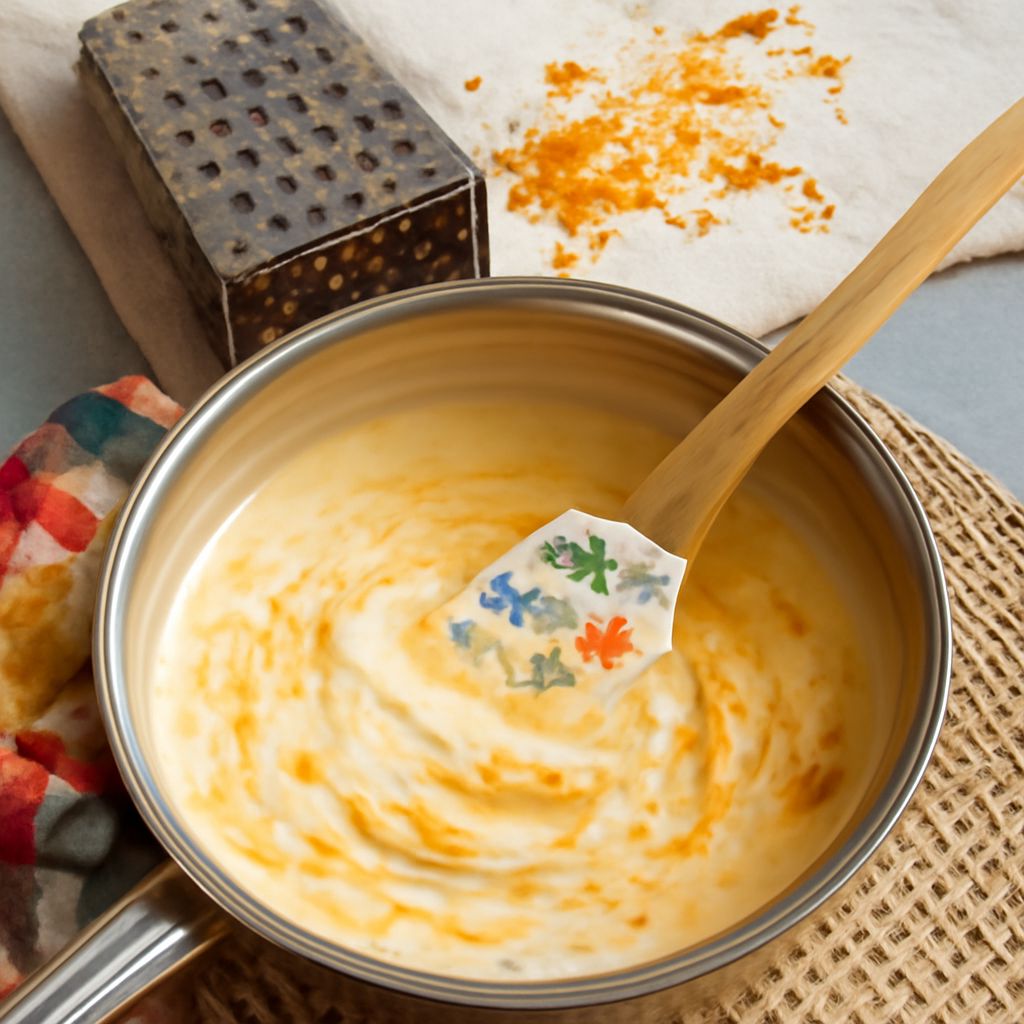
If you want to know how to make a roux for mac and cheese, start with equal tablespoons of butter and flour, then whisk in milk gradually. For a practical batch, use 2 tablespoons butter, 2 tablespoons all-purpose flour, 2 cups milk, 2 cups shredded cheese, and 8 ounces pasta.
The goal is a pale roux, a smooth white sauce, and a cheese finish that stays creamy. Keep the heat moderate while the flour cooks, then reduce or remove the heat before the cheese goes in.
How to Make a Roux for Mac and Cheese: Roux and Sauce Proportions
A practical 8-ounce batch: 2 tablespoons each of butter and flour
- Butter: 2 tablespoons
- Flour: 2 tablespoons all-purpose flour
- Milk: 2 cups, preferably whole milk
- Cheese: 2 cups freshly shredded cheese, about 8 ounces by weight
- Pasta: 8 ounces elbow macaroni or another short shape
This ratio makes enough sauce to coat 8 ounces of pasta generously without turning dry. For a baked mac and cheese, leave the sauce slightly looser because the pasta and oven will absorb more moisture. For stovetop mac and cheese, cook the sauce until it coats a spoon but still flows easily.
Cheddar gives you classic flavor. Monterey Jack, Colby, Gruyère, or a combination of these cheeses melts smoothly. Shred cheese from a block when possible; packaged pre-shredded cheese can contain anti-caking ingredients that make the sauce less silky.
Use 2 cups milk and 2 cups shredded cheese
Cook the pasta in salted water until it is about 1 minute less tender than the package directions specify. Drain it without rinsing. The slightly firm pasta will finish softening when you stir it into the hot sauce.
How to Make a Roux for Cheese Sauce: Cook the Flour and Add Milk
Whisk the flour into the melted butter
- Melt the butter in a medium saucepan over medium heat. Do not let it brown.
- Whisk in the flour until the mixture is smooth and no dry patches remain.
- Cook the mixture for 60 to 90 seconds, whisking constantly.
The butter and flour should form a smooth, pale paste. You may notice a light, nutty aroma, but the roux should not turn tan or brown. A dark roux has less thickening power and can give your cheese sauce a toasted flavor instead of the pale, creamy base you want.
Add milk in small, steady additions
Pour in about 1/4 cup of milk while whisking continuously. The mixture will become thick and paste-like at first. Keep whisking until it looks smooth, then add another small splash. Repeat this process until you have incorporated about 1 cup of milk.
Once the roux has loosened, pour in the remaining milk in a slow, steady stream while you whisk. Scrape the corners and bottom of the pan so no flour paste remains. Gradual additions disperse the roux evenly and prevent lumps.
If small lumps appear, whisk firmly while the sauce is still thin. You can also pass the sauce through a fine strainer before adding cheese, but thorough whisking usually produces a smooth result.
Thicken the Sauce Until It Coats a Spoon
Look for a smooth, glossy texture
Keep the milk sauce over medium to medium-low heat for about 4 to 7 minutes, whisking often. It should steam and thicken without reaching a hard boil. When you lift the whisk, the sauce should fall in a smooth ribbon. If you dip in a spoon, it should coat the back, and a finger drawn through it should leave a clean path for a moment.
Do not rush this stage with high heat. Scorching the milk can add a burnt flavor, and aggressive boiling can make the finished cheese sauce unstable. If the sauce thickens before the flour taste disappears, lower the heat and continue cooking gently for another minute or two.
Thin an overly thick sauce with a splash of milk
The sauce should be a little thinner than your desired final consistency because the cheese will add body. If it becomes stiff or looks pasty, whisk in milk 1 tablespoon at a time until it loosens. If it remains watery after 7 minutes, continue cooking gently for another minute, whisking constantly.
A smooth, glossy sauce is ready for cheese. A floury taste means the roux or milk sauce needs more gentle cooking. A scorched smell means the bottom has overheated; transfer the unburned sauce to a clean pan without scraping the bottom.
Melt in Cheese Without Splitting
Reduce or remove heat before adding cheese
When the sauce coats a spoon, reduce the burner to low or remove the saucepan from the heat entirely. Let it stand for about 30 seconds, then add the shredded cheese one small handful at a time. Whisk or stir until each addition melts before adding the next.
Lower heat protects the cheese proteins and fat from separating. Freshly shredded cheese also melts more evenly than cold, compact pieces, so shred it while the milk sauce thickens and let it come close to room temperature.
Stir until smooth and never boil the finished sauce
Continue adding cheese until the sauce is smooth, glossy, and thick enough to cling to the pasta. If it looks grainy, greasy, or stringy, the pan is too hot; remove it from the burner and stir in a tablespoon or two of warm milk. Do not return it to a boil.
Never boil the sauce after the cheese is added. Boiling can cause the fat to separate and leave you with a grainy texture. If the cheese is slow to melt, use the residual heat from the saucepan and keep stirring rather than raising the temperature.
Stir the drained macaroni into the warm cheese sauce immediately. If it tightens before serving, loosen it with a splash of warm milk and stir until the sauce flows smoothly around every piece of pasta.