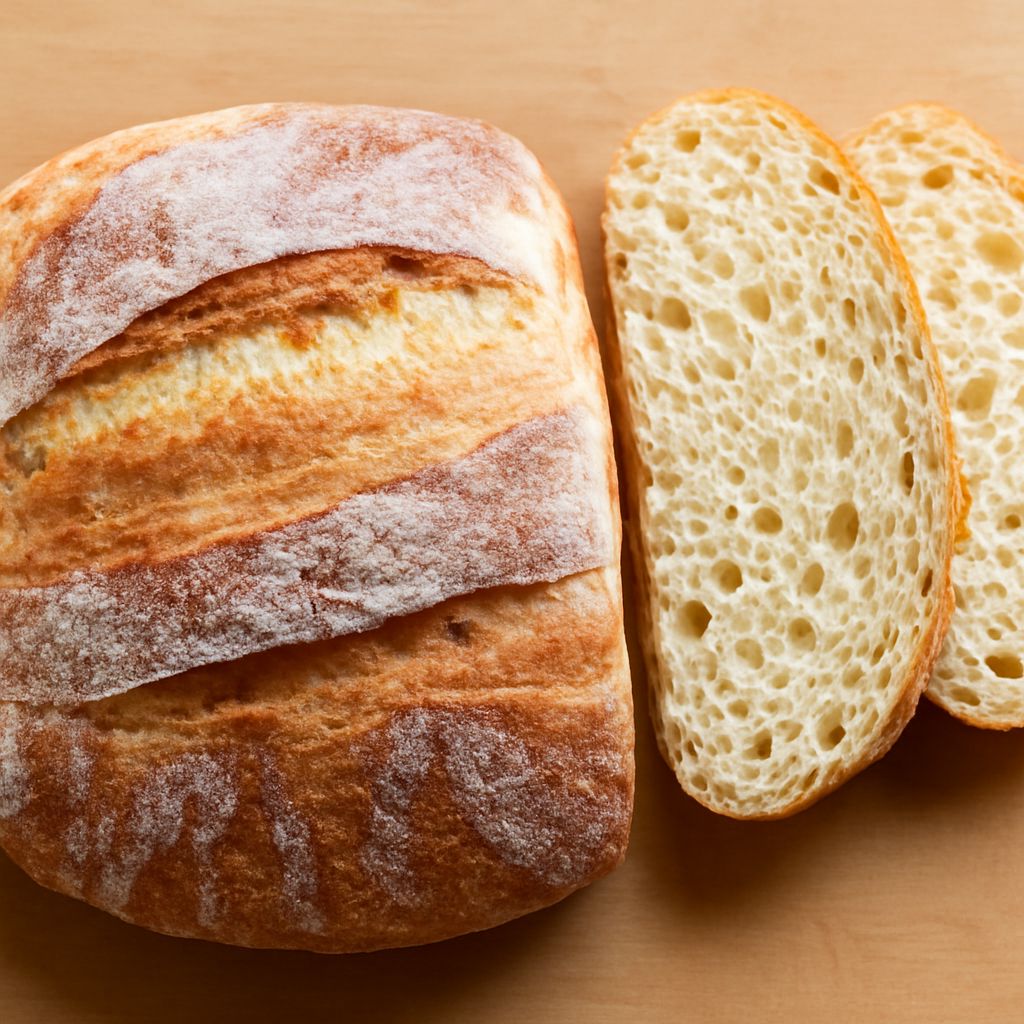
If you are asking, why is my bread so dense, check fermentation first. Most heavy loaves have not trapped and retained enough gas before baking. Underproofing is common, but weak gluten, excess flour, incorrect hydration, rough shaping, and an underheated oven can create similar symptoms.
Use the crumb, crust, and dough’s rise as evidence before changing the recipe. The correction for a tight, dry loaf is different from the correction for a gummy or collapsed one.
Why is my bread so dense? Read the crumb and crust clues
Tight crumb, gummy center, or pale crust
- Small, tight holes throughout: The dough likely underproofed, the yeast was weak, or the dough could not develop enough structure to hold gas.
- Dense bottom with a few large holes at the top: Shape more gently and check gluten development. Gas has collected unevenly instead of spreading through the loaf.
- Gummy, shiny center: The loaf may be underbaked, cut while hot, or made with more water than the flour can absorb.
- Pale, firm crust with a heavy interior: Your oven may have been too cool, or you removed the loaf before its center finished baking.
- Loaf rose high, then sank: It probably overproofed. The dough’s structure weakened and could not support the expanded gas.
Use the loaf’s rise and texture as diagnostic checks
Press the proofing dough gently with a floured finger. If it springs back immediately, it needs more time. If the dent fills slowly and leaves a slight impression, bake it. If the dough deflates or the dent remains deeply, it has gone too far. Also compare its volume with the recipe’s target rather than relying only on the clock.
My bread is too dense: Check fermentation before changing the recipe
Underproofing, weak yeast, and overproofing
Underproofing is the most common reason for a dense loaf. A cool kitchen, a short rise, too little yeast, or salt mixed directly into a yeast slurry can slow fermentation. Old or poorly stored yeast can fail to produce enough gas. Overproofing causes the opposite problem: the dough rises, loses strength, and collapses during scoring or baking.
Concrete timing and temperature corrections
- Keep the dough around 75–80°F (24–27°C) during bulk fermentation. Extend the rise until it looks puffy and has increased by roughly 50–100%, even if that takes longer than the recipe states.
- Test questionable yeast in warm, not hot, water—about 100–110°F (38–43°C). After 5–10 minutes, it should foam. Replace yeast that remains completely still.
- Let the shaped loaf proof until it passes the finger-dent test, then bake immediately. If it repeatedly overproofs, shorten the final rise or reduce the dough temperature.
How to fix bread that’s too dense: Assess gluten, hydration, and flour
Test dough strength without blaming kneading alone
A dense loaf does not automatically mean insufficient kneading. Give the dough a 15–20-minute rest after mixing, then perform two or three gentle stretch-and-folds during the first hour of bulk fermentation. The dough should become smoother, elastic, and able to stretch thinly without tearing. If it still spreads like batter, the flour may be weak or the dough may contain too much water.
Adjust water and choose flour that holds gas
Weigh flour and water rather than measuring cups. For the next batch, hold back 5–10% of the water and add it only if the dough feels stiff. Whole-wheat flour absorbs more water and can produce a compact crumb if it is not hydrated fully; let it rest before judging its consistency. For a taller white loaf, use bread flour with about 12–14% protein. Add whole-grain flour gradually if your current dough lacks strength.
Correct shaping and baking for a lighter loaf
Shape without pressing out the air
Turn the risen dough onto a lightly floured surface and handle it gently. Press only enough to remove unusually large pockets, then fold the edges inward, create surface tension, and seal the seam. Do not flatten the entire dough or bury it under extra flour. After shaping, proof it seam-side down in a prepared pan or seam-side up in a floured basket.
Bake through the center and confirm doneness
Preheat the oven fully, including the baking surface, and score the loaf just before it goes in. Bake at the recipe’s stated temperature; if the crust browns before the center is done, lower the temperature slightly and extend the bake. The center should reach about 200–210°F (93–99°C). Cool the loaf completely before slicing, because cutting hot bread can make a properly baked crumb seem gummy and dense.