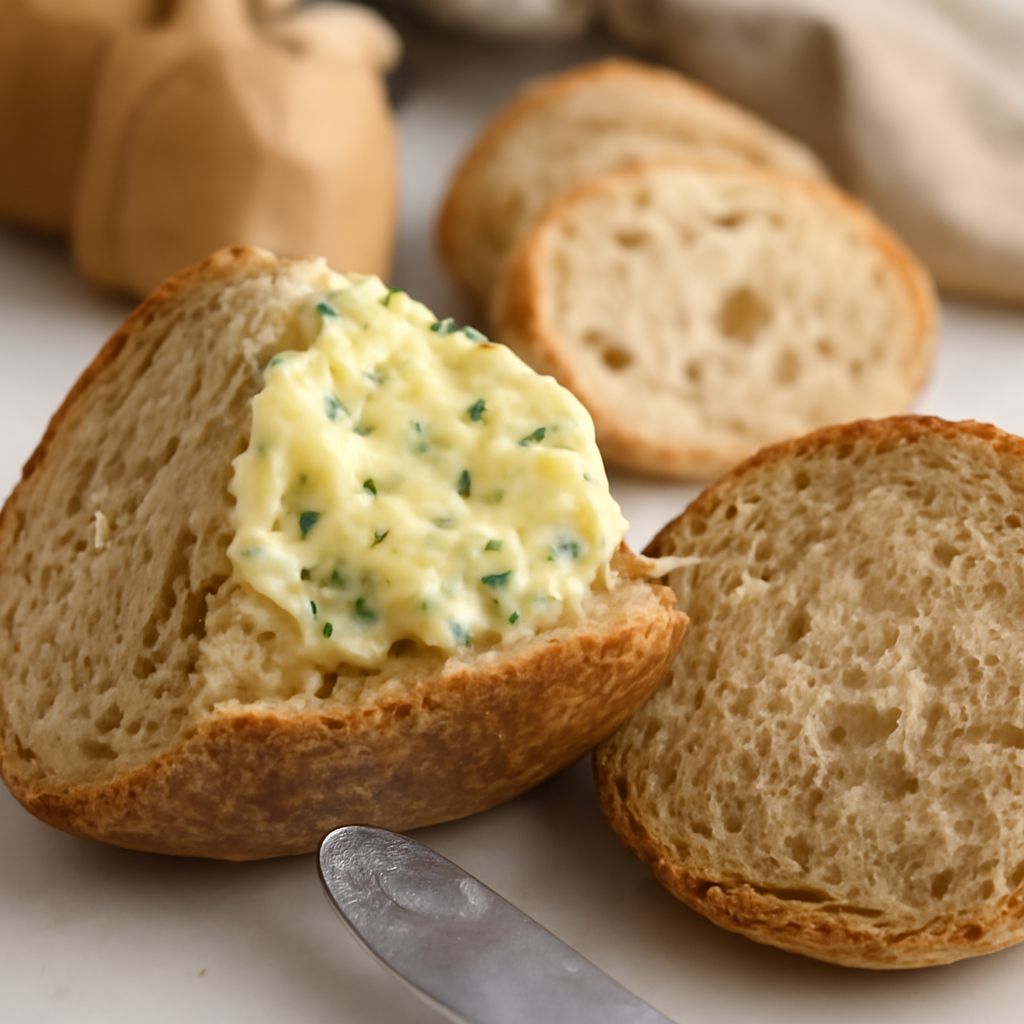
Compound Butter Ingredients and Ratio
If you want to know how to make compound butter, start with a reliable ratio: 1 cup unsalted butter to 2 to 3 tablespoons finely chopped flavorings, plus salt to taste. For a balanced herbed butter that works on vegetables, steak, fish, potatoes, or bread, use this base recipe.
Yield: about 1 cup compound butter, or 16 tablespoons, enough for 8 to 12 servings depending on use.
Herbed butter base:
- 1 cup unsalted butter, softened to cool room temperature
- 2 tablespoons finely chopped parsley
- 1 tablespoon finely chopped chives
- 1 tablespoon finely chopped dill or tarragon
- 1 small garlic clove, grated or very finely minced
- 1/2 teaspoon fine salt, plus more if needed
- 1/4 teaspoon black pepper
- Optional: 1 teaspoon lemon zest for brightness
The butter should be soft enough to press with a finger, but not oily or partially melted. If it is too cold, the herbs won’t blend evenly. If it is too warm, the butter compound will smear and turn greasy instead of slicing cleanly later.
Prep the add-ins before you start mixing. Chop herbs very finely so they distribute evenly and don’t create wet clumps. Mince or grate garlic so no sharp pieces dominate the finished butter. Pat herbs dry after washing; excess moisture can make the mixture loose and shorten storage time.
Mix, Shape, and Chill the Butter
To make the butter blend evenly, mix in this order: soften the butter first, then add salt, pepper, garlic, and any dry seasonings, and fold in the herbs last. That helps you taste the base before the fresh herbs disappear into the mixture.
- Place the softened butter in a medium bowl.
- Add the salt, pepper, garlic, and lemon zest if using.
- Stir with a flexible spatula until smooth and evenly seasoned.
- Fold in the chopped herbs and mix just until distributed.
Don’t overwork it. A compound butter should look uniformly speckled, not whipped. If you beat it too much, the texture gets airy and can trap moisture.
Once mixed, shape it one of two ways:
- Log shape: Spoon the butter onto a sheet of parchment or plastic wrap. Roll into a tight log about 1 1/2 inches thick, twisting the ends to seal.
- Container shape: Press the butter firmly into a small ramekin or airtight container, smoothing the top with a spoon or spatula.
The log shape is best if you want easy slicing. The container shape is easiest if you plan to scoop it onto hot food or spread it on toast.
Chill the shaped butter until firm, usually 1 to 2 hours in the refrigerator. For clean slices, chill until the log feels solid but not rock-hard. If you need faster setting, freeze it for about 20 to 30 minutes, then move it to the fridge.
To slice, unwrap the log and use a sharp knife to cut coins as needed. For a cleaner edge, let the log sit at room temperature for 2 to 3 minutes before cutting.
Use, Store, and Freeze Compound Butter
A good compound butter should taste balanced enough to stand alone, but strong enough to flavor a whole dish. Use a small amount first, then add more if needed.
- On steak, chicken, or fish: top the hot protein with 1 tablespoon per serving so it melts into a sauce.
- On vegetables: finish roasted carrots, green beans, asparagus, or corn with a thin slice.
- On potatoes: stir into mashed potatoes or melt over baked potatoes.
- On bread: spread softened rounds over warm baguette, biscuits, or toast.
- In pans: melt a coin in a skillet to finish sautéed mushrooms or pan-seared seafood.
Store compound butter in the refrigerator, tightly wrapped or sealed in a container, for up to 1 week. If you used very fresh herbs and clean utensils, it may keep well for the full week; if the butter smells or looks dull before then, discard it.
To freeze, wrap the log in parchment, then place it in a freezer bag or airtight container. Freeze for up to 3 months. For best texture, slice the log before freezing, then freeze the coins flat so you can grab only what you need. Thaw in the refrigerator or set a slice directly on hot food.
If the flavor seems flat, add a little more salt or a squeeze of lemon next time. If it tastes harsh, reduce the garlic or use milder herbs. If it seems watery, your herbs were probably wet or the butter was too warm when mixed.
Flavor Variations and Adjustments
Once you know the base method, you can build savory or sweet versions with the same process. Keep the ratio close to the original so the butter stays spreadable and sliceable.
Savory variations:
- Steak butter: parsley, chives, garlic, cracked black pepper, and a pinch of smoked paprika.
- Garlic herb butter: parsley, basil, and extra garlic for garlic bread or pasta.
- Lemon dill butter: dill, lemon zest, and a little black pepper for fish or shrimp.
- Shallot butter: minced shallot, parsley, and thyme for roast chicken or mushrooms.
Sweet variations:
- Cinnamon honey butter: softened butter, honey, cinnamon, and a pinch of salt for rolls, cornbread, or biscuits.
- Maple butter: maple syrup, salt, and a little vanilla for pancakes or waffles.
- Orange butter: orange zest, honey, and a touch of cardamom for scones or quick breads.
For sweet versions, keep liquid ingredients modest so the butter doesn’t separate. Use room-temperature butter and whisk in honey or syrup gradually until smooth. If the mixture loosens too much, chill it briefly, then stir again.
For stronger savory flavor, increase herbs by 1 teaspoon at a time instead of doubling garlic or salt. That keeps the butter compound fresh and layered instead of sharp. For milder flavor, reduce garlic, use more parsley, or add a little plain butter to rebalance the mixture.
That is the simplest way to make compund butter well: start with soft unsalted butter, measure your herbs carefully, mix in the right order, and chill until firm enough to slice. From there, you can adjust the same base for nearly any meal.