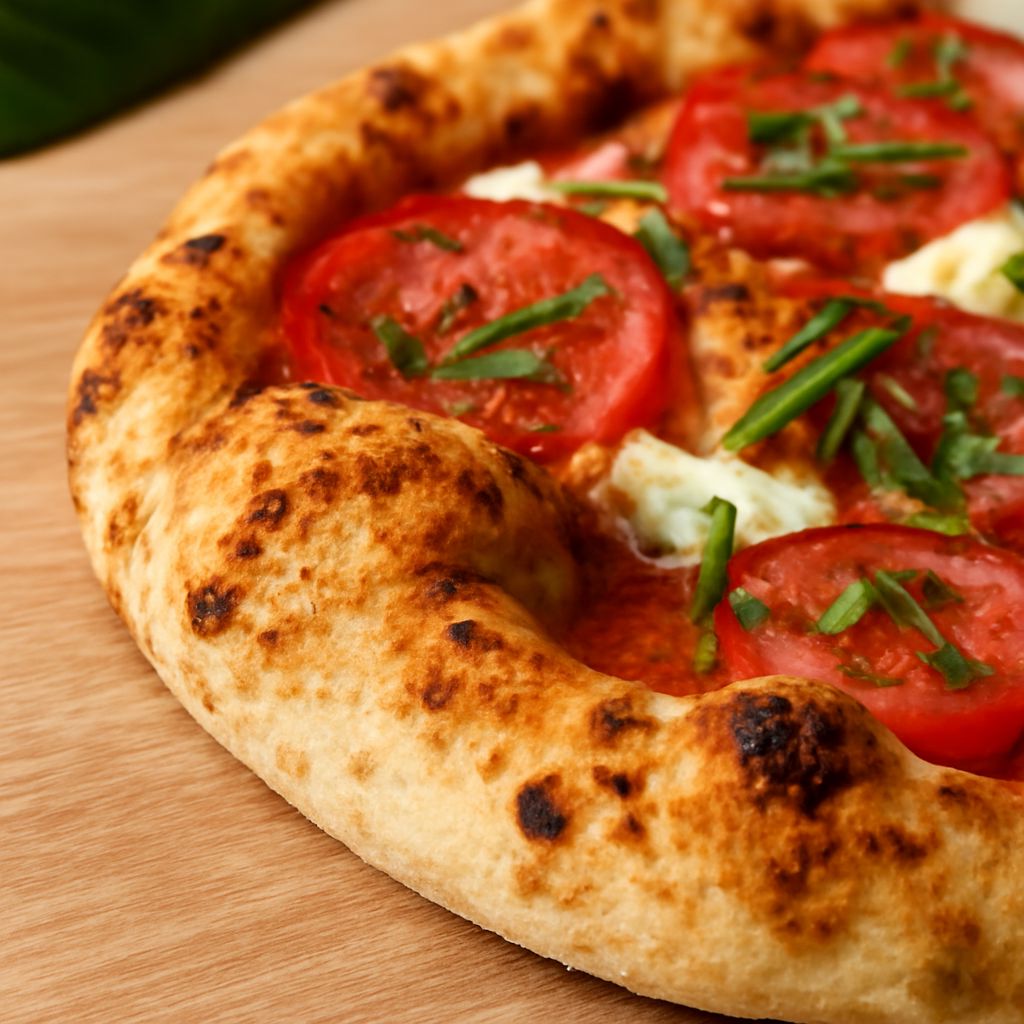
This artisan pizza dough recipe makes three thin-crust pizzas with a crisp base, airy rim, and deep fermented flavor. It uses 500 grams of flour, 375 grams of water for 75% hydration, restrained yeast, three fold rounds, and a cold fermentation of 24 to 72 hours.
Use a kitchen scale for reliable results. The dough will feel sticky at first, but time and folds will build strength without heavy kneading. The balance retains traditional pizza dough recipe fundamentals while creating a more open-textured crust.
Artisan pizza dough recipe: 500 g flour, 375 g water, 10 g salt, 1 g yeast; 3 pizzas
- 500 g flour: bread flour or pizza flour with about 11.5% to 13% protein
- 375 g water: cool or room-temperature water
- 10 g fine sea salt
- 1 g instant yeast
This yields about 886 grams of dough, enough for three dough balls of approximately 295 grams each. That size makes pizzas about 11 to 12 inches wide.
Develop the artisan pizza dough with mixing, rests, and folds
- Combine the flour with 350 grams of the water until no dry flour remains. Cover and rest for 20 to 30 minutes.
- Stir the yeast into the remaining 25 grams of water. Add it to the rested dough, then add the salt. Pinch and fold the mixture for 3 to 4 minutes, until it becomes cohesive. It should remain soft and tacky.
- Cover and rest for 30 minutes. With a damp hand, grab one edge, stretch it upward, and fold it over the center. Rotate the bowl and repeat three more times. Complete three fold rounds, 30 minutes apart.
Stop folding when the dough holds a rounded shape and feels elastic rather than slack. Avoid adding extra flour, which lowers the hydration and can make the finished crust dense.
Fermentation schedule: room-temperature rise, then 24–72 hours cold
At 70°F to 75°F, let the dough complete a room-temperature bulk rise for about 2 to 3 hours from the initial mix. It should expand by roughly one-third, show a few bubbles, and feel lighter when you lift an edge. If your kitchen is warmer, shorten the bulk rise; if it is cooler, allow more time.
Turn the dough onto a lightly floured surface and divide it into three equal pieces. Shape each piece into a smooth ball by tucking the edges underneath without pressing out the gas. Place the balls in covered containers and refrigerate for 24 to 72 hours.
On baking day, remove the dough from the refrigerator 2 to 3 hours before shaping. Let it warm until relaxed, puffy, and easy to stretch. A ball that has collapsed, spread into a puddle, or smells sharply alcoholic has fermented too far.
Gentle shaping, light toppings, and an open-textured crust
Dust a work surface with flour and place one dough ball on it. Turn it over, then use your fingertips to press from the center outward, leaving a 1-inch rim untouched. Lift the dough over your knuckles or stretch it gently on the work surface until it reaches 11 to 12 inches. Do not use a rolling pin; it forces the fermentation gases out of the rim.
Transfer the round to a lightly floured or semolina-dusted peel. Add a thin layer of sauce, about 60 to 75 grams of low-moisture mozzarella, and a restrained amount of toppings. Excess sauce, cheese, or wet vegetables can weigh down the center before the crust finishes baking.
Bake on a thoroughly preheated surface at high heat
Place a baking steel or pizza stone in the upper third of your oven and heat it at the oven’s highest setting, ideally 500°F to 550°F, for at least 45 to 60 minutes. The surface must be fully saturated with heat; a short preheat can leave the bottom pale while the rim browns.
Launch the pizza onto the hot surface and bake for 5 to 8 minutes, rotating once if needed. For more color on top, switch to the broiler for the final 1 to 2 minutes while watching closely. The pizza is ready when the rim is deeply puffed and browned, the underside has crisp toasted spots, and the center is set but still flexible.