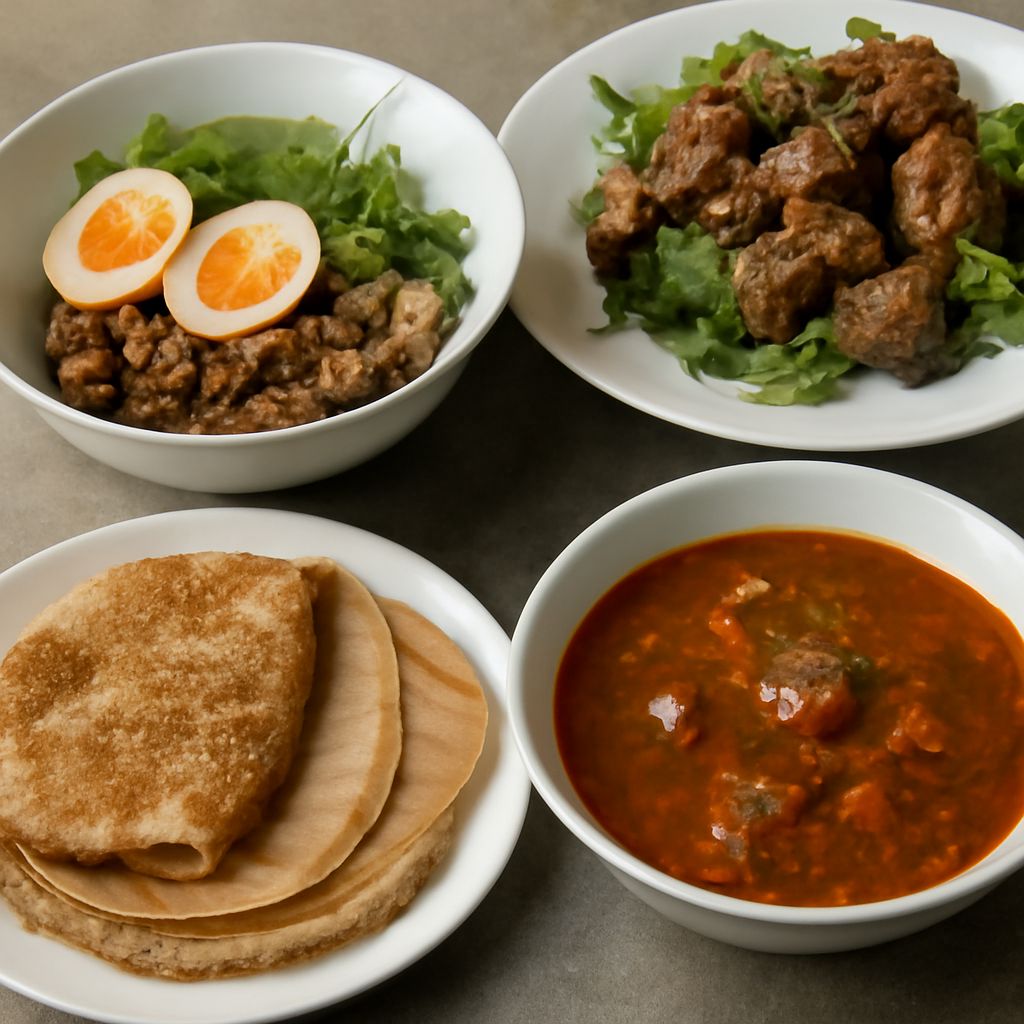
Sudan food is built around grains, legumes, vegetables, and boldly seasoned stews. Sorghum and millet support everyday meals, while kisra, aseeda, ful, okra, grilled meats, peanuts, and fragrant drinks show how cooks turn simple ingredients into generous food.
When you explore Sudanese food, you will notice that meals often arrive in shared dishes. You tear bread with your hands, scoop up stew, and eat alongside family or guests. Recipes vary across the Nile Valley, Red Sea coast, and western regions, but hospitality remains central.
Sudan Food: Grain Staples and Breads, from Kisra to Aseeda
Sorghum is one of the defining grains in Sudanese cooking. Cooks grind it into flour for kisra, a thin, slightly sour flatbread made from fermented batter. You can use kisra to scoop up mullah, the general name for a range of rich Sudanese stews. Its mild tang balances spicy sauces and earthy vegetables.
Aseeda offers a different texture. You make this smooth, firm porridge by cooking grain flour with water, then serve it with a savory stew or sometimes a sweet sauce. Sorghum, millet, and wheat all appear in Sudanese kitchens, depending on local crops and family traditions. Millet is especially important in western areas, where cooks use it for porridges, breads, and fermented preparations.
In some homes, you may also find wheat-based breads and simple flatbreads alongside kisra. These staples provide more than carbohydrates: they act as utensils, absorb sauces, and give a shared meal its structure.
Sudanese Food: Mullah Stews, Ful, Okra, and Grilled Meats
Mullah brings together meat, vegetables, legumes, and spices in sauces designed to be eaten with kisra or aseeda. A popular version uses waika, dried and ground okra that thickens the stew while adding a distinctive earthy flavor. Fresh okra also appears in vegetable stews, where its natural body helps create a satisfying sauce.
Peanuts contribute richness to some regional stews and sauces. Ground peanuts can thicken a dish and add a roasted, slightly sweet note without requiring large amounts of meat. Common seasonings include onion, garlic, chili, coriander, cumin, and dried spices. The goal is layered flavor rather than heat alone.
Ful, a dish of slow-cooked fava beans, is a familiar breakfast and everyday meal. You may find it seasoned with oil, onion, garlic, chili, and lemon, then served with bread and toppings. Its creamy beans make it filling and affordable, while each household adjusts the seasoning to taste.
For celebrations or gatherings, grilled meats add smoky contrast to saucy dishes. Lamb, goat, and beef may be grilled in pieces or prepared as skewers, often with onions and spice. Chicken and fish also appear, especially near the Nile and Red Sea. A shared platter lets you combine grilled meat with bread, salad, beans, and stew in every bite.
Drinks, Sweets, and Communal Meal Traditions
Sudanese drinks often bring tartness, sweetness, or spice to the table. Karkade, made from hibiscus, is served chilled or warm with a vivid ruby color and cranberry-like flavor. Tamarind drink offers a deeper sourness, while jellab combines dates, grape molasses, and water for a sweet, refreshing drink. You may also be offered spiced tea or Arabic coffee after a meal.
Peanuts, sesame, dates, and sugar shape many sweets and snacks. Peanut or sesame brittle provides a crisp finish, while dates may be served plain with tea or used in festive preparations. At a communal meal, you typically wash your hands, gather around a shared platter, and use your right hand to break bread and collect food. Hosts often encourage you to eat more as a sign of welcome.
Sudanese Cuisine: Nile, Red Sea, and Western Regional Influences
Sudanese cuisine changes with geography. Along the Nile, dates, wheat, vegetables, and freshwater fish reflect river farming and trade. Northern cooking often combines grain staples with dates and dishes suited to a dry climate. In eastern Sudan, Red Sea traditions bring seafood, fish, and stronger connections to coastal spice routes. You may encounter more grilled fish, aromatic sauces, and ingredients shared with neighboring Red Sea cultures.
Western regions rely heavily on millet and sorghum, with peanuts, okra, and hearty stews adding nutrition and flavor. These ingredients also connect Sudanese cooking with broader Sahelian food traditions. Across all regions, the same principle holds: grains stretch the meal, legumes provide substance, spices build character, and shared serving turns everyday food into an occasion.